World
Iranian delegation and Vance arrive in Switzerland for talks today
‘Technical talks’ between Iran and US is likely to begin on Sunday, as Israel reportedly pauses its Lebanon offensive under US pressure
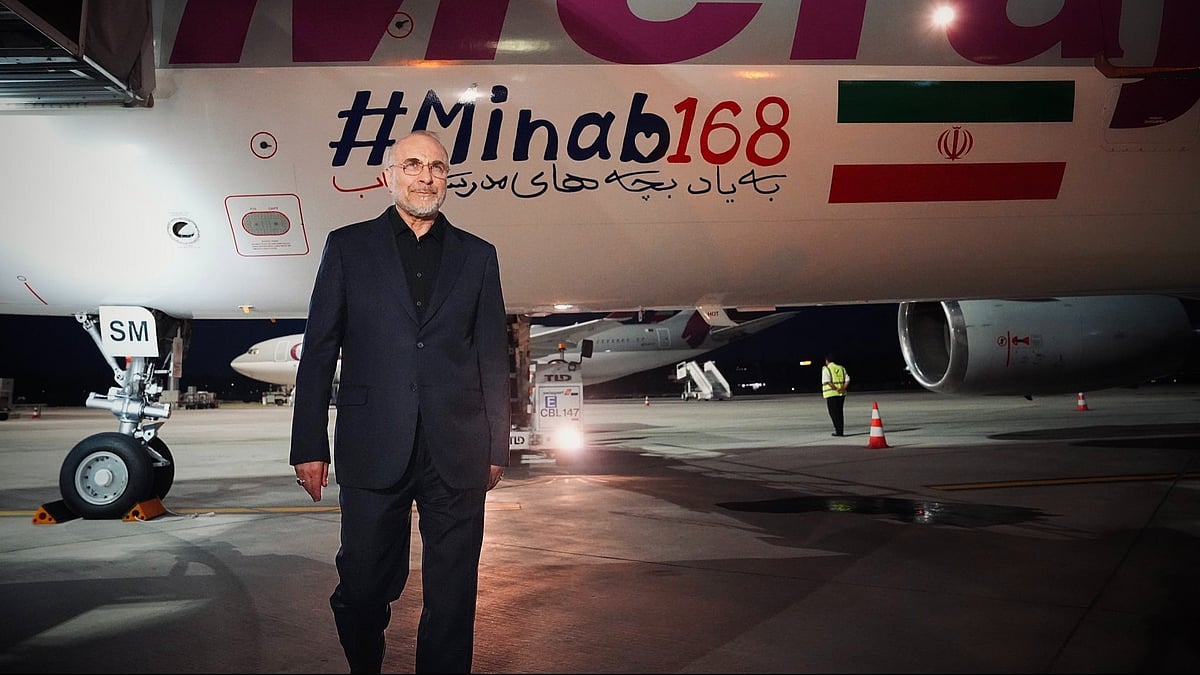
Iran’s nuclear programme and Israel’s continuing offensive in Lebanon are expected to feature prominently in the "technical talks" set to begin in Geneva on 21 June 2026.
The negotiations come days after a 14-point Memorandum of Understanding (MoU) was electronically signed by the US and Iranian presidents to end the conflict triggered by the military campaign launched by Israel and the United States against Iran on 28 February.
The Iranian delegation, led by chief negotiator Mohammad Bagher Ghalibaf, speaker of Parliament, arrived in Switzerland aboard a plane bearing the inscription "Minab 168". The number refers to the 168 schoolchildren and teachers reportedly killed by the United States on the first day of the sudden and undeclared war.
In his first remarks after landing in Zurich, Ghalibaf said he considered himself accountable to the victims of the conflict.
“I consider the innocent children of Minab and all the dear martyrs of Iran to be watching over my actions and behaviour at every moment,” he said.
The United States is still investigating its role in the incident.
The Iranian team includes foreign minister Abbas Araghchi, deputy head of the Supreme National Security Council Baqeri-Kani, governor of the Central Bank Abdol Nasser Hemmati, deputy foreign minister Gharibabadi and deputy minister of Oil Hamid Bourd, all of whom are seen as experts in different fields and are known as tough negotiators. The American team being led by vice-president J.D. Vance is also likely to include Steve Witkoff, President Trump’s West Asia envoy and Jared Kushner, the president’s son-in-law. Before emplaning for Switzerland at the Andrews Air Force base, Vance claimed he would be seeking to make progress on the nuclear issue as well as the Lebanon ceasefire during talks with Iran in Switzerland.
As mediators, Pakistan’s Prime Minister Muhammad Shehbaz Sharif and army chief Field Marshal Syed Asim Munir will also participate in the talks.
Israel's Channel 12, citing Israeli sources, reported that the decision to implement a ceasefire in Lebanon was taken following "enormous" US pressure. Channel 13, citing a diplomatic source, said Washington sent a message urging Israel not to escalate in Lebanon in order to pave the way for the Switzerland talks. Separately, a US official told Al Jazeera that the Israeli military confirmed to the US Central Command that it had ordered its units to comply with the ceasefire in Lebanon. According to Israeli military sources, Israeli occupation forces in Lebanon have been instructed to cease fire but will not withdraw from the Ali al-Taher area in southern Lebanon.
Negotiations are expected to be tough and tricky with hardliners in Isarel, the United States and Iran opposing the deal spelt out in the Memorandum of Understanding. Iran will be pressurised to give substantial concessions to pacify the hawks in Israel and the US but Tehran is also expected to demand in return substantial guarantees before it opens up again the Strait of Hormuz. Officially Iran has claimed that the Strait of Hormuz is open to all commercial ships barring those aligned with enemies and their allies.
Join our official telegram channel (@nationalherald) and stay updated with the latest headlines