Nation
Documentation notice for 250-year-old shrine sparks controversy in Jaisalmer
Border district residents question how centuries-old religious sites can be expected to produce modern land records under administrative verification drive
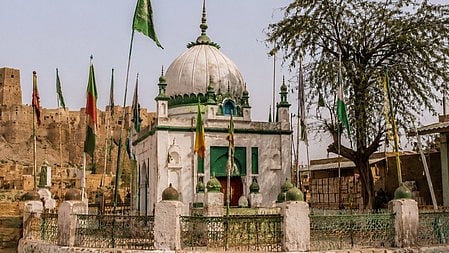
A notice issued to a centuries-old shrine in Rajasthan's border district of Jaisalmer seeking proof of land ownership has triggered protests and reignited a debate over the intersection of faith, heritage and administrative regulation in sensitive border regions.
The controversy centres on the Mehmood Shah Peer Jilani shrine, believed by local residents to be around 250 years old. The shrine management has been asked to submit land ownership documents by 22 June as part of the administration's ongoing "Operation Clean" campaign, which seeks to identify and verify allegedly unauthorised constructions within a 50-kilometre radius of the India-Pakistan border.
Officials have maintained that the exercise is a routine legal and administrative process being undertaken in a strategically sensitive zone. However, local residents and community leaders argue that applying contemporary documentation requirements to centuries-old religious sites overlooks the historical realities of the region.
The notice reportedly warns that if the required records are not produced by the deadline, action could be initiated after 23 June under provisions of the Rajasthan Colonisation Act.
The issue has generated concern among residents who fear that other historic religious and community structures could face similar scrutiny. Many argue that shrines, temples and public places established generations ago were created long before formal land documentation became common practice in western Rajasthan.
Congress district president Amardin Fakir said the matter extends beyond a single religious site. According to him, administrative restrictions that were once confined to a narrow border belt have gradually expanded, affecting a much larger population across the district.
He argued that many places of worship in the region were established centuries ago and that expecting formal ownership records from that era is unrealistic. He cautioned against actions that could be perceived as interference in matters of faith.
Former Ramgarh sarpanch Govind Bhargava recalled that the shrine's significance had previously been acknowledged by authorities. He claimed that during infrastructure works undertaken in the border region several decades ago, officials altered construction plans after villagers highlighted the site's importance.
According to Jumma Khan, president of the shrine committee, the shrine holds spiritual significance for both Hindu and Muslim devotees and attracts thousands of visitors during annual fairs. He said the site has been preserved through community support and public faith for generations, making the demand for centuries-old ownership documents particularly challenging.
The administration has insisted that all affected parties are being given an opportunity to present their case and that the verification process is being conducted in accordance with existing legal provisions.
As the deadline approaches, the dispute has evolved into a broader discussion about how authorities should balance legal requirements with the preservation of historical and religious heritage in India's border districts.
Former Rajasthan Chief Minister Ashok Gehlot has also weighed in on the issue, urging both the state and Central governments to proceed with caution. He said administrative decisions should not create unnecessary controversy or disturb the long-standing tradition of communal harmony and coexistence that has characterised the region for generations.
With IANS inputs
Join our official telegram channel (@nationalherald) and stay updated with the latest headlines