Nation
From Re 1 to Rs 70: Onion price rollercoaster exposes policy failures
Lack of timely intervention has left farmers struggling and consumers paying a heavy price for a kitchen staple
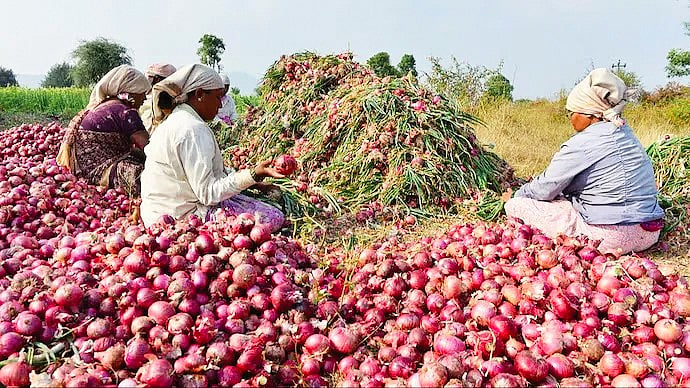
For onion consumers, the sudden spike in prices feels like an unexpected supply crisis. But for farmers, the story is far more complex. Only a few months back, onion growers in Maharashtra were forced to sell their produce for as little as Re 1 per kg in some mandis. Today, consumers in cities like Delhi are paying up to Rs 70 per kg for the same kitchen staple. This staggering price gap reflects not just supply issues, but a deep failure of policy foresight and timing.
The Centre claims it is closely monitoring onion prices and availability. It has begun calibrated releases from buffer stocks and restarted the ‘Kanda (onion) express’ — a rail service transporting onions from Nashik to major consumption centres. Despite this, the government states that onion production for 2025-26, estimated at 307.37 lakh metric tonnes, remains essentially unchanged from the previous year.
Yet, if the government understood that onion prices become volatile around August-September due to seasonal supply constraints, weather, and supply-chain disruptions, why were stronger preventive measures not implemented earlier?
The current crisis is the result of a troubling policy cycle. In April and May, farmers struggled with a glut that caused prices to crash dramatically — down to Rs 300-800 per quintal in Maharashtra mandis, far below the production cost of Rs 1,500-1,800. Unseasonal rains and hailstorms damaged crops further and disrupted exports.
By May, the situation worsened: prices reportedly dropped to as low as 50 paise or Re 1 per kg in some markets. Around 44,000 hectares of onion cultivation were affected by weather aberrations. Declining demand, weak exports and poor storage capacities intensified the glut. Many farmers faced distress sales, with some even burning their unsold produce out of desperation. Disturbing pictures of an emotional farmer dumping his stock on the road went viral.
Herein lies the policy failure. When farmers were earning below production costs, timely interventions — such as preventing distress sales, strengthening government procurement, expanding storage, and maintaining stable export channels — should have been priorities. Instead, farmers were left exposed to a price collapse. Their demands for a minimum support price (MSP)-like mechanism, government procurement centres and stable export policies went largely unheeded.
The pendulum has now swung to the other extreme. Retail onion prices have surged to an average of Rs 42 per kg — 45 per cent higher than last year and 19 per cent up month-on-month. Delhi has seen prices soar to Rs 70 per kg.
The government’s current measures — buffer-stock releases and the expanded ‘Kanda express’ — may offer temporary relief. The rail initiative has grown from transporting 14 rakes with 12,000 tonnes in 2024-25 to 86 rakes carrying 88,000 tonnes this year.
Onions may be seasonal, but this cycle of volatility is not inevitable. Better forecasting, stable export policies, improved storage capacity, timely procurement, and mechanisms to protect farmers from both price crashes and shortages could have eased the crisis.
Join our official telegram channel (@nationalherald) and stay updated with the latest headlines