Environment
Ramesh recalls how a newspaper photo helped save Great Indian Bustard
Congress leader recalls how Indira Gandhi spots a front-page image of the endangered Great Indian Bustard during a 1976 flight to Udaipur
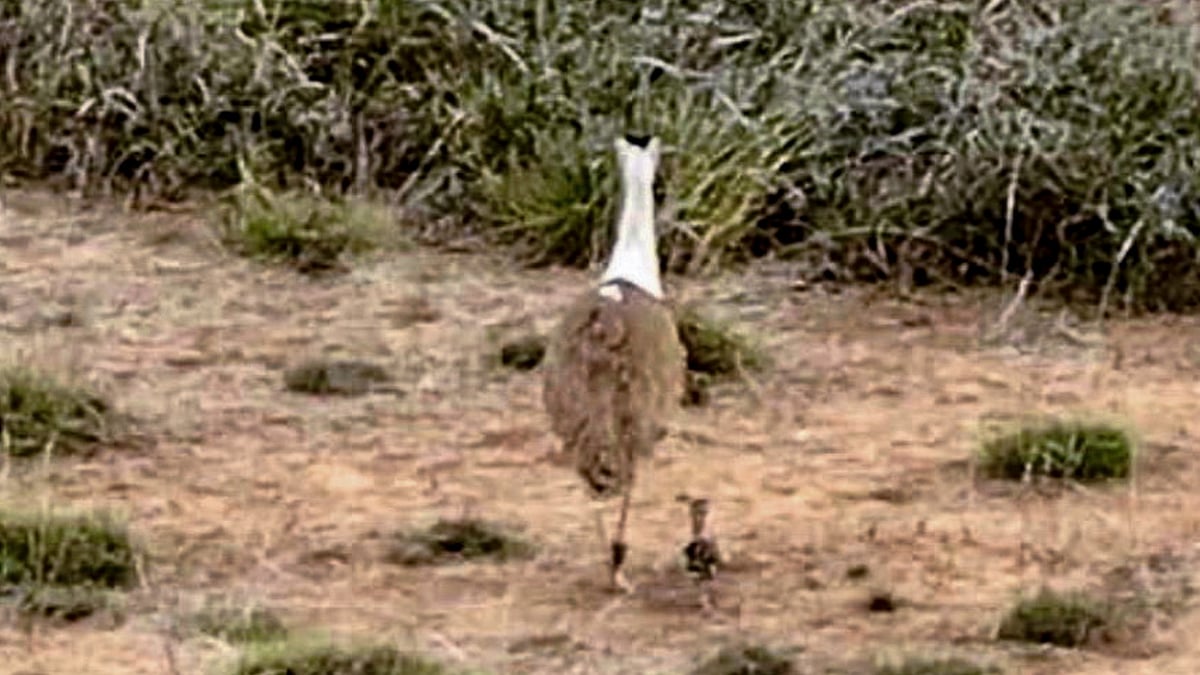
A chance encounter with a newspaper photograph during a flight to Rajasthan half a century ago helped set in motion one of India's most significant wildlife conservation efforts, Congress leader Jairam Ramesh recalled on Sunday.
Marking 50 years since the episode, Ramesh recounted how then prime minister Indira Gandhi stumbled upon a front-page image of the critically endangered Great Indian Bustard while travelling to Udaipur on 21 June 1976.
The visit itself was historic. Indira Gandhi was travelling to Haldighati to commemorate the 400th anniversary of the legendary battle that immortalised Maharana Pratap in India's collective memory. But it was an unexpected wildlife story in that morning's newspaper that would leave a lasting environmental legacy.
Sharing a copy of the front page of the Hindustan Times from that day, Ramesh said Indira Gandhi noticed an unusual photograph of the Great Indian Bustard, a bird already teetering on the brink of extinction. Intrigued, she went on to read the accompanying report inside the newspaper.
"On the morning flight to Udaipur she happened to come across the day's edition of the Hindustan Times. The front page carried an unusual picture — that of the Great Indian Bustard that was facing near-extinction," Ramesh wrote on social media.
Upon landing in Udaipur, Indira Gandhi met a group of bird enthusiasts led by Harsh Vardhan, then a member of the Rajasthan Wildlife Board. What followed, Ramesh said, became a turning point for conservation in India's desert ecosystem.
"This sequence of events triggered the conservation programme for the Great Indian Bustard as well as steps to establish the sprawling Desert National Park near Jaisalmer and Barmer," he noted.
Today, five decades later, the Great Indian Bustard remains one of the world's most endangered birds, battling habitat loss, infrastructure expansion and other threats across its shrinking range.
Yet Ramesh argued that the hope of saving the species can be traced back to that flight to Rajasthan.
"The Great Indian Bustard is still critically endangered and continues to face several threats. But hopes have been kept alive since that flight to Udaipur on 21 June 1976," he said.
The story also revives an intriguing chapter in India's natural history. According to Ramesh, celebrated ornithologist Salim Ali had proposed the Great Indian Bustard as India's national bird in 1961.
The idea, however, did not prevail. Two years later, the Indian Board for Wildlife, chaired by Jayachamarajendra Wadiyar, chose the Indian Peafowl as the national bird, citing its deep historical, cultural, mythological and religious significance.
Half a century on, the Great Indian Bustard remains a symbol of both India's conservation challenges and the power of a single moment to shape environmental policy. What began as a glance at a newspaper photograph would eventually inspire a movement to save one of the country's rarest and most iconic birds.
With PTI inputs
Join our official telegram channel (@nationalherald) and stay updated with the latest headlines