World
Netanyahu urges stronger India ties, warns future US president could be hostile to Israel
Israeli leader calls for wider alliances ahead of 27 October election as rival Gadi Eisenkot attacks his security doctrine
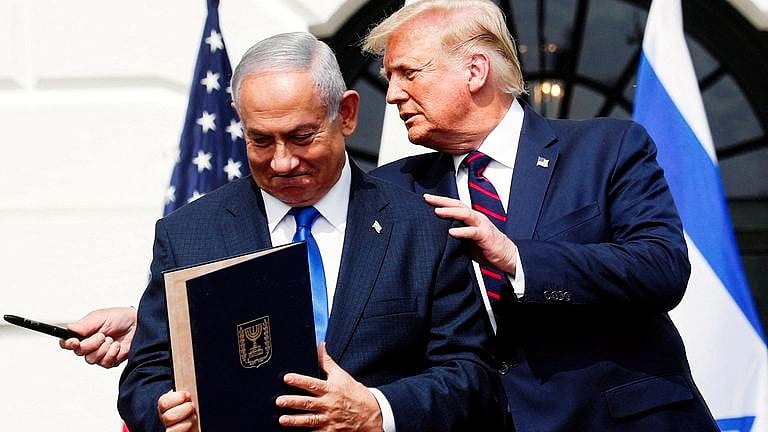
Benjamin Netanyahu has called for stronger alliances with India and Latin American countries, warning that a future US administration could be hostile towards Israel.
His remarks came as he presented his security doctrine ahead of Israel’s 27 October election, hours before Donald Trump endorsed his re-election bid.
Challenger Gadi Eisenkot dismissed the presentation as an election exercise and accused Netanyahu of using fear to distract voters.
Israeli Prime Minister Benjamin Netanyahu has called for expanding alliances with countries including India, warning that Israel must prepare for a future American administration that could take a hostile position towards it.
Presenting his security doctrine on Sunday, nine days before Israel’s 27 October election, Netanyahu said his government needed to strengthen the country’s diplomatic position and develop partnerships beyond its longstanding relationship with Washington.
His remarks came hours before US President Donald Trump publicly endorsed his bid for re-election.
Netanyahu raised the prospect of an unfriendly US president taking office in the future and questioned how Israel would respond to such a shift. He said the country should use the remaining period of Trump’s presidency to consolidate its position while preparing for changes in American policy.
Alongside continued engagement in Washington, Netanyahu advocated building a broader network of international partners.
“India is not a small country, and there are many others,” he said, referring to efforts to cultivate relationships within and beyond Israel’s neighbourhood.
He also identified political shifts in Latin America as an opportunity, suggesting that developments in Brazil could open the way for closer cooperation. Israel, he argued, needed both a wider circle of allies and capabilities that would make it a valuable partner.
India figures in diplomatic pitch
Netanyahu has repeatedly highlighted ties with India and his relationship with Prime Minister Narendra Modi when defending his government’s diplomatic record and rejecting suggestions that Israel faces international isolation.
In May, he described the relationship with India as distinctive and cited strong support for Israel in the country.
His latest comments also reflect concerns about Israel’s standing across the American political spectrum. Analysts cited in the account argue that Netanyahu’s confrontations with Democratic presidents Barack Obama and Joe Biden contributed to weakening support among Democrats.
Netanyahu has often portrayed those disagreements as evidence of his willingness to resist pressure from Washington in defence of Israeli interests, a message that has featured prominently in his election campaigns.
Eisenkot challenges security doctrine
Gadi Eisenkot, Netanyahu’s main challenger in the forthcoming election, rejected the presentation as a campaign intervention rather than a substantive national security plan.
The former Israel Defence Forces chief said the document relied on slogans and failed to address the strategic challenges facing the country, with conflict continuing across multiple fronts.
He also questioned the timing of its release, coming shortly before polling day and three years after what he described as the gravest security disaster in Israel’s history.
Eisenkot accused Netanyahu of attempting to shape public perceptions through fear and divert attention from controversies surrounding his campaign.
The exchange places Israel’s security strategy and international relationships at the centre of the final stretch of campaigning, as Netanyahu seeks another term as the country’s longest-serving prime minister.
With PTI inputs
Join our official telegram channel (@nationalherald) and stay updated with the latest headlines