POLITICS
Congress pushes to make voting a fundamental right
Demand comes days after SC ruled that right to walk on a designated footpath is a fundamental right protected under Constitution
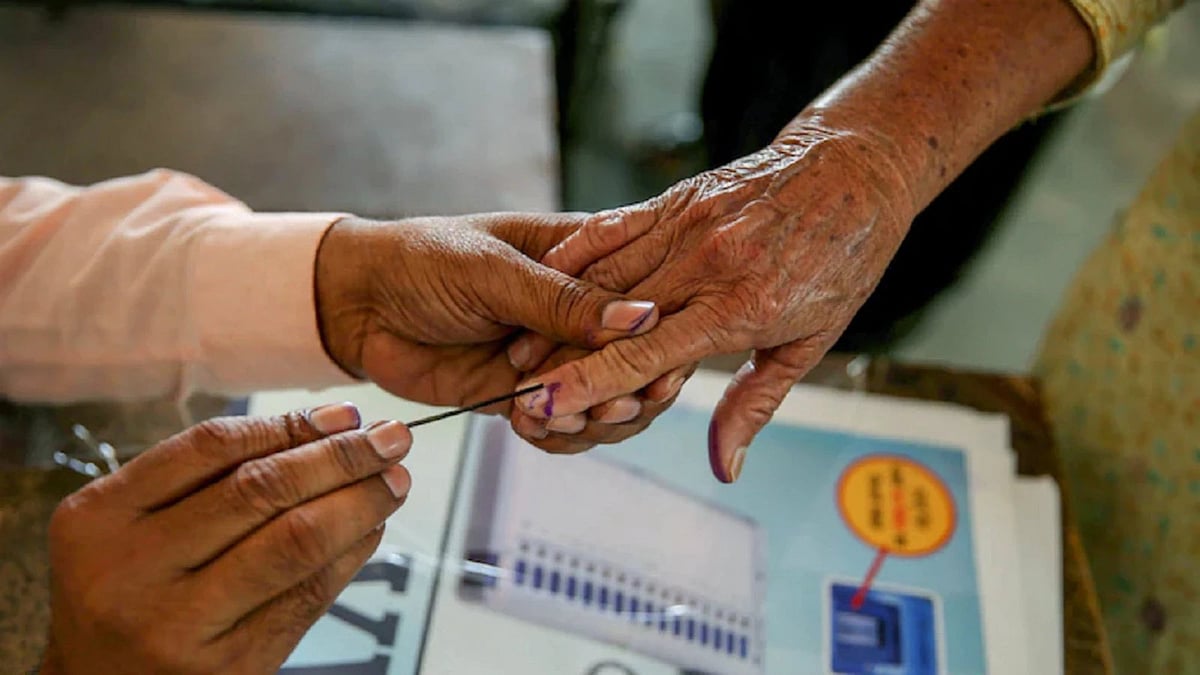
The Congress on Sunday renewed its demand for the right to vote to be elevated to the status of a fundamental right, arguing that stronger constitutional protection is needed to safeguard Indian democracy against voter suppression, arbitrary disqualifications and what it described as the increasingly partisan functioning of the Election Commission of India (ECI).
Leading the charge, Congress general secretary Jairam Ramesh said the time had come to grant voting the highest level of constitutional protection and judicial scrutiny, particularly in light of controversies surrounding voter list revisions and electoral processes in recent years.
The demand comes days after the Supreme Court ruled that the right to walk on a designated footpath is a fundamental right protected under the Constitution.
Drawing a parallel with the court's observation, Ramesh questioned why the right to vote — the cornerstone of democracy — continues to remain a statutory right rather than a fundamental one.
"With the blatantly partisan functioning of the Election Commission of India working at the behest of the Prime Minister and the Union home minister having been brutally exposed, it is now time to elevate the right to vote as a fundamental right that would offer it the highest level of judicial review and protection," he said.
Revisiting the constituent assembly debate
Ramesh also delved into the history of the Constitution to argue that the idea is far from new.
He recalled that the Advisory Committee on Fundamental Rights, Minorities and Tribal and Excluded Areas, chaired by Sardar Vallabhbhai Patel, debated the issue extensively in April 1947.
According to Ramesh, both B.R. Ambedkar and Jagjivan Ram strongly favoured making voting a fundamental right.
However, leaders such as Patel and C. Rajagopalachari expressed concerns that such a move could discourage princely states from joining the Indian Union at a sensitive stage of nation-building.
Instead, the Constitution ultimately enshrined universal adult franchise through Article 326.
"Sardar Patel himself took the position that universal adult franchise was, in itself, an implicit fundamental right," Ramesh noted.
A long-running constitutional debate
The Congress leader said legal scholars and courts have spent decades debating whether the right to vote is merely a statutory right derived from the Representation of the People Act, 1951, or whether it possesses a broader constitutional character.
He pointed to a dissenting opinion by justice Ajay Rastogi in the 2023 Anoop Baranwal vs Union of India case, where the judge argued that voting should be treated as a fundamental right.
Ramesh further noted that the Supreme Court has already recognised several rights linked to voting as fundamental in nature.
The court has upheld citizens' right to know the criminal records and financial interests of candidates, protected the secrecy of the ballot and recognised the option to reject all candidates through NOTA.
"It is therefore all the more anomalous that the right to vote remains only a statutory right. All surrounding rights have been declared fundamental but the core without which the former cannot exist still remains statutory," he argued.
Linking the demand to electoral reforms
The Congress sees the move as a safeguard against what it alleges are growing attempts to manipulate electoral rolls and disenfranchise voters.
Ramesh specifically referred to concerns over the Special Intensive Revision (SIR) process, claiming that large numbers of voters in some states have faced arbitrary exclusions.
"It would be a powerful step in putting in place safeguards against voter suppressions or arbitrary disqualifications that have taken place in different states in astronomical numbers under the SIR process," he said.
He added that recognising voting as a fundamental right would also lead to greater judicial oversight of the Election Commission's functioning.
Triggered by a Supreme Court verdict
The renewed demand follows a recent Supreme Court ruling that declared a citizen's right to walk on a demarcated footpath a fundamental right.
A bench of justices P.S. Narasimha and A.S. Chandurkar held that pedestrians' rights form part of the freedom of movement guaranteed under Article 19(1)(d) and are closely linked to the right to life and personal liberty under Article 21.
The judgment prompted Ramesh to publicly ask whether the right to vote — arguably the most essential democratic right — should also receive similar constitutional protection.
"How about declaring the right to vote also a fundamental right?" he had remarked after the verdict, describing it as crucial to preventing what he called the current "death spiral" of Indian democracy.
The Congress's latest intervention is likely to revive a long-standing constitutional debate over whether voting should remain a statutory entitlement or be elevated to one of the most protected rights under the Indian Constitution.
With PTI inputs
Join our official telegram channel (@nationalherald) and stay updated with the latest headlines