


Pre-Approved Home Loans Explained: What They Mean & How to Get One Faster
Before you start looking for properties, it helps to know what is a pre-approved home loan and why lenders bring it up so often these days


Before you start looking for properties, it helps to know what is a pre-approved home loan and why lenders bring it up so often these days.
In this article, we'll explain what a pre-approved home loan is, who's eligible, what lenders require, and how to get pre-approved for a house loan quicker so that your budget is sorted before your house hunting begins.
What Is a Pre-Approved Home Loan?
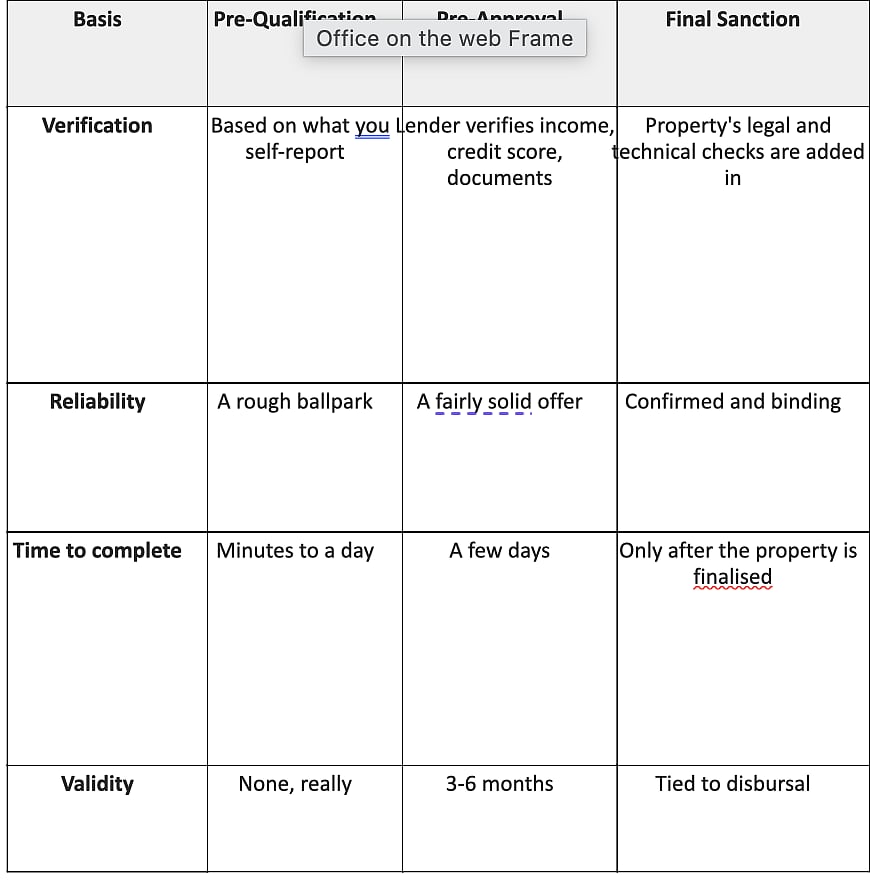
The pre-approved home loan meaning is fairly simple: it’s when a lender looks at your income, credit score, and repayment record in advance, then tells you how much you can borrow, sometimes months before you've even shortlisted a house. A regular loan works the other way round, since approval usually comes only after a property is finalised.
It's essentially an in-principle sanction, which is based on your financial profile rather than a specific property. After reviewing your income, credit history, and repayment ability, the lender will issue a letter outlining the loan amount you qualify for, the interest rate, and the term, typically anywhere from three to six months.
Pre-Approval vs Pre-Qualification vs Final Sanction
A clear understanding of these terms is essential when dealing with home loans.
Benefits of a Pre-Approved Home Loan
Beyond clarifying your budget, a pre-approved home loan offers several practical benefits.
You know your budget upfront, instead of guessing
Sellers and builders tend to negotiate more seriously once you're pre-approved
Disbursal moves faster since most paperwork is already sorted
It signals to everyone involved that you're a genuine, ready buyer
Far less chance of a rejection surprise after you've already picked a house
Eligibility Criteria
Lenders typically look at a handful of things before issuing a pre-approval:
Age, generally 21 to 65 years by the time the loan matures
Steady income for at least 2-3 years, whether you're salaried or self-employed
A credit score of 750 or higher tends to move things along quicker
Existing loans or credit card dues that don't eat too much into monthly income
Residency status, though a fair number of lenders also cover NRIs
Consider plugging your numbers into a home loan eligibility calculator as well. It only takes a couple of minutes and gives you a rough idea of where you stand before you even talk to a lender.
Documents Required
Each lender will have slightly different paperwork requirements, but the majority of banks will request the following documents to evaluate your eligibility.
Submit identity proof, like Aadhaar, PAN, Passport, Voter ID card
Address proof like a utility bill, rent agreement, or Aadhaar
Income proof, salary slips or Form 16 for salaried applicants, ITR for the self-employed
Bank statements covering the last six months
Employment or business continuity proof, depending on your situation
How to Get a Pre-Approved Home Loan: Step-by-Step Process
Once you have organised your finances and collected required paperwork, it is typically easy to get pre-approved. Follow these steps:
Pull your credit report and clear up any errors or pending dues
Run an eligibility calculator to see what you can likely borrow
Gather your income, ID, and bank statement documents
After selecting a lender, visit the nearest branch or use the bank's home loan apply online facility on its website or mobile app
Submit everything and respond promptly if they request additional materials
You'll receive a pre-approval letter that specifies the amount, rate, and validity period
Tips to Get Your Pre-Approval Faster
The timeline differs from lender to lender, but these steps can help you get your pre-approval faster.
Settle small personal loans or card dues before you apply
Keep your credit score above 750 by paying EMIs and bills on time
Stick to one or two lenders instead of applying everywhere, since too many inquiries dent your score
Have your full set of documents ready rather than sending them in bits and pieces
A joint application with a spouse or family member can push your eligibility up a notch
Conclusion
A pre-approved home loan basically hands you a clear budget, a bit more leverage while negotiating, and a quicker path to disbursal once you've found the right place. Staying on top of your credit score, keeping your documents in order, and not applying to multiple lenders all help speed things along.
That said, pre-approval isn't a done deal on its own; the property you finally pick still has to clear the lender's checks. Get that groundwork out of the way early, and the actual house hunt turns into a much calmer process.