


Silicon Jeri and the Triple Helix of Regional Innovation
Sabeer Nelli on Designing Silicon Jeri as a Bridge Between Local Institutions and Global Markets
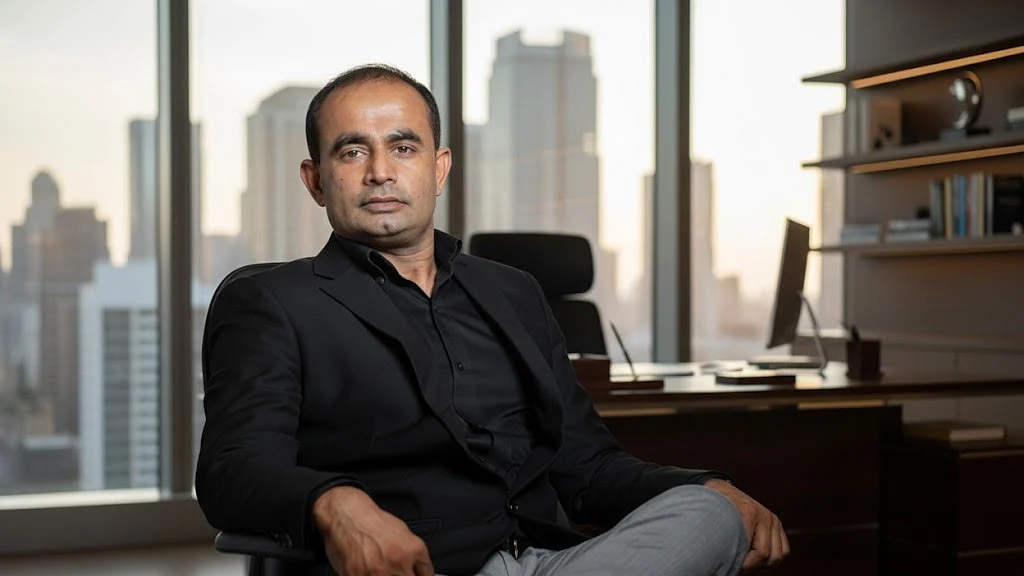


When Sabeer Nelli, CEO of Zil Money, set out to build Silicon Jeri in Manjeri, Kerala’s Malabar region, he asked a question most tech hubs never do: What would a world-class innovation ecosystem look like if designed for local realities rather than copied from elsewhere? The answer reframes how innovation emerges in India’s smaller cities.
The strongest ecosystems are not replicas of Silicon Valley or Bangalore, but those aligned with their Regional Innovation System - the interaction of local institutions, culture, talent, and community values. Silicon Jeri’s design reflects how people in Malabar actually live and decide, not how infrastructure hopes they will. This context-first approach may hold the key to resilient innovation beyond metropolitan centers.
The Triple Helix at Work
A consistent pattern in successful smaller-city innovation ecosystems is what scholars describe as ‘institutional coherence’ - the effective alignment of academia, industry, and government around shared innovation goals. This dynamic is commonly articulated through the Triple Helix model, where universities, businesses, and policymakers collaborate in mutually reinforcing ways. Research repeatedly shows that ecosystems with strong university–industry–government partnerships outperform those where infrastructure exists without institutional alignment.
Closely linked to this is the Regional Innovation System perspective, which holds that resilient ecosystems are differentiated rather than imported replicas of metro models. Evidence from emerging hubs shows sustainability comes from aligning innovation with local strengths - seen in Portugal’s Amarante Tech Hub and in Asian initiatives that embed innovation within existing community institutions rather than isolated campuses.
Silicon Jeri reflects both principles in practice. Conceived as a systems-integrated hub, it forges active links with Kerala’s startup mission, local governance, and nearby colleges through training programs and workshops that close skills gaps. By creating a dense collaboration network rather than importing external talent, Silicon Jeri anchors innovation within its regional ecosystem, enabling economic efficiency, social sustainability, and shared ownership of growth across the Malabar region.
The Campus as Strategy: Operational Interface and Measured Growth
Silicon Jeri’s campus is designed not as a symbolic center of innovation, but as a working interface between local life and global opportunity. Its role is practical rather than performative: to translate institutional alignment into everyday activity - how people acquire skills, collaborate, and build careers without leaving their geography. Community events, school visits, and skills-focused workshops in areas such as AI, cybersecurity, and fintech are not peripheral initiatives; they are mechanisms that synchronize local education pathways with real industry demand, making innovation visible, accessible, and grounded in lived experience.
At the center of this interface sits the Zil Money Global Development Center. By anchoring globally distributed product development work in Manjeri, it enables engineers and designers to participate in international markets while maintaining local continuity. This model creates career progression without geographic displacement, converting regional talent into globally relevant capability while keeping economic value rooted locally.
This same context-driven logic shapes how Silicon Jeri nurtures startups. Through ZilCubator, the ecosystem prioritizes operational rigor over rapid scaling, emphasizing disciplined execution, staged growth, and resilience. In a region where regulatory costs, capital constraints, and family expectations matter, measured growth is not a limitation but a strategic advantage - ensuring ventures are built to last within their real operating environment.
Leveraging Local Advantages in an Evolving Landscape
Silicon Jeri’s rise also coincides with a broader trend: India’s non-metro cities are becoming increasingly attractive for innovation and tech growth. Several macro factors are driving this rise of smaller-city tech hubs:
Digital decentralization has reduced dependence on metropolitan offices. With mature connectivity and remote-work infrastructure, knowledge-intensive work can now be executed from smaller cities, allowing places like Manjeri to plug directly into global technology and product ecosystems.
Cost advantages make non-metro locations structurally attractive. Lower real estate costs and moderated salary expectations enable firms to operate with 20–30% savings compared to metro hubs, supporting sustainable team-building beyond expensive urban centers.
Local institutional strengths act as foundational anchors. Many emerging cities possess universities, engineering colleges, incubators, or sector-specific clusters that supply skilled talent and continuity, forming the backbone of viable innovation ecosystems.
Supportive policy frameworks accelerate ecosystem maturity. National programs such as Startup India, the Smart Cities Mission, and the Atal Innovation Mission, alongside state startup missions like KSUM, TANSIM, Startup Odisha, and Startup Gujarat, channel funding, infrastructure, and capability-building into regional ecosystems. Kerala’s GCC policy further reinforces this alignment.
Cluster specialization and path dependency guide long-term growth. Cities such as Pune and Ahmedabad demonstrate how fintech, design, EVs, and advanced R&D flourish when innovation builds on existing strengths. These technology-led regional innovation systems benefit from strong Triple Helix collaboration, higher startup density, patent activity, and global linkages.
Conclusion: Resilience Through Contextual Design
Silicon Jeri’s experience offers a clear lesson for emerging innovation hubs across India: resilience comes from designing ecosystems for local reality, not from replicating external models. By asking what would work here, rather than copying Bangalore or Silicon Valley, Silicon Jeri made deliberate choices - integrating with the community, leveraging local institutions, and prioritizing sustainable growth over speed. The result is an ecosystem that allows innovation to flourish without forcing Manjeri to become something it is not. As the planned Zil Park expansion takes shape, the most transferable insight remains simple but powerful: innovation thrives when it is built around people, place, and context, not imported blueprints.
This is an advertorial. The article is published as received.
Join our official telegram channel (@nationalherald) and stay updated with the latest headlines