Environment
Why we should all bother about biodiversity
Biodiversity loss extends far beyond vanishing trees. It reshapes ecosystems, livelihoods and our future, writes Avay Shukla
Biodiversity is perhaps the most unacknowledged component of the natural environment, and the attention of policy-makers rarely goes beyond trees and animals, if even that. But biodiversity is much more than just trees and animals. It is the building block of nature, without which there would be no nature, or an inhabitable planet.
Biodiversity is the extraordinary variety of all living things on Earth. It encompasses plants, animals, micro-organisms, fungi and even pathogens, the genetic information they carry, and the complex ecosystems they create. I've learnt this the hard way, and am only just beginning to understand it.
When I acquired my half-acre of land in Puranikoti village in 2002, there were only two houses here; the landscape comprised rolling, grassy hillsides with a few apple trees and some deodars and blue pines. My own plot was carpeted with wild daisies, buttercups, lilies and primroses. The place was practically overrun with bees, butterflies, cicadas and dragonflies, and there was a continuous buzzing on sunny days. The birds formed the next level on the food chain, and were in turn subordinate to feral cats and pine martins. Purani Koti was a biodiversity hotspot!
Not any more. Most of the land in the village has been built over, the trees felled, the buzzing of dragonflies replaced with the rasping of jackhammers and saws. To compensate, I have planted more than 200 trees on my land, of the fruit and jungle varieties. But it has been of no avail, for trees alone on just one plot cannot create biodiversity.
For the lowest tier of natural growth in the area — the grasses, bushes, ferns, wild flowers, creepers — have all gone, and the soil has lost its capacity to store rain and snow or to retain moisture.
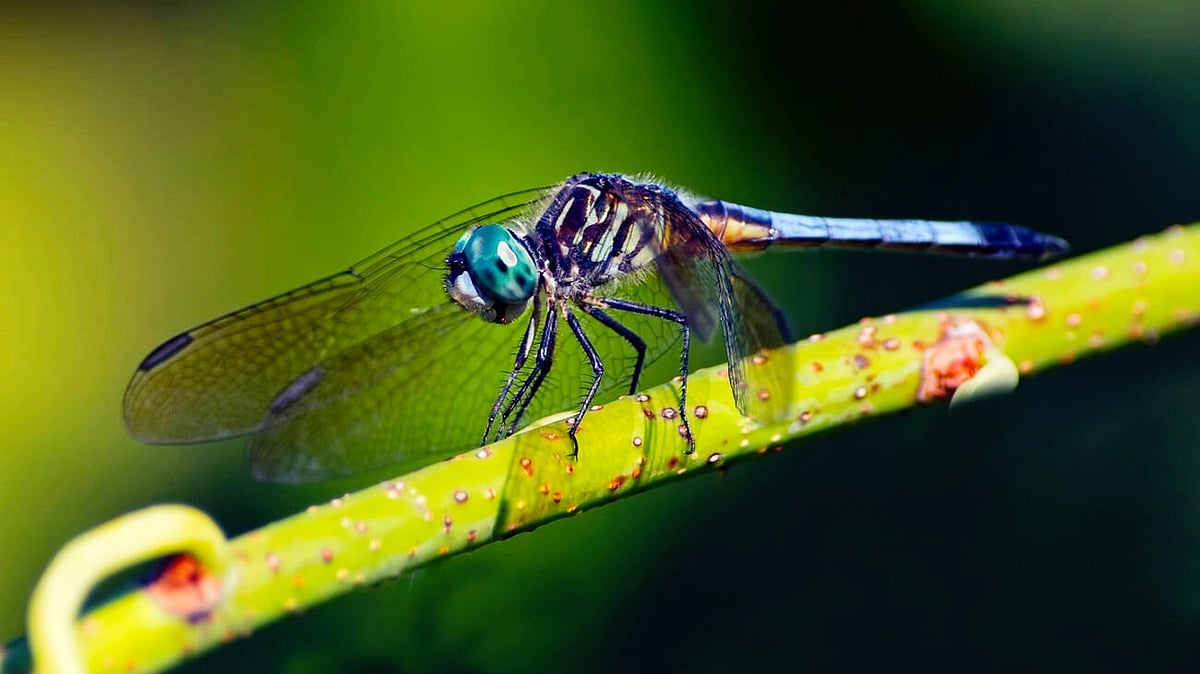
With the disappearance of this living building block of nature, the insects that depended on it have also started vanishing. A few, very few, butterflies and bees still delight us, but I have not seen any dragonflies this year: I fear their niche has disappeared and they are gone for ever.
In a year or two, the bees and butterflies will also abandon this biodiverse wasteland. Which, along with global warming, probably explains why we can no longer grow the fruits — apples, pears, apricots, cherries — that we used to: with the biodiversity gone, there are no insects left to pollinate their flowers or birds to spread the seeds.
This loss of precious biodiversity is rarely factored into our planning and developmental processes. What is reluctantly considered (at most) is forest or green cover — i.e. the number of trees to be felled. These are quantified and valued, the amount paid by the project proponent and twice that number planted as compensatory afforestation. The loss of biodiversity is completely ignored and never compensated for.
Some figures from Himachal may better illustrate the point: Himachal's forest area is 37,000 sq. km (37 lakh hectares), and a 2024 study by the Bhopal Institute of Forest Management quantifies its biodiversity value at Rs 33,000 crore per annum.
In other words, the biodiversity contribution value of every hectare is Rs 89,000 per annum. Working out its NPV over a typical 25–30-year life cycle of any project, the state should be charging at least Rs 30 lakh for every hectare of forest diverted for non-forest use. But this is not done because no value is attached to biodiversity.
This may, however, be changing globally, even as we in India continue to fell millions of trees every year for grandiloquent schemes that will displace the livelihoods of thousands of forest-dependent communities but enrich crony oligarchs by a few trillion dollars more.
Peru, for example, has become the first country in the world to give legal protection to insects (in this case its famous stingless bees). Recognising the ecological importance of these tiny pollinators of the Amazon forests, which pollinate 80 per cent of the Amazon's tropical fruits, just this month it enacted a law that recognises their right to exist, to a clean and intact habitat, to regenerate, and to receive legal representation if pollution, deforestation and projects threaten their survival. Anyone, company or individual, who threatens these rights can be sued and prosecuted.
Similarly, in Wales, the River Wye has received legal protection of its 'rights of nature' from its catchment to the sea. The new charter recognises the river as a living ecosystem with the intrinsic right to exist, i.e. the right to flow, the right to its biodiversity, the right to be free from pollution, the right to regenerate and to a healthy catchment. Any citizen can now go to court to enforce these rights.
New Zealand, too, has given legal status to the Whanganui river. Mount Taranaki has been given legal guardianship through an eight-member Guardian Council consisting of four government experts and four tribal representatives: no project, government or private, can be sanctioned there without the approval of this Council.
In India, the Uttarakhand High Court in 2017 had recognised the Ganga as 'a living entity' with legal rights, but the ruling was inexplicably stayed by the Supreme Court, and the matter continues in limbo.
The Peru and Wales laws are small beginnings in realising the importance of protecting ecosystems and biodiversity as a whole, not just trees and forests in isolation. One hopes our governments, courts and the NGT take note of these developments, dispel their sense of omniscience, and rouse themselves from their slumber, sloth and lack of understanding of ecological issues. Then — and only then — will the dragonflies perhaps return to Puranikoti and reclaim what is rightfully theirs.
More of the writer's works here
Avay Shukla is a retired IAS officer and author of Holy Cows and Loose Cannons — the Duffer Zone Chronicles and other works. He blogs at avayshukla.blogspot.com
Join our official telegram channel (@nationalherald) and stay updated with the latest headlines