World
31 killed, 169 injured in suicide attack at Shia mosque in Pakistan’s capital
powerful blast rips through the Khadijah al-Kubra mosque-cum-imambargah in Tarlai, sending shockwaves across the neighbourhood
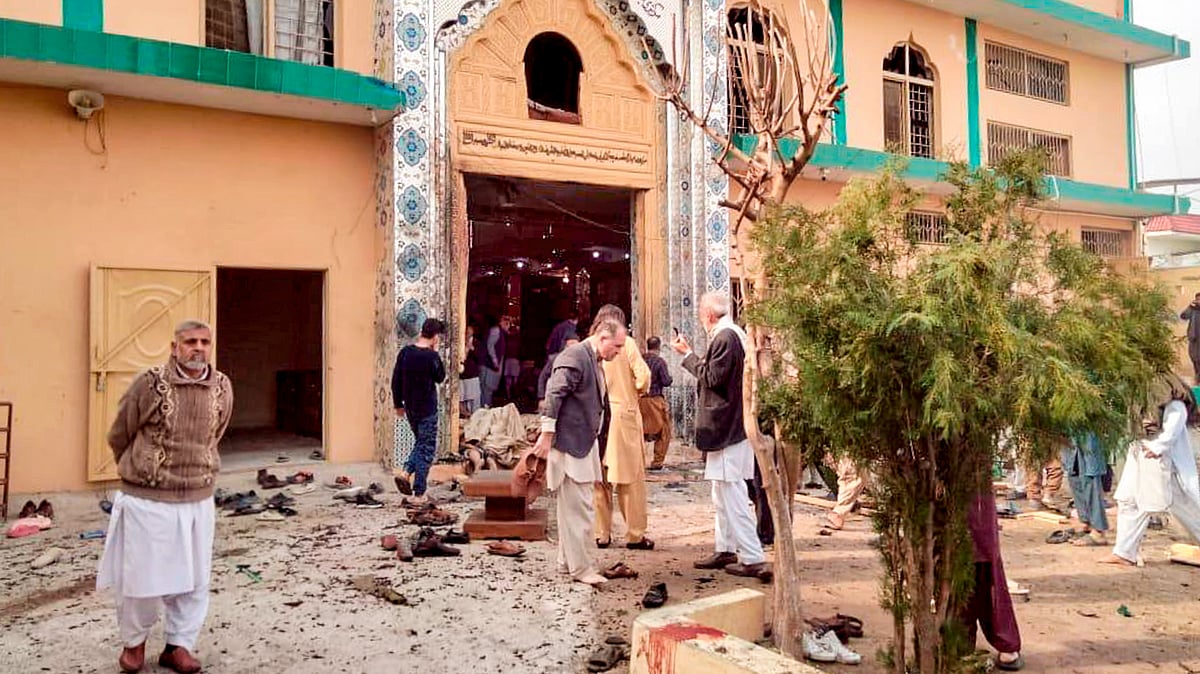
At least 31 people were killed and 169 others injured when a suicide bomber detonated himself at a Shia mosque during Friday prayers in Pakistan’s capital, Islamabad, in one of the deadliest attacks on the community in recent years, officials said.
The powerful blast ripped through the Khadijah al-Kubra mosque-cum-imambargah in the Tarlai area, sending shockwaves across the neighbourhood and shattering windows at a considerable distance. Police said the attacker was intercepted at the gate of the imambargah but managed to detonate his explosive vest before being neutralised.
Islamabad deputy commissioner Irfan Nawaz Memon confirmed the casualty figures, warning that the death toll could rise as several of the injured remain in critical condition.
No militant group immediately claimed responsibility. However, police sources said preliminary investigations suggest the attacker was a foreign national with suspected links to Fitna al Khwaraji — a term used by Pakistani authorities to describe the Tehreek-e-Taliban Pakistan (TTP). The TTP, however, denied involvement, with its spokesperson Muhammad Khurasani saying the group’s operations are confined to targeting Pakistan’s security institutions and their alleged facilitators.
Among those killed was a cousin of Islamabad inspector general of police Syed Ali Nasir Rizvi, while another relative of the police chief was injured, according to Islamabad Capital Territory (ICT) police spokesperson Taqi Jawad.
Eyewitnesses told local media that the attacker opened fire before blowing himself up. Television footage from the scene showed bodies strewn across the mosque floor amid shattered glass and debris as police and Rescue 1122 personnel carried out emergency operations.
Hospitals across the capital were placed on high alert as the injured were rushed in for treatment. The Pakistan Institute of Medical Sciences (PIMS) confirmed receiving at least 18 bodies and more than 78 injured, while Rawalpindi’s Benazir Bhutto Hospital treated four victims, one of whom later succumbed to injuries.
Army troops and Rangers cordoned off the area as security forces launched combing and search operations in and around the site.
The attack occurred during the visit of Uzbek President Shavkat Mirziyoyev, who arrived in Pakistan on Thursday for a two-day state visit, heightening security concerns in the capital.
President Asif Ali Zardari, Prime Minister Shehbaz Sharif and Senate Opposition Leader Allama Raja Nasir Abbas strongly condemned the attack. Zardari described the targeting of innocent worshippers as “a crime against humanity” and prayed for the speedy recovery of the injured. Sharif directed Interior Minister Mohsin Naqvi to ensure a thorough investigation and bring those responsible to justice without delay.
Deputy Prime Minister and Foreign Minister Ishaq Dar termed the blast a “cowardly suicide attack on innocent worshippers during Friday prayers” and said targeting places of worship was a blatant violation of Islamic principles. “This barbarity will not intimidate us. Extremists will be brought to full account,” he said.
Defence Minister Khawaja Asif alleged the involvement of India and Afghanistan in the attack, without providing evidence, claiming that the assailant had travelled to and from Afghanistan and pointing to what he described as emerging collusion. Minister of State for Interior Tallal Chaudhry, however, said the attacker was not an Afghan national, though forensic analysis showed he had travelled to Afghanistan multiple times.
Chaudhry said similar patterns had been observed in recent terror incidents, including those involving the Balochistan Liberation Army (BLA), asserting that militants were driven by financial motives rather than ideology. “Whether they belong to the BLA, TTP or any other group, they are paid in dollars,” he said, reiterating Islamabad’s demand that Afghanistan not allow its territory to be used by militant groups.
Minister for parliamentary affairs Tariq Fazal Chaudhry, who hails from the affected area, expressed grief over the loss of lives and called for national unity. “Such acts of terrorism cannot dampen the morale of the nation,” he said.
Iran, the United States, the United Kingdom and several other countries also condemned the attack.
The Islamabad bombing comes amid intensified counter-terror operations in Khyber-Pakhtunkhwa. According to the army, security forces killed 24 militants in two intelligence-based operations earlier this week — 14 in Orakzai district between 4 and 5 February, and 10 more in Khyber district during a separate encounter.
Friday’s attack was the deadliest in the capital since a suicide bombing less than three months ago killed 12 people outside a district and sessions court complex in Islamabad. The TTP has been blamed for several major attacks in Pakistan, including the 2008 bombing of the Marriott Hotel in Islamabad that killed 54 people and wounded over 250, and the 2009 assault on the army’s General Headquarters.
As investigations continue, authorities say security has been further tightened across the capital amid fears of follow-up attacks.
With PTI inputs
Join our official telegram channel (@nationalherald) and stay updated with the latest headlines