World
Trump open to trilateral meet with Xi, Putin to discuss nuclear arms reductions
China’s smaller nuclear arsenal and the expiration of New START complicate arms-control talks
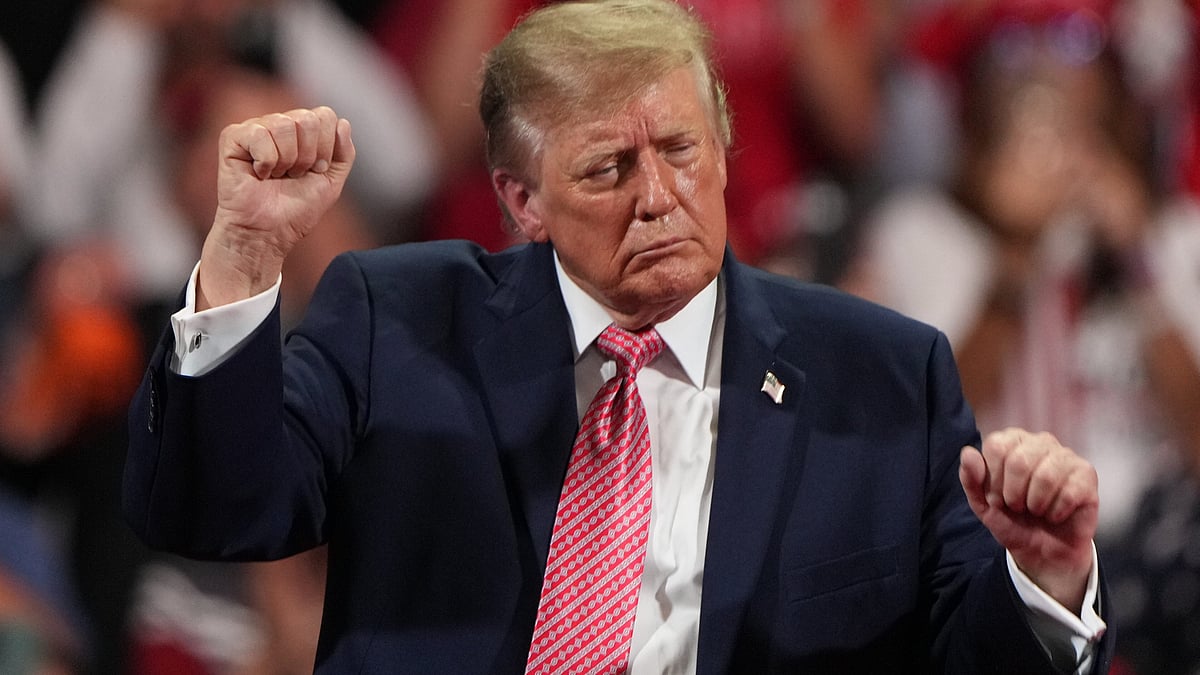
US President Donald Trump is open to a trilateral meeting with Chinese President Xi Jinping and Russian President Vladimir Putin to discuss nuclear arms reductions, potentially during his planned China visit next month
China’s reluctance to accept restrictions on its smaller nuclear arsenal and the expiration of the New START treaty pose major challenges to negotiations
No summit has been confirmed, and experts stress that concrete proposals, verification measures and sustained diplomatic engagement will be essential for progress
US President Donald Trump has expressed willingness to meet Chinese President Xi Jinping and Russian President Vladimir Putin for trilateral discussions on nuclear arms reductions, signalling a possible renewed diplomatic effort to prevent an escalation in the global nuclear arms race. The proposed meeting could take place during Trump's planned visit to China next month, although no formal agreement on the summit, its timing or its agenda has been announced.
Speaking to reporters before departing the White House on Monday, Trump indicated that he was open to the idea of a three-way meeting, provided that nuclear weapons and denuclearisation remained at the centre of the discussions. He made it clear that he would prefer to focus on nuclear arms control rather than allowing the meeting to be dominated by Russia's ongoing war in Ukraine.
"I would do it, not so much for Ukraine, we would have it to talk about denuclearization," Trump said.
His remarks highlight Washington's interest in reviving arms-control diplomacy involving the world's three major nuclear powers at a time when existing agreements are weakening and strategic competition is intensifying.
Trump's comments followed reports that Russian President Vladimir Putin had proposed a meeting involving the leaders of the United States, China and Russia on the sidelines of the Asia-Pacific Economic Cooperation (APEC) summit scheduled to take place in Shenzhen in November.
Such a meeting would bring together the leaders of the three countries with the largest or most consequential nuclear arsenals, potentially creating an opportunity to discuss limits on nuclear weapons, strategic stability and measures to reduce the risk of a nuclear confrontation.
However, the proposal remains uncertain. None of the three governments has formally confirmed that a trilateral summit will take place, and there is no publicly established timetable or agreed framework for negotiations.
Trump has repeatedly voiced support for a nuclear agreement that includes Washington, Moscow and Beijing. His latest remarks suggest that he wants to use high-level diplomacy to establish a broader approach to nuclear arms reductions rather than rely exclusively on bilateral arrangements between the United States and Russia.
The initiative would nevertheless face considerable diplomatic and technical challenges, particularly because the three countries have different security priorities, nuclear capabilities and positions on arms-control obligations.
The United States and Russia possess the world's largest nuclear stockpiles and have historically been the principal participants in strategic nuclear arms-control agreements. China, meanwhile, maintains a smaller arsenal but has been expanding its nuclear capabilities.
Trump acknowledged this disparity, noting that China remained behind Washington and Moscow in terms of its nuclear arsenal but was continuing to strengthen its capabilities.
The difference in the size of the three countries' nuclear forces is expected to be one of the principal obstacles to any trilateral agreement.
Washington and Moscow have decades of experience negotiating limits on strategic nuclear weapons, whereas Beijing has traditionally resisted joining the same type of arms-control framework. Chinese officials argue that their country's arsenal remains considerably smaller than those of the United States and Russia and that imposing identical restrictions would not adequately account for this imbalance.
The Chinese Foreign Ministry reiterated this position last week, stating that expecting Beijing to participate in three-way nuclear disarmament negotiations at the present stage was neither fair nor realistic.
This position presents a significant challenge for the Trump administration. While Washington wants China to become part of a broader nuclear arms-control framework, Beijing is unlikely to accept restrictions that it believes would limit its strategic capabilities while leaving the existing imbalance with the other two powers unresolved.
Any meaningful agreement would therefore need to address questions such as how nuclear weapons should be counted, whether different limits should apply to different countries and how compliance could be monitored and verified.
The possibility of renewed negotiations comes amid growing uncertainty over the future of international nuclear arms control.
The New Strategic Arms Reduction Treaty, commonly known as New START, was the principal agreement governing strategic nuclear weapons between the United States and Russia. The treaty limited each country to 1,550 deployed strategic nuclear warheads and established restrictions on deployed strategic delivery systems, alongside verification and transparency measures.
Its expiration earlier this year removed the legally binding limits that had provided an important framework for managing the two countries' strategic nuclear arsenals.
The absence of a successor agreement has raised concerns that Washington and Moscow could face fewer formal constraints on their strategic nuclear forces. It has also intensified calls for renewed negotiations to preserve transparency, reduce the risk of miscalculation and prevent an uncontrolled expansion of nuclear capabilities.
Arms-control specialists have warned that the weakening of existing arrangements could encourage greater competition among nuclear powers, particularly as China continues to modernise and expand its arsenal.
Against this backdrop, Trump's proposal to bring Xi and Putin into a single discussion could represent an attempt to move beyond the traditional US-Russia arms-control framework and establish a wider dialogue involving China.
However, a trilateral meeting alone would not resolve the technical and political challenges involved in negotiating a binding agreement.
Daryl Kimball, executive director of the Arms Control Association, said on Monday that meaningful negotiations would require detailed proposals and sustained diplomatic engagement.
The observation underscores the difference between agreeing to hold a summit and reaching an enforceable arms-control arrangement. Even if the three leaders meet, substantive progress would depend on whether their governments are prepared to negotiate specific limits, establish verification mechanisms and maintain dialogue beyond the initial discussions.
Potential areas of negotiation could include transparency over nuclear stockpiles, restrictions on strategic weapons, measures to reduce the risk of accidental escalation and the development of mechanisms for future arms-control talks.
Nevertheless, disagreements over the scope of any agreement, the balance between existing arsenals and future nuclear expansion could complicate efforts to establish common ground.
The three countries would also need to determine whether negotiations should focus exclusively on strategic nuclear weapons or cover a broader range of nuclear capabilities and related security concerns.
The proposed meeting could also intersect with diplomatic efforts to address Russia's continuing war in Ukraine.
Russia has suggested that a meeting involving Trump and Xi could provide an opportunity to discuss the conflict. Ukrainian officials, however, have expressed concern about discussions that could affect their country's future without Kyiv's participation.
Trump's latest remarks indicate that he would prefer to keep nuclear arms control at the centre of any trilateral meeting rather than allow the Ukraine conflict to dominate the agenda.
The distinction is significant because the United States, Russia and China have different positions on the war, while any discussions concerning Ukraine's sovereignty, security or future arrangements remain politically sensitive.
A summit focused on nuclear weapons could provide a separate channel for dialogue among the three major powers, although it would not necessarily eliminate disagreements over the war or other international security issues.
Trump's willingness to meet Xi and Putin reflects growing recognition that the future of nuclear arms control cannot be considered solely through the traditional relationship between Washington and Moscow.
China's expanding nuclear capabilities, the expiration of New START and deteriorating strategic trust have increased the importance of discussions involving all three countries. At the same time, Beijing's reluctance to accept trilateral restrictions and the absence of an agreed negotiating framework remain substantial obstacles.
For now, the proposed summit remains an idea rather than a confirmed diplomatic initiative. Its significance will depend on whether the three governments can agree on a meeting, establish a common agenda and translate political statements into concrete negotiations.
Trump's remarks have nevertheless placed nuclear arms reductions back at the centre of discussions about relations among the world's leading nuclear powers. Whether the initiative develops into a substantive agreement will depend on the willingness of Washington, Moscow and Beijing to reconcile their competing strategic interests and commit to a durable arms-control process.
With agency inputs
Join our official telegram channel (@nationalherald) and stay updated with the latest headlines