


We make lot of money from China: Trump defends Xi’s US visit
Trump claims the US leads China in AI development and says the technology should be called “superintelligence”
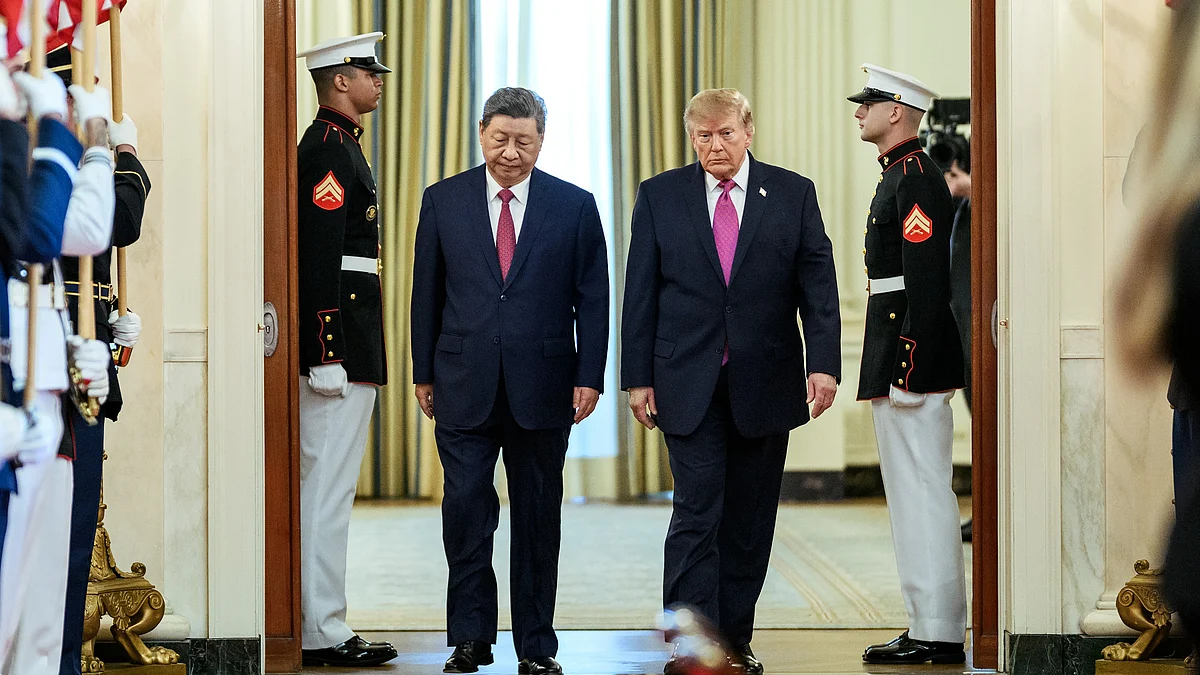


Trump says the US is making “a lot of money” from China and describes his meeting with Xi Jinping as successful, but provides no figures or specific agreements
Trump claims the US leads China in AI development and says the technology should be called “superintelligence”
Ahead of the 3 November midterm elections, Trump proposes a $5,000 payment to Americans if Republicans retain control of Congress, but offers few implementation details
US President Donald Trump has defended his decision to host Chinese President Xi Jinping at the White House, saying the United States is now making “a lot of money” from China and that the two countries share a more favourable economic relationship than in the past.
Speaking at a midterm election rally in Bullhead City, Arizona, on Wednesday (local time), Trump highlighted his personal rapport with Xi and claimed that the United States was leading China and other countries in artificial intelligence (AI). He also said he preferred calling the technology “superintelligence”, arguing that the term better reflected its capabilities.
Trump’s remarks came as he sought to portray his administration’s approach to China as beneficial to American economic and technological interests ahead of the November 3 congressional midterm elections.
Addressing the rally, Trump said his decision to host Xi had prompted questions but maintained that the meeting was justified by their personal relationship.
“We had the -- the President of China last week. And people said, 'Why are you doing that?' I’m doing that because we get along. It’s nice,” Trump said.
He went on to claim that the United States had improved its financial position in its dealings with Beijing.
“You know, we’re doing great with China. We make a lot of money with China. We used to lose a lot of money with China. We make a lot of money with China. And China respects us too,” he added.
Trump also pointed to Xi’s long journey to the United States as evidence of the Chinese leader’s respect for Washington and the US presidency.
“He doesn’t fly in an aeroplane for 21 hours unless he respects the President of a country or the country itself. And we had a great - a very great meeting,” Trump said.
However, the President did not disclose specific agreements reached during the meeting or provide figures to substantiate his claim that the United States was now making money from its trade with China.
His comments highlighted his emphasis on personal diplomacy and economic outcomes in describing the relationship between the world’s two largest economies.
Trump also turned to technological competition with China, asserting that the United States was ahead of Beijing and other countries in the development of artificial intelligence.
“You know, we’re leading the world. We’re leading China. We’re leading everybody with what they called artificial intelligence. But I said, it’s not artificial; it’s really super. It’s superintelligence. Sometimes it may get too super; that’s what we have to watch,” he said.
Trump suggested that the term “superintelligence” better captured the technology’s growing capabilities. He added that its potential could require careful monitoring if it became too powerful.
The President said he had invited prominent technology executives to the White House, including for a dinner attended by Xi. He claimed that the Chinese leader was familiar with the executives and their work.
“I had them to the White House. I had them to dinner with President Xi. He knew every one of them and what they did,” Trump said, without identifying the executives.
“They agree with me, it’s really superintelligence, so we’re going with that term,” he added.
Trump did not provide technical details or evidence to support his assertion that the United States was leading China in AI development. His comments nevertheless underscored the importance he places on maintaining American technological leadership amid growing competition with Beijing.
China also featured in another part of Trump’s speech, when he discussed the proposed new ballroom at the White House.
Referring to the project, Trump said, “I thought President Xi would complain… that we’re reaching China.”
He did not elaborate further on the remark.
The comments reflected the broader prominence of China in Trump’s speech, spanning diplomatic relations, trade, technological competition and the proposed White House construction project.
Turning to domestic politics, Trump promoted his proposed $5,000 payment to Americans if Republicans retain control of Congress in the 3 November elections.
He suggested that the money should be spent within the United States rather than used for overseas travel or purchases.
“You can’t say… darling, let’s take a little trip to China so we can spend the five grand,” he said.
Trump did not provide further details about the proposed payment, including its funding mechanism or how it would be implemented.
The proposal formed part of his broader effort to appeal to voters ahead of the midterm elections, as he highlighted his administration’s economic claims and its approach to international relations.
Trump’s remarks combined a defence of his engagement with Xi, claims of improved economic ties with China and assertions of American leadership in artificial intelligence.
While he described the meeting with the Chinese President as highly successful, he did not outline specific outcomes or provide figures supporting his claims about the financial benefits of trade with Beijing.
His comments also placed technological competition at the centre of the US-China relationship, with AI emerging as an area in which he believes Washington maintains an advantage.
With the congressional midterm elections approaching, Trump used the rally to connect his foreign policy messaging with domestic economic promises, presenting his dealings with China and his administration’s technology ambitions as part of a wider case for continued Republican control of Congress.
With IANS inputs
Join our official telegram channel (@nationalherald) and stay updated with the latest headlines