World
Europe must lead its own defence as NATO evolves into 'NATO 3.0': Hegseth
US defence secretary says allies must shoulder greater responsibility for Europe's security as Washington shifts focus and resources
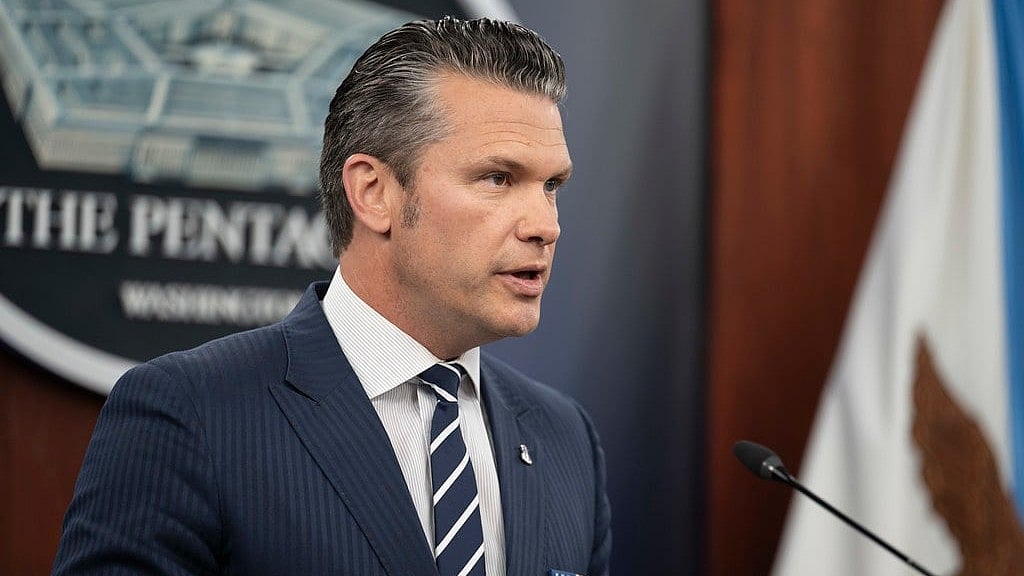
US defence secretary Pete Hegseth on Thursday said America's European allies must take the lead in defending their own continent and help transform NATO into what he described as a more capable and hard-line military alliance.
Speaking at a meeting of NATO defence ministers, Hegseth called for a reboot of the 32-member alliance, describing the vision as a "NATO 3.0" capable of deterring future threats.
His remarks come weeks after the United States informed allies that it would no longer provide certain warships and aircraft in the event that a NATO member came under attack. European allies and Canada are now assessing how to fill those gaps.
“NATO 3.0 is post-Cold War recognition that (NATO) needs to go back to a real hard-line military alliance that has real military capabilities capable of deterring right here on the continent and taking the lead for the conventional defence of Europe,” Hegseth told reporters.
He said the United States would invest $1.5 trillion in defence in 2027, sending what he described as a message that America is building an "arsenal of freedom".
According to Hegseth, that arsenal would primarily protect American interests while also reinforcing NATO's overall strength.
He said he would urge allies to take greater responsibility for Europe's defence and be prepared to act more decisively on security matters.
The comments come as NATO's Supreme Allied Commander Europe, traditionally an American officer, works on contingency plans following Washington's decision to scale back some military support commitments.
On 3 June, the United States signalled that it would no longer automatically provide assets such as an aircraft carrier and support ships, aerial refuelling aircraft and dozens of fighter jets during a crisis involving an ally.
The Trump administration has argued that it must prepare for the possibility of two simultaneous conflicts and retain sufficient military resources in case of a confrontation with China in the Indo-Pacific region.
Under Article 5 of NATO's founding treaty, member states agree that an attack on one ally will be considered an attack on all.
While the provision does not legally require members to provide military assistance, many allies would be expected to do so in practice.
The United States remains NATO's largest military power. However, Washington is now reducing the scale of support it may provide in a future Article 5 scenario, even as it maintains its nuclear deterrent in Europe, a central element of NATO's defence posture.
Join our official telegram channel (@nationalherald) and stay updated with the latest headlines