World
Funding crisis forces World Food Programme to cut food aid to Gaza
UN agency will reduce assistance as winter approaches, with nearly all of Gaza’s 2.1 million residents displaced and 2/3rds relying on food aid
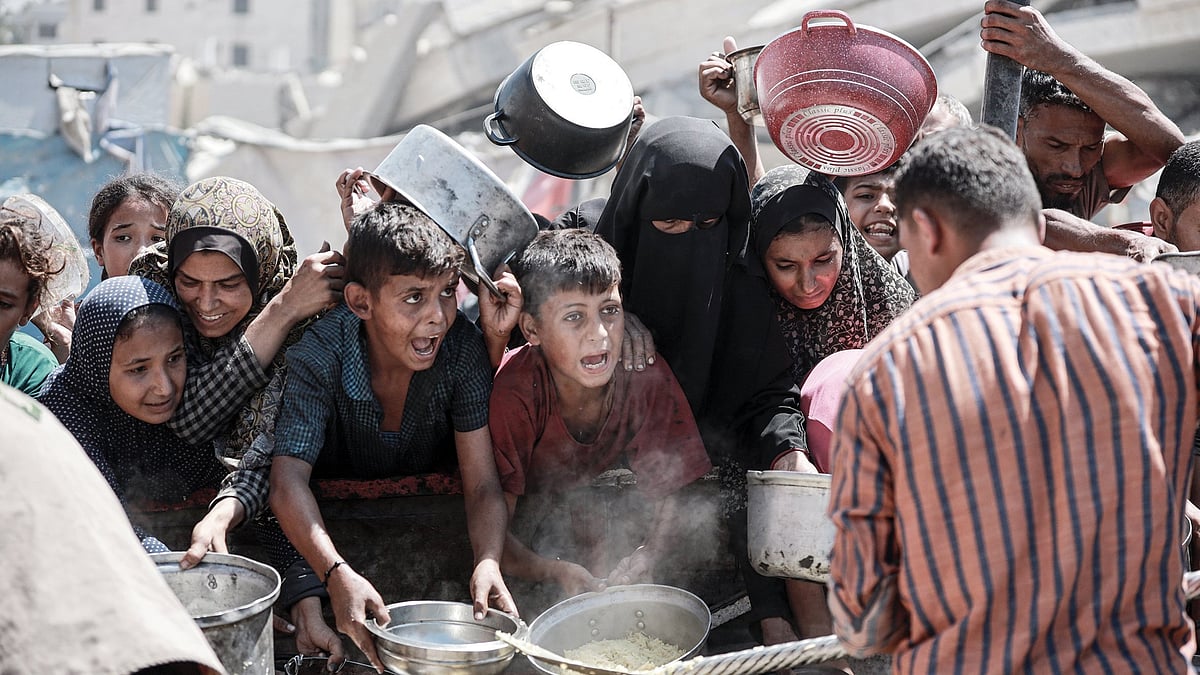
WFP cuts food assistance in Gaza by a third, reducing the number of people helped from 1.6 million to 1.1 million.
Daily hot meals from community kitchens will fall from 250,000 to 150,000.
The UN agency says it needs $450 million to sustain critical operations over the next six months.
The World Food Programme (WFP) is cutting food assistance across the Gaza Strip because of funding shortages, reducing the number of people it supports from 1.6 million to 1.1 million as families continue to face severe hardship.
The UN agency said it was being forced to “drastically reduce lifesaving assistance” despite continuing humanitarian needs in the Palestinian territory. The cuts come as winter approaches, with most of Gaza’s population still displaced and many families struggling to obtain enough food.
The number of hot meals distributed daily through community kitchens will fall from 250,000 to 150,000. Families in hard-to-reach areas, including locations near the so-called Yellow Line marking Israel’s area of military control, will receive meals every other day instead of daily.
The number of people receiving flour bags and ration boxes from the WFP will also be reduced from 1.1 million to 600,000 a month. Cash transfers to some 500,000 people had already been cut since July, leaving recipients with less money to buy food in local markets.
Shaun Hughes, the WFP’s director for Palestine, said the reductions were driven by funding constraints rather than a decline in needs or a lack of access.
The agency said it had received less than half the funding for its Palestinian operations in 2026 compared with previous years. It urgently needs $450 million to maintain critical operations over the next six months.
The cuts have raised concerns among displaced families who say existing food assistance is already inadequate.
“What will we do with these reduced rations? How will we provide for the little ones?” Mervat al-Satari, a displaced mother of five living in al-Mawasi in Khan Younis, told the BBC.
Sawsan Bahloul, a mother of three in the same area, said daily assistance had helped her family manage, despite the small portions. She said receiving meals every two days would make their situation more difficult.
Dalal al-Dahdouh, who lives with her family of eight in the ruins of their home in Gaza City, said the flour and food boxes provided by the WFP were already insufficient. She feared the cuts would have a “major impact” on her family.
Humanitarian conditions remain dire despite a ceasefire agreed between Hamas and Israel a year ago. Violence, including near-daily Israeli strikes, has continued, while reconstruction has yet to begin on a significant scale. Israel tightly controls the entry of goods through crossings, and although food is available in markets, widespread unemployment leaves many people unable to afford it.
The WFP said it would continue supporting bakeries that provide about a third of Gaza’s bread needs, as well as nutritional assistance for around 300,000 women and children and nutritional snacks for approximately 200,000 children.
Food insecurity also remains a concern in the occupied West Bank, where the WFP continues to assist around 200,000 Palestinians after halving the number of recipients in September. The agency cited rising Israeli settler violence and Palestinian displacement as factors worsening food insecurity there.
Join our official telegram channel (@nationalherald) and stay updated with the latest headlines