World
Israel to reopen Rafah crossing in limited pilot for Gaza’s sick and wounded
Reopening Rafah was a key part of the US-brokered ceasefire announced by President Trump in October
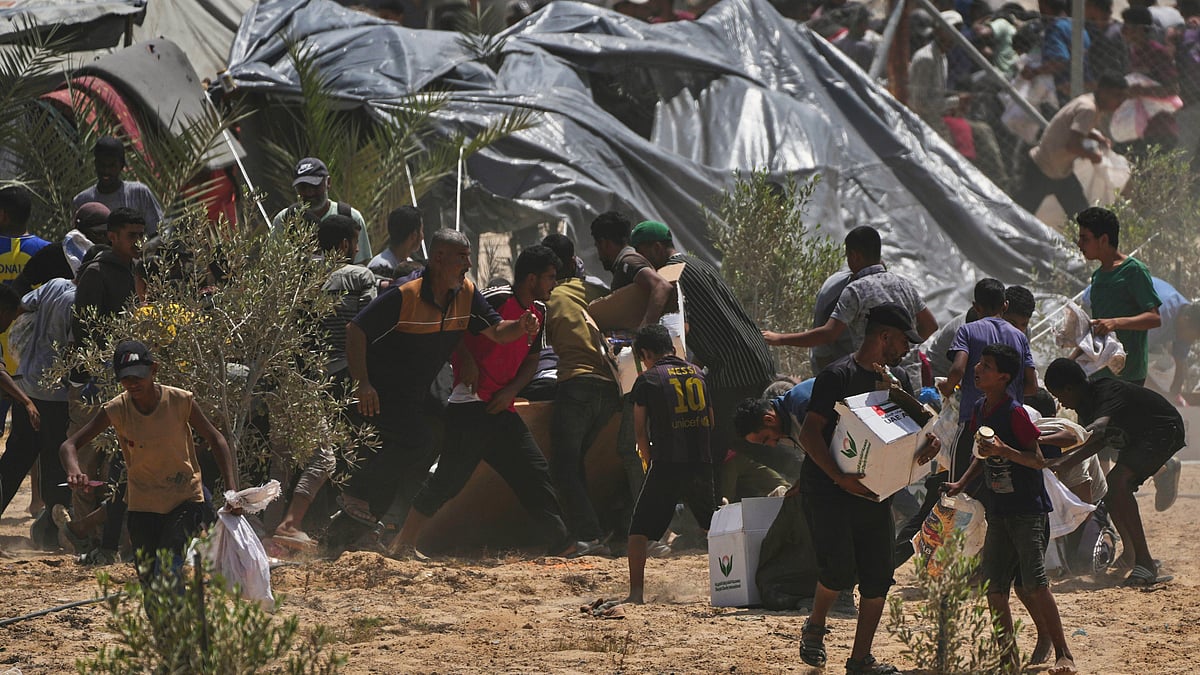
Israel has announced that it will reopen the Rafah border crossing between Gaza and Egypt in a limited “pilot phase” beginning Monday, raising cautious hopes among thousands of Palestinians desperate for medical treatment abroad after nearly two years of closure, the Al Jazeera reported.
COGAT, the Israeli military agency overseeing aid and civilian movement in Gaza, said on Sunday that the crossing would operate in both directions for Gaza residents travelling on foot, with coordination involving Egypt and the European Union.
“Today, a pilot is underway to test and assess the operation of the crossing,” the agency said, adding that movement in and out of Gaza is expected to begin on Monday.
The announcement follows Israel’s completion of a new screening facility at Rafah, intended to process Palestinians seeking to leave or return. Rafah is Gaza’s only border crossing not directly controlled by Israel and had previously been jointly managed by Palestinian and Egyptian authorities, in coordination with Israel. It has remained closed since May 2024, when Israeli forces seized the crossing during the war on Gaza.
Ismail al-Thawabta, director of Gaza’s Government Media Office, said around 80,000 Palestinians who left Gaza during the war are seeking to return, while an estimated 22,000 wounded and sick people are in urgent need of medical evacuation.
Egyptian officials told Reuters that at least 50 Palestinian patients would cross into Egypt for treatment on Sunday, with about 200 people — patients and family members — expected to transit daily in the initial phase, and roughly 50 people returning to Gaza each day. Video footage showed ambulances lined up on the Egyptian side of the border, ready to receive evacuees.
Among those waiting is 65-year-old Abed El Halim Abo Askar, who has battled cancer for four years. His surgery, scheduled for 10 October 2023, was postponed when the war began days earlier. His daughter, son-in-law and two granddaughters were killed in an Israeli air attack during the first month of the conflict. “Every day they tell us to be patient,” his son Ahmed said. “But nothing has happened since the war began. Medicines are not available, and hospitals have been destroyed.”
Reopening Rafah was a key condition of the first phase of a US-brokered “ceasefire” announced by President Donald Trump, which came into effect in October after two years of fighting. The truce, however, has repeatedly faltered.
Israeli attacks continued across Gaza on Sunday, killing at least three people, according to medical sources, following air raids a day earlier that left at least 31 dead. Since the start of the ceasefire, Israeli forces have killed at least 511 Palestinians and wounded more than 1,400.
While the pilot reopening focuses on the movement of people, there remains no clarity on the entry of humanitarian aid into Gaza, where the United Nations says at least 600 aid trucks are needed daily. Adding to the strain, Israel announced it would terminate the operations of Doctors Without Borders (MSF) in Gaza, citing the organisation’s failure to submit lists of Palestinian staff — a move that has drawn sharp criticism from aid groups and the UN.
For many in Gaza, the reopening of Rafah offers a narrow, uncertain passage — one that may mean survival for some, exile for others, and little relief from the devastation that continues to define daily life.
Join our official telegram channel (@nationalherald) and stay updated with the latest headlines