


Europe is late to its own sermon
Chanting ‘rules-based international order’ like an incantation is no substitute for consistency, writes Ashok Swain


When the prime minister of Canada, Mark Carney, told the world at Davos that the so-called ‘rules-based order’ was collapsing, it made headlines because it sounded like a verdict from inside the club. Yet the real shock is not that this order is dying, but that Western capitals kept pretending it was alive.
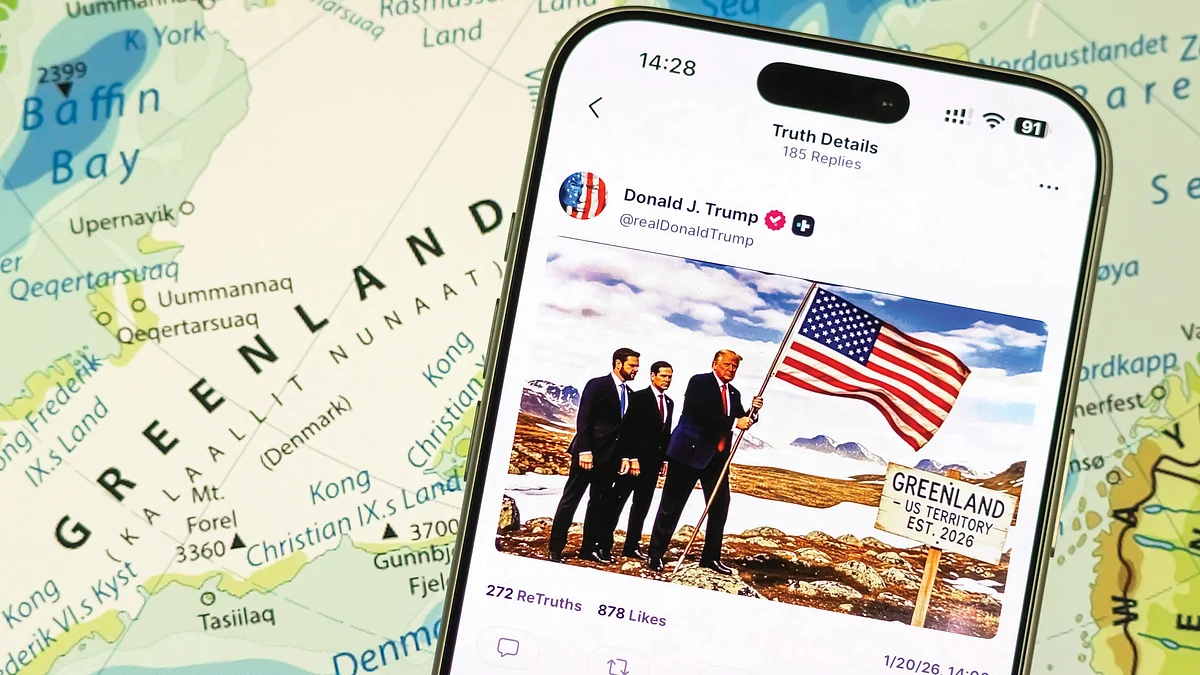
Carney’s intervention landed as Europe feels newly exposed. Donald Trump’s threats over Greenland unsettled Denmark and rattled those leaders who now sound like guardians of international law. Denmark, having fought alongside the US in Afghanistan and Iraq, finds itself treated as a disposable pawn. For decades, Europe accepted that America would always protect it. Now it sees a different America, one that views allies as leverage.
European leaders repeated ‘rules-based international order’ like a sacred incantation. But Europe is late to its own sermon. The order it claims to defend was not consistently rules-based; it was Western-led, often Washington-led. Europe was not an innocent bystander. It was a partner, sometimes enthusiastic, sometimes hesitant but rarely willing to break ranks.
The phrase itself has been slippery. It sounds neutral but isn’t. The order was never purely about law. It was about shaping the world to suit those who claimed to uphold the rules.
The post-Cold War period made this tension permanent. With the Soviet Union gone, the US stood unchallenged. That should have been the moment to strengthen international law and empower the UN. Instead, Washington increasingly treated global rules as optional. European allies adjusted their moral language accordingly.
The 1990s opened with a clear signal. In Panama, the US asserted the authority to seize foreign leaders, suspending sovereignty when it deemed necessary.
Justifications were dressed in legal terms, but the principle was raw power. Once normalised, the precedent was applied elsewhere.
Then came Afghanistan. The initial response to 9/11 found sympathy. But what followed was not self-defence. It became a 20-year occupation, a state-building experiment, marked by civilian deaths, torture and corruption. NATO allies did not offer token support; they made Afghanistan a shared Western project, staying long after the mission.
Iraq was more corrosive. Europe recalls it as an American mistake, but it is a selective memory. Key Western allies joined the 2003 invasion despite the lack of legal foundation and the collapse of the Weapons of Mass Destruction (WMD) justification. The West shattered a state in the Middle East and then spoke the language of order over the ruins.
Libya followed a similar script. The intervention was sold as protecting civilians but slid into regime change. The result was fragmentation, militia rule and chaos. Europe was not dragged in at gunpoint; Britain and France were deeply involved. The language of humanitarian responsibility again became a tool for destroying a government with no plan for what came after.
Syria represented a darker version. External powers backed armed actors, poured fuel into a civil war, and turned Syria into a proxy battlefield. The consequences were catastrophic for Syrians and destabilising for the region. When faced with the backlash of refugee flows, Europe pretended the crisis was not a manmade one.
Ukraine is where the claim becomes most revealing. After 2014, US intelligence involvement in Ukraine expanded beyond information sharing into deep security and political entanglement. In the crisis that culminated with President Yanukovych’s removal, Western involvement did not mean tanks in the streets, but it did include years of political backing, diplomatic pressure and behind-the scenes intelligence work that shaped the balance of forces.
The demise of the rules-based international order began the moment the West decided that rules were for others
The West’s commitment to sovereignty has always been selective. Some countries are treated as fully sovereign; others are treated as arenas where outside powers may intervene.
This selectivity becomes glaring when it comes to Israel. For decades, Israel’s occupation of Palestinian territory has been treated as an exception. International law is invoked when convenient and softened when costly. Settlement expansion continues; civilian suffering is normalised through rituals of concern that rarely bring accountability. When Israel expands military action and carries out mass killings, Western responses often tilt toward justification rather than enforcing universal standards.
Venezuela exposed the deepest hypocrisy. US military strikes hit targets around Caracas in a shock operation resembling a decapitation raid. Amid the chaos, American forces captured President Nicolás Maduro and his wife, flying them out to face prosecution in the US. Western allies who speak endlessly about sovereignty largely responded with silence. Europe’s failure to resist helped destroy the order it claims to uphold.
None of this is to say that Western states are uniquely destructive or that non-Western powers are guardians of law. Russia’s invasion of Ukraine, China’s intimidation of Taiwan, and the crackdown on democracy and human rights by authoritarian and sectarian leaders in many parts of the world, including in India, make that fantasy impossible. The point is simpler and more damning: the West built a narrative where it claimed to represent rules and law.
This is why Europe’s anxiety over Greenland is revealing. For years, European leaders participated in a world where the US could rewrite realities, topple governments, and impose punishment beyond borders, all the while insisting they were protecting order. For the first time, Europe now fears it could be treated the same way. It is discovering that loyalty to empire does not guarantee immunity from empire.
Carney’s message resonates because it admits what outsiders have long argued. The global system was marketed as universal but operated as a Western advantage. It spoke of free markets, democracy and human rights while tolerating occupations, sanctions and wars. Now Europe speaks of saving the rules-based order, as if it was pristine until Trump arrived. But Trump is not an alien invasion; he is a product of the American political system. The deeper logic is old: American primacy first, international law and rules second.
If Europe wants to blame someone for the order’s demise, it must start by looking in the mirror. For decades, European leaders chose alignment over independence. They chose the comfort of the American security umbrella while outsourcing moral responsibility. They joined legally questionable wars, tolerated occupations they condemned in theory, and justified a system where international law was applied unevenly.
Europe can still play a constructive role in rebuilding global norms, but not through nostalgia. It cannot chant ‘rules based order’ as a substitute for consistency. If Europe truly wants rules, it must accept that they apply even when the violator is a friend and benefactor. The demise of the rules-based order did not begin with Trump’s threats to Denmark; it began the moment the West decided that rules were for others.
Ashok Swain is a professor of peace and conflict research at Uppsala University, Sweden
Join our official telegram channel (@nationalherald) and stay updated with the latest headlines