World
US clears record $11.1 billion arms sale to Taiwan as China warns of escalation
Package underscores Washington’s push for asymmetric deterrence amid Beijing’s growing military pressure on the island
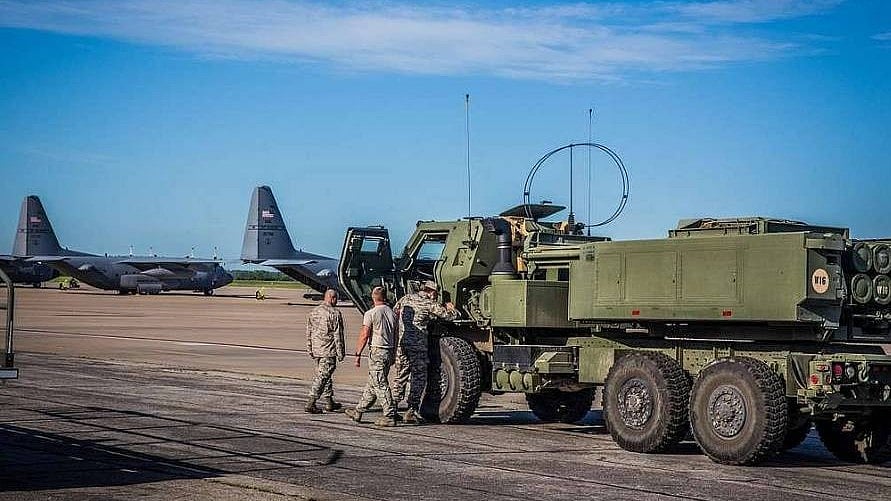
The United States has approved an $11.1 billion arms package for Taiwan, the largest in the history of bilateral security cooperation, in a move that significantly raises the strategic stakes in the Taiwan Strait as China intensifies military pressure on the island.
The sale, cleared on Wednesday under President Donald Trump’s second administration, is intended to strengthen Taiwan’s ability to deter or resist a potential Chinese assault through highly mobile, precision-focused and survivable weapon systems.
What the package includes
The proposed deal covers eight major defence items aimed at enhancing Taiwan’s asymmetric warfare capabilities, including:
HIMARS multiple-launch rocket systems, widely credited with shifting battlefield dynamics in Ukraine
Javelin anti-tank guided missiles and advanced artillery howitzers
Altius loitering munition drones and key spare parts for existing platforms
Taiwan’s defence ministry said the systems would help build “strong deterrent power” and ensure sufficient self-defence capacity, calling them central to maintaining peace and stability in the Indo-Pacific.
Strategic significance
The package comes at a politically sensitive moment, with several implications:
Deterrence over parity: Washington and Taipei are doubling down on an asymmetric defence model, prioritising systems that can inflict high costs on a larger invading force rather than matching China platform-for-platform.
Signal to Beijing: By approving a record package, the US is signalling that its Taiwan policy remains anchored in deterrence despite broader geopolitical bargaining with China.
Domestic push in Taiwan: The sale dovetails with President Lai Ching-te’s recently announced $40 billion defence expansion plan for 2026–33, underlining a rare political consensus in Taipei that national security spending must rise.
The Pentagon said the deal advances US national and security interests by supporting Taiwan’s military modernisation and maintaining a “credible defensive capability”.
China’s reaction and regional fallout
Beijing reacted sharply, accusing Washington of “severely undermining peace and stability” and warning that using Taiwan to contain China would “fail”. Such arms sales remain among the most volatile flashpoints in US-China relations.
Analysts note that systems like HIMARS could complicate Chinese invasion planning by threatening troop concentrations, logistics hubs and landing zones early in a conflict. Rupert Hammond-Chambers of the US–Taiwan Business Council described the package as a direct response to China’s military posture and to US pressure on allies to shoulder more of their own defence burden.
The approval also followed an unannounced visit by Taiwan’s foreign minister to the Washington area, highlighting the increasingly close — if unofficial — coordination between the two sides.
While concerns persist that President Trump’s transactional diplomacy or a future meeting with Chinese President Xi Jinping could dilute US support for Taiwan, US officials have indicated that arms sales to Taipei are set to exceed levels seen during Trump’s first term.
The administration’s latest national security strategy explicitly frames Taiwan as strategically vital, citing its location between Northeast and Southeast Asia and pledging to deter conflict by maintaining US military “overmatch” in the region — language that has reassured policymakers in Taipei but further antagonised Beijing.
With PTI inputs
Join our official telegram channel (@nationalherald) and stay updated with the latest headlines