


From Nandigram to Nabanna: The contradictions of Suvendu Adhikari’s rise
Adhikari did not emerge from the ideological ecosystem of the BJP or the Rashtriya Swayamsevak Sangh. His political roots lie in the Congress tradition of coastal Bengal
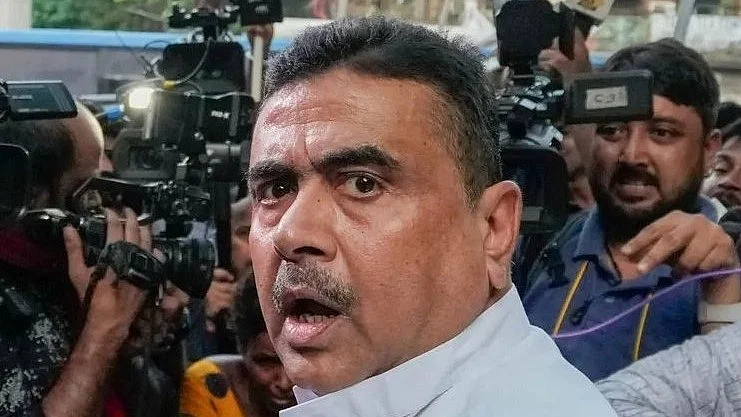


The elevation of Suvendu Adhikari as the first Bharatiya Janata Party Chief Minister of West Bengal marks one of the most dramatic political transformations in contemporary Indian politics. Few leaders embody the shifting ideological and moral landscape of Indian electoral politics as sharply as Adhikari — a politician who rose through anti-establishment mobilisations, built his career under regional secular politics, and eventually emerged as the principal face of aggressive Hindutva politics in Bengal.
His political journey is not merely the story of one individual’s ambition. It is also a commentary on the collapse of ideological consistency in Indian politics, where corruption allegations, political violence, and inflammatory rhetoric cease to matter once electoral utility takes precedence.
Adhikari’s ascent to the state’s highest office symbolises both the BJP’s long-awaited breakthrough in Bengal and the transformation of the state’s political culture from ideological contestation to hyper-polarised identity politics.
A Congress Legacy, A Trinamool Rise
Adhikari did not emerge from the ideological ecosystem of the BJP or the Rashtriya Swayamsevak Sangh. His political roots lie in the Congress tradition of coastal Bengal. Following the footsteps of his father, veteran politician Sisir Adhikari, he joined the Congress in the mid-1990s and became a councillor in Kanthi municipality.
When Mamata Banerjee broke away from the Congress to form the All India Trinamool Congress in 1998, the Adhikari family shifted loyalties with her. It proved politically decisive.
Suvendu Adhikari soon emerged as one of the most influential organisers in East Midnapore. Unlike many drawing-room politicians in Kolkata, his strength came from cadre management, rural networks and street mobilisation. His defining moment arrived during the Nandigram anti-land acquisition movement of 2007.
As a leading face of the Bhumi Uchhed Pratirodh Committee, Adhikari helped galvanise resistance against the proposed Special Economic Zone project backed by the then Left Front government. The movement transformed Bengal politics permanently. It shattered the moral legitimacy of the 34-year-old Left regime and propelled Mamata Banerjee into the national spotlight as a symbol of peasant resistance.
Ironically, the same movement that was once projected as a struggle for farmers’ rights and democratic resistance later became the foundation for a new politics of muscular territorial dominance in the region.
The BJP’s Former “Corrupt TMC Leader”
Before his defection to the BJP in December 2020, Adhikari was among the very leaders most aggressively targeted by the BJP itself.
During the Narada sting controversy, BJP leaders repeatedly cited videos allegedly showing several TMC leaders, including Adhikari, accepting cash in exchange for favours. BJP spokespersons routinely portrayed the sting operation as evidence of the “institutionalised corruption” of the TMC regime.
The BJP’s campaign machinery circulated those videos extensively on social media and in election rallies. Adhikari was portrayed as one of the central figures of Bengal’s alleged “cut-money culture.” The phrase “syndicate raj” became a constant BJP attack line against leaders operating in districts under his influence.
Similarly, in the aftermath of the Saradha Chit Fund Scam, BJP leaders repeatedly accused senior TMC functionaries of proximity to chit-fund operators. Adhikari was questioned by the Central Bureau of Investigation in connection with the matter. At the time, the BJP projected these investigations as proof of deep-rooted corruption within the ruling establishment.
Yet politics in contemporary India has increasingly demonstrated that allegations often have an expiry date determined not by courts, but by political realignments.
The moment Adhikari crossed over to the BJP in 2020, the rhetoric changed almost overnight. The same leader once denounced as a corrupt TMC strongman became the BJP’s principal “face of resistance” against Mamata Banerjee. Critics pointed out that even sting-operation videos earlier circulated by BJP platforms quietly disappeared from official channels after his induction.
This is precisely what opponents describe as the “washing machine” phenomenon in Indian politics — where leaders accused of corruption suddenly emerge politically sanitised after joining the ruling party or its ideological camp.
The BJP justified the shift by claiming that Adhikari had rebelled against corruption within the TMC system. But the contradiction remained glaring: if the allegations were once serious enough to demand arrest and prosecution, what fundamentally changed beyond political allegiance?
Nandigram: Symbolism and Personal Vendetta
The 2021 Bengal Assembly election transformed Adhikari from a regional power broker into a national political figure. His decision to contest against Mamata Banerjee in Nandigram converted the election into an intensely personalised battle.
His narrow victory over Banerjee was projected by the BJP as a symbolic defeat of TMC dominance, even though the party ultimately failed to capture power in Bengal.
From that point onward, Adhikari increasingly positioned himself not merely as an opposition leader but as the ideological spearhead of Hindu consolidation in Bengal politics.
The Shift Toward Open Polarisation
What distinguishes Adhikari from many earlier Bengali leaders is the bluntness of his communal rhetoric.
Over the past few years, he has repeatedly made statements targeting Muslims in ways that would once have been politically unacceptable in Bengal’s mainstream discourse. He has spoken about ending what he calls “minority appeasement,” called for identifying “infiltrators,” and frequently framed electoral politics in overtly communal binaries.
Several of his speeches have drawn criticism from civil rights groups and opposition parties for allegedly violating constitutional principles of equality and secularism. Critics argue that such rhetoric seeks to import the politics of religious polarisation seen in parts of North India into Bengal’s historically syncretic political culture.
Supporters, however, portray him as a leader articulating Hindu anxiety allegedly ignored under decades of Left and TMC rule.
But the deeper concern is not merely ideological disagreement. It is the normalisation of political discourse where Muslims are increasingly spoken of not as equal citizens but as a demographic problem, a security concern, or an electoral obstacle.
In a state shaped profoundly by the trauma of Partition and communal violence, such rhetoric carries dangerous historical echoes.
From Anti-Establishment Rebel to Establishment Power
Perhaps the greatest irony of Adhikari’s political career lies in the contrast between his origins and his present image.
He first rose to prominence through a mass democratic movement against state-backed land acquisition and authoritarian governance. Today, he represents a political formation critics accuse of centralising power, weaponising investigative agencies, weakening dissent, and intensifying communal divisions.
The transition reflects not just personal ambition but the broader transformation of Indian politics itself — where ideological flexibility has become a survival strategy and where political morality increasingly depends on proximity to power.
What Adhikari’s Rise Means for Bengal
The emergence of a BJP government under Suvendu Adhikari signals a historic shift in Bengal’s political trajectory. For decades, Bengal politics revolved around class, language, peasant struggles, labour movements and regional identity. Under Adhikari, the axis may increasingly move toward religious polarisation and majoritarian mobilisation.
What is undeniable, however, is that Suvendu Adhikari’s rise encapsulates the central paradox of contemporary Indian politics: allegations that once disqualified a politician can disappear through ideological migration, while divisive rhetoric increasingly becomes a pathway to power rather than a barrier against it.
His journey from Congress worker to Trinamool strategist to BJP Chief Minister is therefore not merely a personal success story. It is a mirror reflecting the unsettling evolution of Indian democracy itself.
~Hasnain Naqvi is a former member of the history faculty at St. Xavier’s College, Mumbai
Join our official telegram channel (@nationalherald) and stay updated with the latest headlines