World
US, Iran agree on roadmap for final deal within 60 days at Swiss talks
Mediators Qatar and Pakistan cite "encouraging progress" as technical negotiations move forward
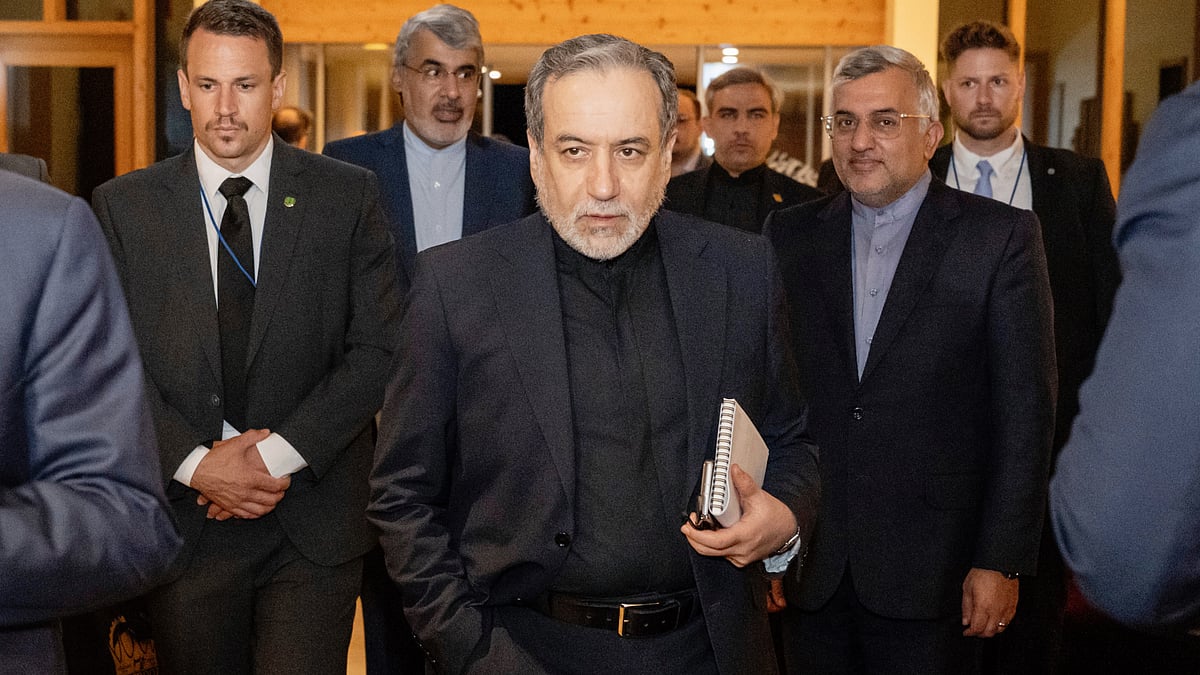
The United States and Iran have agreed on a roadmap aimed at reaching a final agreement within 60 days following two days of talks at the Swiss resort of Bürgenstock, with mediators Qatar and Pakistan describing the outcome as "encouraging".
In a joint statement issued on Monday, the mediators said the discussions were held in a "positive and constructive" atmosphere and had resulted in the creation of a mechanism for further technical negotiations. 'Encouraging progress has been made, including the creation of a mechanism for further technical talks,' the statement said.
The discussions, held on Sunday and Monday as part of the Lake Lucerne Summit in Switzerland, took place under the framework of the Islamabad memorandum of understanding (MoU), reportedly signed by the US and Iran on Thursday to advance negotiations on regional security and other contentious issues.
The US delegation was led by vice-president J.D. Vance, while the Iranian side was headed by Parliament speaker Mohammad Bagher Ghalibaf. Pakistan Prime Minister Shehbaz Sharif and Qatari Prime Minister Sheikh Mohammed bin Abdulrahman Al Thani also took part in the summit and helped facilitate the talks.
According to the joint statement issued after the meeting — described as the first high-level committee session since the signing of the MoU — representatives from the US, Iran, Pakistan and Qatar reviewed progress made under the framework.
The statement said the parties had agreed to establish a high-level committee to provide political oversight of the mediation process.
The committee will receive regular updates from chief negotiators and oversee specialised working groups dealing with nuclear issues, sanctions and dispute-resolution mechanisms. It will also monitor implementation of the MoU and review progress on matters covered under the framework.
'The High-Level Committee has agreed upon a roadmap towards reaching a final deal within 60 days, laying the foundation for the immediate commencement of further technical talks,' the statement said.
It added that a dedicated communication channel had been established for the duration specified under the MoU to reduce the risk of incidents or misunderstandings and to facilitate the safe passage of commercial shipping through the Strait of Hormuz.
The Strait of Hormuz, which links the Persian Gulf with the Gulf of Oman, is one of the world's most important oil transit routes and serves as a key export corridor for major Gulf producers including Saudi Arabia, Iraq, Kuwait, the UAE and Iran.
Recent tensions involving the US and Iran, along with restrictions affecting maritime traffic through the strait, reportedly disrupted oil flows and fuelled concerns over global energy supplies, contributing to volatility in crude oil markets.
The statement also announced the creation of a deconfliction cell involving the parties to the talks and the Lebanese Republic, with support from the mediators. The mechanism is intended to help ensure compliance with provisions in the MoU relating to the cessation of military operations in Lebanon.
In a post on X, Iranian foreign minister Abbas Araghchi said Pakistani and Qatari mediators had achieved "major progress" towards ending the conflict in Lebanon. He described the proposed deconfliction mechanism as the first significant test of the process.
A ceasefire reportedly brokered in Lebanon over the weekend appeared to be holding, with Israel easing some restrictions in areas close to the border.
However, neither Israel nor Hezbollah is a party to the US-Iran understanding. Israel has maintained that its forces will remain in southern Lebanon until security threats are addressed, while Hezbollah has said it will halt attacks only if Israel commits to withdrawing its troops.
The mediators said they would continue efforts to ensure the negotiations proceed in a constructive atmosphere with the aim of securing a final agreement.
Speaking to reporters, Vance said that "peace requires give and take".
"This is a historic meet. Never before have Iranian and American leadership met at such a high level outside of Islamabad," he said on Sunday.
"What today really represents is the beginning of a technical negotiation that's not going to solve every disagreement, but is going to allow us to sit together as teams, for the first time really in history, to figure out what matters most to the respective parties, to settle those issues, to solve those issues, and get to a better tomorrow," he said.
"The reason why the political leadership of the respective countries is here is because we wanted to, first of all, set up the structure for these technical negotiations, and second of all, make sure that our teams have our full support and know they can always call on us to break through any barriers."
Thanking the US president, Vance said a great deal had already been accomplished and expressed confidence that further progress could be made.
"Can we change relations in the Middle East, or do we go back to doing things the old way?" he said. "Where Iran and the Gulf have had an unfriendly relationship, or Iran has been a driver of regional instability? We see a future where everyone can work together to promote peace and prosperity for everyone."
Pakistan and Qatar also thanked countries that had supported the negotiations.
On Monday, Sharif said the first High-Level Committee meeting under the MoU framework had concluded successfully in Bürgenstock.
"The discussions were held in a positive and constructive atmosphere and yielded encouraging progress, including agreement on a roadmap toward a final deal within 60 days, the establishment of a High-Level Committee to provide political oversight, and the commencement of further technical talks," he wrote on X.
"Pakistan will continue to play its honest and sincere role in advancing dialogue and diplomacy towards a peaceful and lasting resolution," he added.
The Bürgenstock meeting marked the first formal review of progress under the Islamabad MoU, which was reportedly signed last week following diplomatic efforts by Pakistan and Qatar to facilitate dialogue between Washington and Tehran amid heightened regional tensions.
According to statements issued by the participants, the MoU was signed by US President Donald Trump and Iranian President Masoud Pezeshkian, with Sharif acting as a guarantor.
With AP/PTI inputs
Join our official telegram channel (@nationalherald) and stay updated with the latest headlines