Opinion
The ‘femininomenon’ on Delhi’s streets
They aren’t ‘victims’ nor likely to brook male condescension. They aren’t ‘good girls in need of protection’
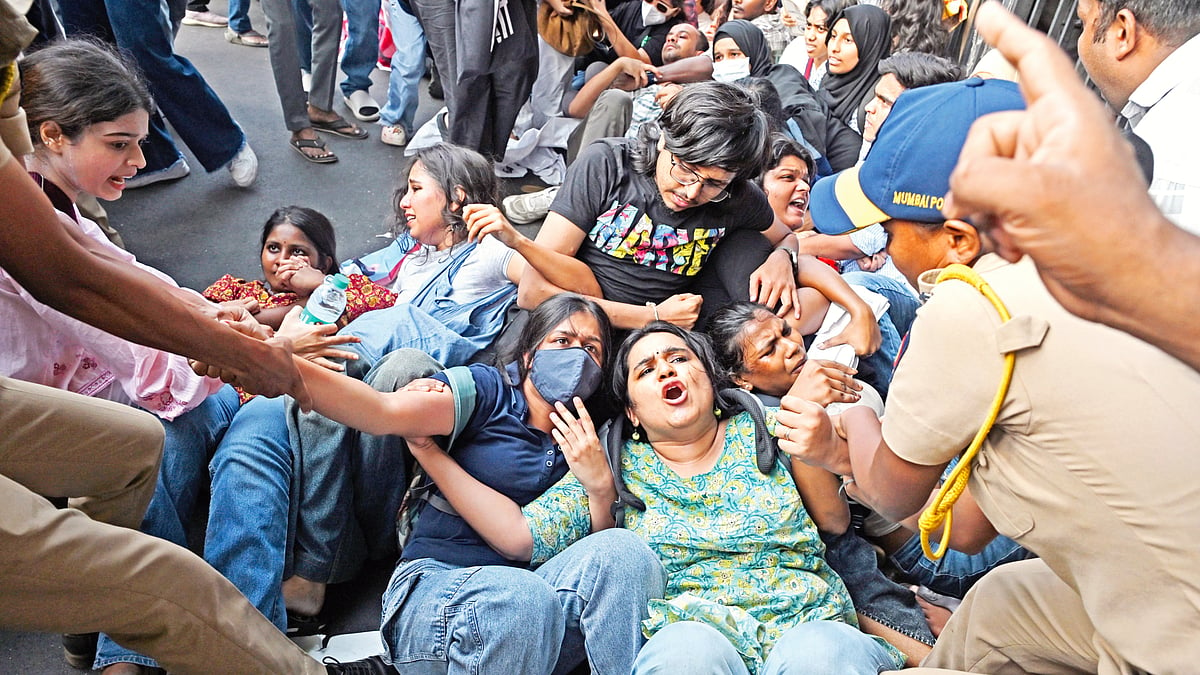
The October protests in Delhi began as a demand for electoral accountability. But they have since become inseparable from the not-so-sudden but rather unruly assertion of women’s right to occupy public spaces and, more importantly, to do so on their own terms.
The protests against chief election commissioner Gyanesh Kumar and a broken election system segued and branched off into a parallel mobilisation against sexual violence and for women’s safety in the capital. The resulting movement didn’t separate the right to vote from the right to walk home, protest, laugh, dress however or simply be angry.
This ‘femininomenon’ (borrowing from Chappell Roan’s 2022 hit) became a cultural event in its own right. Delhi’s streets brought together women, queer and non-binary people, students, journalists and first-time voters who were tired of being overlooked.
The protests began with demands for Gyanesh Kumar’s resignation over irregularities in the Special Intensive Revision (SIR) exercise that has seen some 13 crore voters struck off the electoral rolls. But when protesters gathered in Delhi on 3 October, allegations surfaced of sexual assault on three women journalists.
The crackdown peaked over the weekend of 10–11 October, when Delhi Police detained thousands and heavily barricaded Jantar Mantar, citing orders under Section 163 of the new-fangled penal code BNSS.
This round of protests was more overtly gendered than Jantar Mantar 1.0, which led to the resignation of then education minister Dharmendra Pradhan. A journalist accused Delhi Police ACP Vivek Bhagat of assaulting her while trying to detain her during the protests. Bizarrely, what followed the day after she made this charge was the release of a promotion order for Bhagat. Small mercy that it was later withheld pending enquiry.
Soon, other women at the protests started flagging how unevenly public spaces were being policed. Women and feminine-presenting people — from AISA president Neha Bora to journalists being groped by police on camera to women being chased, threatened, abused by goons on the streets — were confronting the very dangers they are taught to avoid from childhood. Judging from the police reaction, their dissent itself seemed to warrant punishment.
Running parallel to the anti-CEC/SIR mobilisation, students from Delhi University’s women’s colleges protested the gang rape of a 17-year-old at Aastha Kunj Park on her birthday. Though chief minister Rekha Gupta acknowledged lapses, young women knew a ‘Pink Force’ on paper could do only so much. So, they took to chanting slogans like ‘Ek kachori, do samosa/ in mardon ka kya bharosa’ to speak up and be heard.
One protester, sporting baby bangs, a septum piercing and winged eyeliner, held up a placard reading, ‘The baddest bitches are demanding change.’ Today’s young women are neither victims nor likely to brook male condescension. They aren’t ‘good girls in need of protection’. They have been raised on promises of equality but inherited institutions that restrict their access to public life and employment. They do not fear being loud or rebellious. What harm, they ask, could either do to the trajectory of their life when they have so little to begin with?
Some might argue their generalising slogans unfairly target all men when stripped of context, but the women might counter they are, in fact, being kind… to compress years of street harassment, sexual assault, victim blaming, moral policing and institutional indifference into fun rhymes to chant atop yellow barricades.
These are the same men who circulate AI-generated misogynistic bilge, demeaning images of women, powerful or otherwise, and then look flabbergasted when women take offence. In a video from the protests, a man with a saffron cloth around his neck claimed that women chanting such slogans are cheap, that they ‘sell themselves for 300 rupees’.
In late July, Prime Minister Narendra Modi said women using expletives at protests was a ‘culture shock’ and then proceeded to ‘forgive them.’ At a Chhatron Ki Goonj forum in Pune, Opposition leader Rahul Gandhi challenged the condescension and spoke of the Manusmriti as the fountainhead of these regressive views on women.
But women on the streets — with their clothes torn in police assaults, their bodies battered by lathi charges, their failing mental and physical health, their missed assignments, lectures and deadlines — know how slow-learning the State is.
The Pradhan Mantri Ujjwala Yojana, for instance, frames subsidised LPG connections as a means to secure women’s samman (dignity).
Young women are looking past Modi’s unsolicited forgiveness and Gandhi’s call to ‘smash the patriarchy’. They refuse to be poster girls for any political party. They have watched feminist language become campaign fodder, even as the State deploys AI-assisted cameras to surveil its own citizens. What angers them most, though, is the largely absent response to reports of harassment and sexual violence. So, these ‘baddies’ in their Y2K fits and chunky bangles take to the streets to ‘clock’ the patriarchy across party lines.
On 10 October, a group of allegedly right-wing men heckled and chased away protesting women in Connaught Place — and were allowed to go scot-free. Thankfully, the men in their 30s who raped a child in Aastha Kunj did get arrested. But women, young and old, are demanding action before verbal harassment can turn into sexual assault.
Under Sec. 43(5) of the BNSS, women cannot be arrested between sunset and sunrise, barring ‘exceptional circumstances’. Where practicable, a woman police officer must make the arrest. Yet, in another viral reel, a young woman, hoarse from protesting, sat on her bed at 11.00 pm as her family worried about a police vehicle waiting outside to arrest her.
Still, how broken must a system be for women to prefer police buses? Some took rides home in detention buses that, they said, felt safer than Delhi at night.
Meanwhile, a group of women walking towards Jantar Mantar were reportedly profiled by Delhi Police, but only hijab-wearers were detained and asked to surrender their phones. Trans and non-binary people, including Arunachal’s ‘protest diva’ Lobsang Riba added colour, range and a whole dimension to the protests.
Some of the most unsettling images from the protests feature women police officers dragging women protesters across the road. Their presence alone does nothing to challenge, leave alone dismantle, the patriarchy; the sindoor-flaunting women police officers are embedded in a male-dominated ecosystem and their fig-leaf presence only enables it.
So it is that in a video published by ‘not.a.journalist’ journalist Samdish Bhatia, a visibly shaken woman, her kurti torn by police restraint, screams in exasperation: “This is why we resist.”
Sohini Sengupta is a writer, dog-addict and relentless questioner of the status quo
Join our official telegram channel (@nationalherald) and stay updated with the latest headlines