POLITICS
Centre pushing Matuas into uncertainty over citizenship: Mamata Banerjee
Centre’s policies are casting doubt on the very identity of people who, the CM says, have long been citizens of India
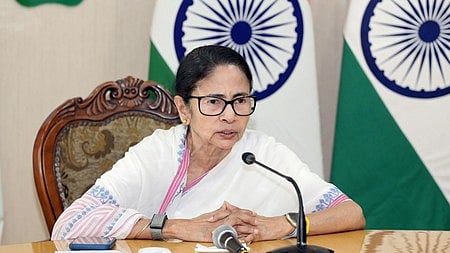
West Bengal chief minister Mamata Banerjee on Thursday launched a sharp attack on the BJP-led Union government, accusing it of plunging members of the Matua community into “uncertainty and confusion” under the pretext of granting them citizenship.
The chief minister made the remarks while paying homage to Matua matriarch Binapani Devi, reverentially known as Baroma, on her death anniversary. In a message posted on X, Banerjee alleged that the Centre’s policies were casting doubt on the very identity of people who, she said, have long been citizens of India.
“It is extremely unfortunate that due to the conspiracy of the BJP government at the Centre, our Matua brothers and sisters are being pushed into an unstable and confusing situation. In the name of granting citizenship, politics is being played,” Banerjee wrote.
She further claimed that the identity of the community was being questioned through administrative measures, alleging that certain processes were being used to deliberately exclude Matua voters from electoral rolls.
“Through SIR, they are deliberately being excluded from the voters’ list. Those who have been citizens of this country for generations, whose votes elect governments, are now being made to face uncertainty in the name of granting them ‘citizenship’ again,” she said, portraying the move as both unjust and deeply unsettling for the community.
Banerjee asserted that her government would firmly oppose any attempt to undermine the rights and dignity of the Matua people.
“This injustice will not be accepted. Our struggle will continue against attempts to snatch away the rights of my Matua brothers and sisters and the people of Bengal. We will not allow any harm to come to the people of Bengal,” she said.
In a more personal note, the chief minister recalled her close bond with Baroma, describing it as both spiritual and deeply emotional. She said she had received “motherly affection” from the revered leader, whose influence continues to resonate within the Matua community.
Offering her tributes, Banerjee said the ideals of Harichand Thakur and Guruchand Thakur had long shaped the social and spiritual ethos of the community. She noted that the Matua Mahasangha had played a crucial role in Bengal’s history of social reform and renaissance.
“Baroma nurtured these ideals throughout her life. Under her leadership, the Matua Mahasangha was established as a pillar of social equality and fraternity,” Banerjee said.
The chief minister also highlighted the initiatives undertaken by her government for the welfare of the community, including the formation of the Matua Development Board and the establishment of Harichand-Guruchand University at Thakurnagar in North 24-Parganas.
The Matua community, many of whose members trace their roots to migrants from present-day Bangladesh, holds significant political influence in several districts of West Bengal. Banerjee’s remarks once again brought the spotlight onto the sensitive intersection of citizenship, identity, and electoral politics in the state.
With PTI inputs
Join our official telegram channel (@nationalherald) and stay updated with the latest headlines