POLITICS
Centre has betrayed us: Wangchuk on Ladakh’s unfulfilled demands
Five rounds of talks have been held since February, but there has been little progress on the region’s key demands
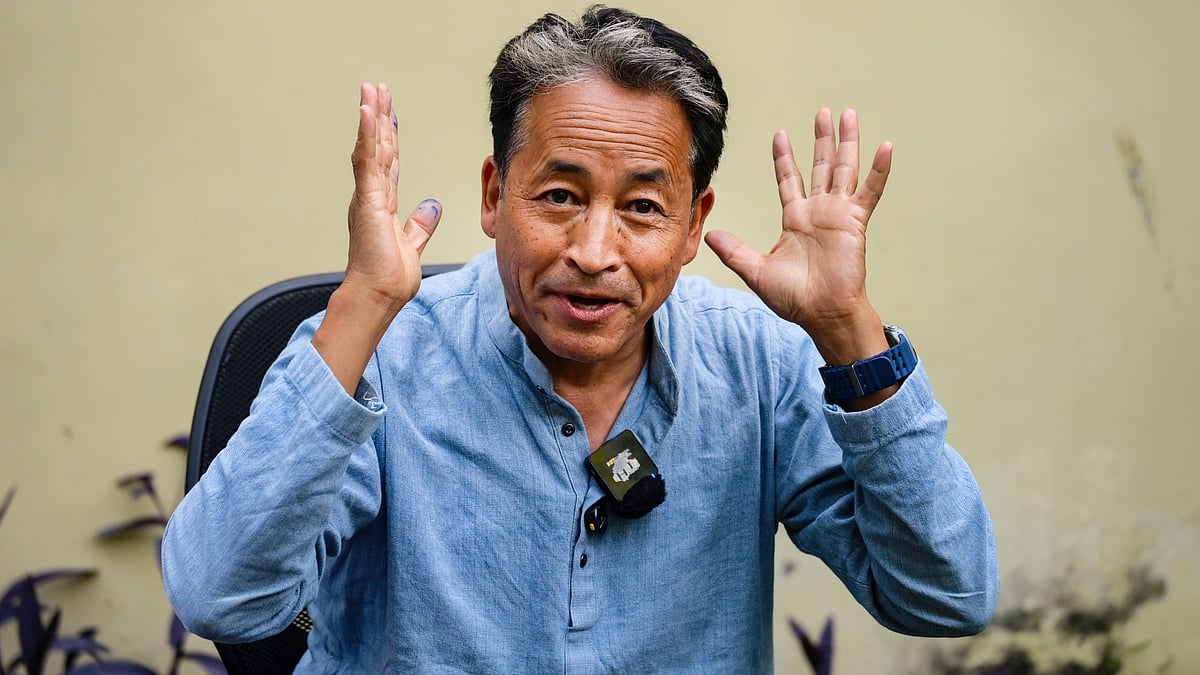
Sonam Wangchuk accuses Centre of betraying Ladakh over unfulfilled promises of constitutional safeguards and democratic rights.
The 22 October meeting with the Union home ministry fails to take place, deepening an impasse despite five rounds of talks since February.
Leh and Kargil groups press for statehood, Sixth Schedule protections, an elected Assembly and safeguards for land, jobs and the environment.
In his first media interaction after being detained during the Gen Z protest at Jantar Mantar in July, climate activist and educationist Sonam Wangchuk on Thursday, 22 October accused the Central government of betraying Ladakh by backtracking on its promises of constitutional safeguards, an elected Assembly, and democratic rights for the Union Territory.
Addressing the media at Ladakh Bhavan in Delhi alongside lawyer Vikram Hegde, Wangchuk said the Centre was failing the people of Ladakh even as pressure from China along the border continued to mount.
“On one hand, China is building pressure. They don’t even recognise Ladakh and (say) Ladakh is a part of China,” Wangchuk said. “But the country we love is not treating us well. They are moving away from every promise to the extent that they are not giving the people of Ladakh the same status as the rest of the people.”
The remarks come amid a prolonged impasse between the Centre and Ladakh’s civil society groups over the region’s political future and constitutional protections. The latest round of talks in Leh on 15 October remained inconclusive, while a meeting with the Union home ministry scheduled for 22 October, following an earlier invitation, did not take place, Wangchuk said.
"It was the ministry that proposed another meeting on 22 October and asked us to come to Delhi, saying it would arrange a meeting at the ministry of home affairs. Accordingly, we made all our plans and booked tickets to Delhi for 22 October. We usually plan in advance, and we made our arrangements accordingly. Unfortunately, the hopes and expectations of the people of Ladakh have repeatedly been dashed despite the promises made to them on various issues," he added.
Five rounds of talks have been held since February, but there has been little progress on the region’s key demands.
Wangchuk and representatives of the Leh Apex Body (LAB) and the Kargil Democratic Alliance (KDA) have been negotiating with the Centre over a set of demands aimed at securing political representation, protecting local land and employment rights, and preserving Ladakh’s fragile Himalayan ecology.
These include full statehood for Ladakh, which has been a Union Territory without a legislature since its separation from Jammu and Kashmir in 2019; constitutional safeguards under the Sixth Schedule of the Constitution to protect tribal communities, land rights and the region’s environment; an elected legislative Assembly; two parliamentary seats, covering Leh and Kargil; and a dedicated public service commission for local recruitment.
The Centre has resisted the demand for full statehood and has so far been reluctant to extend Sixth Schedule protections to Ladakh. The provision, which grants a measure of autonomy to tribal areas, currently applies to specified areas in Assam, Meghalaya, Tripura and Mizoram.
Instead, the government has proposed exploring constitutional safeguards under Article 371, which provides special provisions for certain states, including Nagaland, Mizoram and Sikkim. The Centre has argued that such an arrangement could protect Ladakh’s distinct culture, land rights and language without the legal and administrative complications it sees in extending Sixth Schedule status.
The failure to make progress on the demands has fuelled discontent in the region, with civil society groups pressing the Centre to honour its commitments and provide a clear roadmap for democratic governance.
Sajjad Kargili, co-chairman of the Kargil Democratic Alliance said in an X post, 'Good to see you standing up against arbitrary, dictatorial orders imposed without consulting the people.'
Join our official telegram channel (@nationalherald) and stay updated with the latest headlines