


‘India is for Indians first’: Pawan Khera’s ‘neo-colonisers’ jibe at US
Congress leader invokes Gateway of India’s colonial past to question Modi government’s handling of US ties


Pawan Khera invokes the Gateway of India’s colonial legacy to warn against what he calls modern-day ‘neo-colonisers’.
Congress questions implications of Rubio’s direct engagement with Mukesh Ambani on energy and data infrastructure.
Khera says India’s energy, food and data security, and farmers’ livelihoods must not be compromised for US approval of Modi.
Rajya Sabha Congress MP Pawan Khera has invoked the colonial history of Mumbai’s Gateway of India to accuse the Narendra Modi government of allowing India’s sovereignty and strategic interests to be undermined by the United States, as controversy over US secretary of state Marco Rubio’s visit shifts from diplomatic protocol to the influence of powerful corporate interests.
In a post on X, Khera referred to Rubio and US ambassador to India Sergio Gor being photographed in front of the Gateway of India, arguing that the monument’s colonial legacy offered a reminder of the need to protect India’s hard-won independence.
'The Gateway behind US Secretary of State Marco Rubio and Ambassador Sergio Gor was built by the British colonial government to commemorate King George V and Queen Mary’s 1911 royal visit to Bombay (Mumbai),' Khera wrote.
Describing the monument as a symbol of the colonial rule India had fought to overthrow, he warned against what he called the neo-colonisers of the present day.
'India is for Indians first,' Khera said, arguing that the country’s energy security, food security and data security, as well as farmers’ livelihoods, could not be sacrificed for American approval of Prime Minister Narendra Modi.
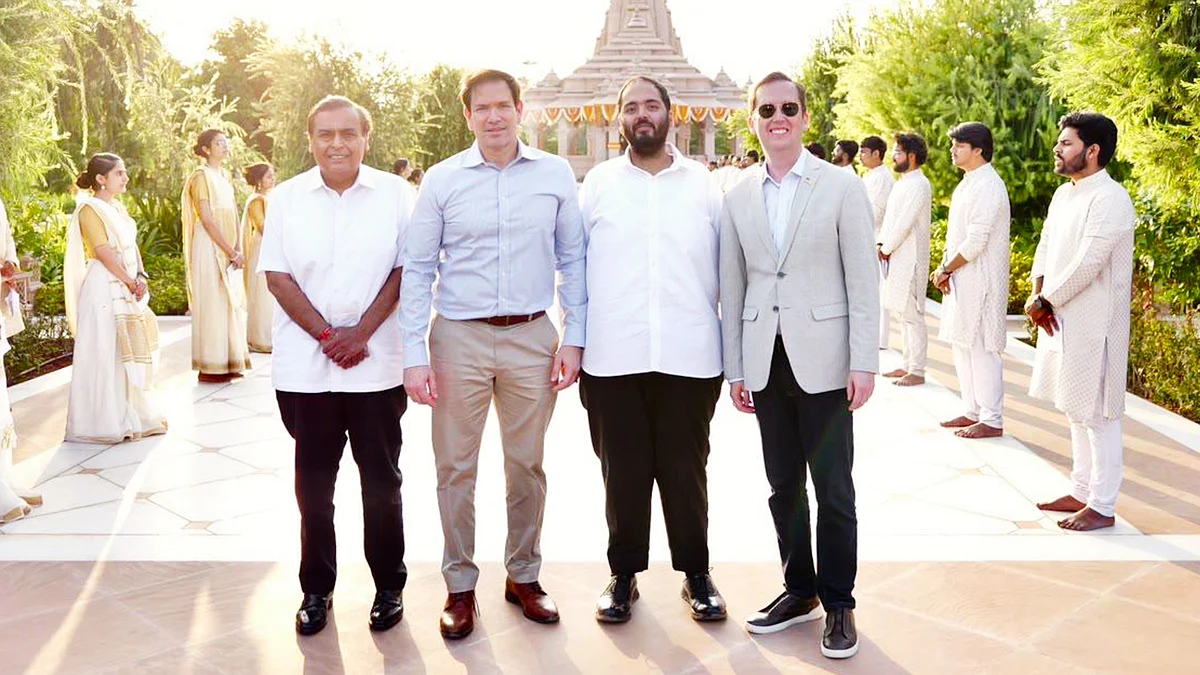
The remarks come amid a political controversy over Rubio’s decision to hold talks with external affairs minister S. Jaishankar in Mumbai rather than New Delhi, followed by a visit to Reliance Industries’ refinery complex in Jamnagar, Gujarat, where he met chairman Mukesh Ambani and executive director Anant Ambani.
Jaishankar’s Mumbai visit and a protocol row
The controversy began after Gor said at the Bloomberg New Economy Forum in New Delhi that Washington expected Jaishankar and other Indian officials to travel to Mumbai to meet Rubio.
The statement drew sharp criticism from Congress leaders, who questioned why the US ambassador had announced the Indian foreign minister’s travel plans before India’s ministry of external affairs (MEA) had formally confirmed the meeting.
Lok Sabha Leader of Opposition Rahul Gandhi accused the government of allowing the external affairs minister to be treated as a subordinate, saying Rubio had 'summoned his employee to Mumbai'.
Khera similarly argued that a foreign government summoning India’s external affairs minister on Indian soil would represent a new low under the Modi government.
The MEA subsequently defended the Mumbai venue. Its spokesperson, Randhir Jaiswal, said India had hosted foreign dignitaries outside New Delhi for more than a decade. He also pointed out that Jaishankar was scheduled to host UAE foreign minister Sheikh Abdullah bin Zayed Al Nahyan in Mumbai and attend an event marking the 250th anniversary of American independence.
Rubio met Jaishankar in Mumbai on 20 October for discussions covering bilateral ties, energy, trade, defence, technology and regional developments.
Ambani meeting sharpens questions over energy interests
The controversy took another turn when Rubio travelled to Jamnagar on 21 October and met Mukesh Ambani and his son Anant at Reliance Industries’ refinery complex. Reliance said the discussions covered the global energy landscape and the convergence of energy infrastructure and digital technologies, including data centres.
Rubio also met Adani Group chairman Gautam Adani and Tata Sons chairman N. Chandrasekaran during his visit.
The meetings have drawn attention because of the intersection of US energy priorities and the interests of India’s largest private-sector groups. Reliance operates the Jamnagar refining complex and has been a significant participant in global crude oil markets, including purchases of Russian oil.
The US administration has pressed India to expand energy trade with the United States. In its account of Rubio’s meeting with Jaishankar, the US state department said the secretary of state had advocated increased purchases of American technologies and systems and argued that greater energy trade could help diversify India’s supply chains.
The meetings with major industrialists have fuelled political debate over whose interests will shape future economic and energy arrangements between New Delhi and Washington. However, the publicly available accounts of the meetings do not establish that any specific concession was made to Reliance or other corporate groups.
Congress frames dispute as a question of sovereignty
India and the US have been attempting to advance a bilateral trade agreement amid tensions over American tariffs and India’s purchases of Russian oil. The negotiations have also raised questions about market access and the treatment of sensitive domestic sectors.
The Congress has used Rubio’s itinerary and his meetings with business leaders to question the government’s handling of the relationship.