


Rs 14.73 lakh cr wiped out in intraday estimate as Sensex sheds 548 pts
Rising crude prices, FII outflows and fears of further interest rate hikes drag markets lower despite rally by rupee
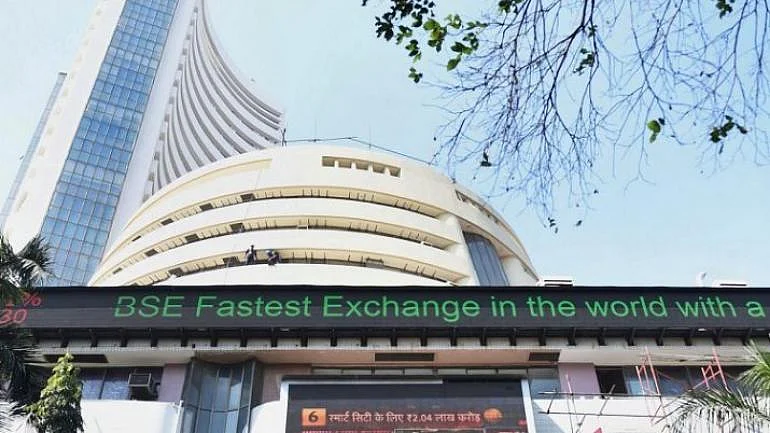


Around Rs 14.73 lakh crore in investor wealth wiped out intraday as the Sensex falls 548 points.
Crude oil above USD 105 a barrel, foreign fund outflows and rising bond yields weigh on sentiment.
Rupee gains nearly 1 per cent, but fail to prevent a market decline; small-cap and mid-cap stocks advance.
Indian stock markets reversed early gains on Monday, 12 October, with the Sensex falling nearly 548 points to close below 72,000 amid rising crude oil prices, persistent foreign fund outflows and concerns over further interest rate hikes. The sell-off wiped out around Rs 14.73 lakh crore in investor wealth during the session, according to some estimates, though closing figures were yet to come in.
The combined market capitalisation of BSE-listed companies fell from Rs 480.81 lakh crore to Rs 466.08 lakh crore by 2.47 pm, according to India Today. The figure is an intraday estimate.
The 30-share BSE Sensex fell 547.65 points, or 0.76 per cent, to settle at 71,924.68, after dropping nearly 796 points during the session. The NSE Nifty 50 declined 157.10 points, or 0.70 per cent, to close at 22,363.35.
The sell-off was led by banking, fast-moving consumer goods (FMCG) and information technology stocks. ITC was the biggest Sensex loser, falling 3.23 per cent, followed by Tech Mahindra, which dropped 3.1 per cent. Hindustan Unilever, Larsen & Toubro, State Bank of India and Tata Consultancy Services also ended lower. Bharat Electronics, Mahindra & Mahindra, Kotak Mahindra Bank and HCL Technologies were among the gainers.
Brent crude, the global oil benchmark, climbed 1.14 per cent to USD 105.80 a barrel, adding to concerns over inflation in an economy heavily dependent on imported oil. Foreign institutional investors sold shares worth Rs 3,568.90 crore on Friday, according to exchange data, extending the pressure on domestic equities.
The benchmark 10-year government bond yield also rose to a three-year high, fuelling concerns that borrowing costs could remain elevated. Banking stocks came under pressure after the Reserve Bank of India (RBI) tightened daily cash reserve ratio (CRR) maintenance requirements to absorb surplus liquidity.
Retail inflation rose to 5.54 per cent in September, the highest reading under the new consumer price index series, official data released after market hours showed. Higher food prices contributed to the increase.
Garima Kapoor, deputy head of research and economist at Elara Capital, said persistent commodity price pressures and rising global yields could prompt further rate hikes by the RBI. She expects two more hikes during the current financial year.
Vinod Nair, head of research at Geojit Investments, said rising bond yields and continued foreign investor outflows had undermined the market's early gains.
The rupee strengthened by nearly 1 per cent, or 93 paise, to close at a provisional 95.78 against the US dollar, following RBI measures aimed at supporting the currency.
On Saturday, the central bank tightened rules governing foreign exchange derivatives trading to curb speculative bets against the rupee. It also directed banks to set aside a 20 per cent reserve against dollar purchases exceeding USD 2 million.
However, the currency's recovery failed to sustain optimism in the stock market, as investors remained concerned about oil prices, global bond yields and geopolitical uncertainty.
Ponmudi R., chief executive officer of online trading and wealth technology firm Enrich Money, said equities surrendered their early gains as optimism over the rupee gave way to concerns about rising bond yields, persistent foreign investor outflows and elevated crude prices.
Hariselvan Radhakrishnan, founder and chief executive officer of research firm HST Wealth, said concerns that the RBI's measures to support the rupee could tighten banking system liquidity weighed on financial stocks. Weakness in heavyweight stocks, including Reliance Industries, ITC and technology companies, accelerated the market's reversal.
Ajit Mishra, senior vice-president of research at Religare Broking, said elevated global bond yields, escalating geopolitical tensions and persistent foreign fund outflows remained major headwinds.
The broader market proved more resilient, with the BSE SmallCap Select index gaining 1.65 per cent and the MidCap Select index rising 0.66 per cent.
Among sectoral indices, hospitals fell 2.04 per cent, FMCG declined 1.34 per cent, PSU banks lost 1.05 per cent, information technology dropped 0.68 per cent, telecommunications slipped 0.63 per cent and energy fell 0.53 per cent.
Housing finance rose 1.86 per cent, capital goods gained 1.31 per cent, realty advanced 0.80 per cent and auto stocks climbed 0.75 per cent. Consumer discretionary and the MidSmall Private Banks Quality Tilt index also ended higher.
Join our official telegram channel (@nationalherald) and stay updated with the latest headlines