


Union Budget 2026 Live: Rahul Gandhi slams Budget 2026 as “blind to India’s real crises”
Stock markets fall as Securities Transaction Tax on commodity futures doubled
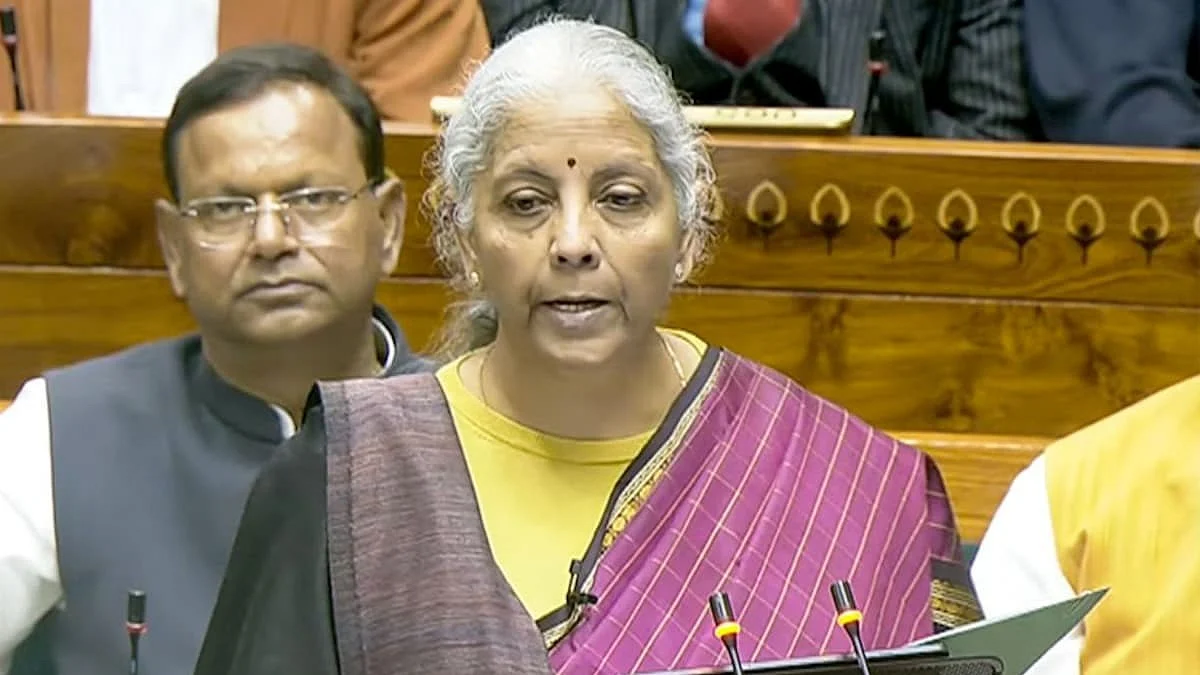


Finance Minister Nirmala Sitharaman’s Budget speech for 2026–27 was expansive in length and dense with sector-wise announcements, but it stopped short of articulating a coherent broader vision for the economy. Spread across dozens of schemes, initiatives and challenge-mode programmes, the speech reflected administrative hyperactivity rather than strategic clarity.
The Budget comes against a backdrop of heightened geopolitical uncertainty and a global economy unsettled by renewed protectionism, even as Asia’s third-largest economy presses ahead with its ambitious Viksit Bharat vision.
In this context, Budget 2026 assumes added significance, with a sharp focus on how the government plans, earns, and allocates every rupee. The decisions taken today will see how the government looks at steering India toward its goal of emerging as the world’s largest economy by 2030.
Join our official telegram channel (@nationalherald) and stay updated with the latest headlines
Rahul Gandhi slams Budget 2026 as “blind to India’s real crises”
Leader of Opposition Rahul Gandhi criticised the Union Budget 2026–27, calling it “blind to India’s real crises”. He said issues such as unemployment among youth, falling manufacturing, investor pullout, declining household savings and farmer distress had been ignored.
In a post on X, Gandhi said the Budget showed no course correction despite looming global shocks. The remarks come even as Finance Minister Nirmala Sitharaman raised the capital expenditure target to Rs 12.2 lakh crore for FY27 and announced multiple infrastructure measures amid global trade frictions and slowing exports.
Budget speech heavy on tinkering, light on vision
Finance Minister Nirmala Sitharaman’s Budget speech for 2026–27 was expansive in length and dense with sector-wise announcements, but it stopped short of articulating a coherent broader vision for the economy. Spread across dozens of schemes, initiatives and challenge-mode programmes, the speech reflected administrative hyperactivity rather than strategic clarity.
Click here to read a detailed article
Helios Capital’s Samir Arora warns of further market downside after STT hike
Helios Capital’s Samir Arora warned that markets could see further downside following the Finance Minister’s announcement to raise the Securities Transaction Tax (STT) on Futures and Options. He was quoted by business news channels as saying that the initial reaction suggests deeper weakness, noting that Indian markets have been underperforming globally and that foreign investors remain cautious and largely uninterested at present.
Defence budget pegged at Rs 7.84 lakh crore for 2026–27
The government has allocated Rs 7,84,678 crore for defence in 2026–27, up from Rs 6,81,210 crore in the previous financial year. Of the total outlay, capital expenditure has been pegged at Rs 2,19,306 crore, while revenue expenditure stands at Rs 5,53,668 crore, including Rs 1,71,338 crore for pensions, PTI reported.
Under capital spending, Rs 63,733 crore has been earmarked for aircraft and aero engines, and Rs 25,023 crore for the naval fleet. In 2025–26, the capital outlay was Rs 1,80,000 crore, later revised to Rs 1,86,454 crore.
Allocations announced for key government schemes
The Union Budget has announced funding allocations for several flagship schemes spanning skilling, agriculture, nutrition, infrastructure, startups and employment.
PM Skilling and Employability Transformation through Upgraded ITIs (PM SETU): Rs 6,141 crore
Saksham Anganwadi and POSHAN 2.0: Rs 23,100 crore
Pradhan Mantri Kisan Samman Nidhi (PM-KISAN): Rs 63,500 crore
Startup India Fund of Funds 2.0: Rs 900 crore
Grants-in-aid to National Co-operative Exports Limited (NCEL): Rs 450 crore
PM One Nation One Subscription (PMONOS): Rs 2,200 crore
Control of Pollution: Rs 1,091 crore
Vibrant Villages Programme Phase II: Rs 300 crore
Metro rail projects: Rs 28,740 crore
Pradhan Mantri Viksit Bharat Rozgar Yojana: Rs 20,083 crore
No big-ticket Budget push for Tamil Nadu unlike Bihar last year: Sumanth Raman
Political analyst Sumanth Raman said the Union Budget does not offer any major announcement for Tamil Nadu that could resonate with voters ahead of the Assembly elections due by April. Speaking to PTI, he noted that while Bihar received comparatively significant attention in last year’s Budget, no similar focus was visible for the poll-bound southern state. Raman added that announcements such as high-speed rail projects were not new and were unlikely to make a strong electoral impact.
New tax processes for small taxpayers and investors
The Union Budget has proposed a new, rule-based tax framework for small taxpayers and investors, including automated systems for TDS-related processes and changes to return filing timelines.
Key tax announcements:
New Income Tax Act to come into force from 1 April 2026
Rule-based automated system proposed for issuing low or zero TDS deduction certificates
Depositories to accept Form 15G/15H and forward them directly to companies
TCS on education and health payments cut to 2 per cent from 5 per cent
Time limit for filing revised returns extended on payment of a nominal fee
ITR-1 and ITR-2 filing deadline set at 31 July
Return filing deadline for non-audit business cases and trusts fixed at 31 August
Tax holiday till 2047 for foreign cloud service providers using Indian data centres
A tax holiday till 2047 has been proposed for foreign companies providing cloud services globally through data centres in India. The exemption will apply to eligible entities subject to certain conditions, aimed at boosting India’s cloud infrastructure and digital economy.
FM announces single-window clearance for cargo approvals by year-end
Finance Minister Nirmala Sitharaman said that approvals required for cargo clearances will be processed seamlessly through a single-window system by the end of this year, aimed at boosting trade efficiency and reducing procedural delays.
Biogas value to be excluded from excise duty on blended CNG
The Budget proposes that the entire value of biogas will be excluded while calculating excise duty on blended CNG, providing relief to clean fuel producers and encouraging adoption of greener energy sources.
Govt to develop five tourism destinations in Purvodaya states, plans 4,000 e-buses
The government announced plans to create five new tourism destinations across the five Purvodaya states. Additionally, provisions will be made for deploying 4,000 electric buses to improve sustainable connectivity and promote eco-friendly tourism.
FM extends exemption on capital goods for lithium-ion battery manufacturing
Finance Minister Nirmala Sitharaman announced the extension of tax exemptions on capital goods used in the manufacturing of lithium-ion cells, supporting India’s push for energy storage and clean technology initiatives.
Government to develop integrated East Coast Industrial Corridor with Durgapur node
The government plans to develop an integrated East Coast Industrial Corridor, featuring a well-connected industrial node at Durgapur, aimed at boosting regional manufacturing and logistics infrastructure.
Hike in Securities Transaction Tax on commodity futures
Increase in the Securities Transaction Tax (STT) on commodity futures to be revised to 0.05 per cent, up from the existing 0.02 per cent, as part of measures to rationalise market levies.
Definition of accountants to be rationalised under safe harbour rules
The Budget proposes rationalising the definition of accountants under safe harbour rules, aimed at promoting and supporting home-grown accounting firms and encouraging domestic expertise in tax compliance.
MAT exemption for non-residents paying tax on presumptive basis proposed
Non-resident taxpayers who opt for the presumptive taxation scheme will be exempt from paying Minimum Alternate Tax (MAT), easing compliance and reducing tax burden for foreign investors.
Three-year dividend income exemption for notified cooperatives
Notified cooperatives to get a three-year exemption on dividend income from investments made up to 31 January 2026, aiming to support cooperative growth and reinvestment.
TCS cut on overseas tour packages to 2 per cent
Finance Minister Nirmala Sitharaman announced that the Tax Collected at Source (TCS) rate on the sale of overseas tour packages will be reduced to 2 per cent, down from the earlier rates of 5 per cent and 20 per cent, easing the tax burden on travellers.
Tax exemption for awards by Motor Accident Claims Tribunal
Finance Minister Nirmala Sitharaman proposed that compensation awarded by the Motor Accident Claims Tribunal will be exempt from income tax, providing relief to accident victims and their families.
FM proposes rule-based automated process for small taxpayers in FY27
Finance Minister Nirmala Sitharaman proposed a rule-based automated system for small taxpayers in the FY27 Budget, aimed at simplifying compliance and reducing procedural hassles.
FM proposes extended deadline for filing revised I-T returns
Finance Minister Nirmala Sitharaman proposed extending the time limit for filing revised income-tax returns from 31 December to 31 March, subject to payment of a nominal fee.
One girls’ hostel per district, support for veterinary and Ayush infrastructure
Finance Minister Nirmala Sitharaman announced the setting up of a girls’ hostel in every district of India, covering over 700 districts. She also proposed a loan-linked capital subsidy scheme for veterinary colleges, hospitals, and diagnostics laboratories.
The Budget includes plans to upgrade Ayush pharmacies, drug testing labs, and the WHO Traditional Medicine Centre in Jamnagar, Gujarat. Additionally, the Centre will support five university townships near major industrial logistics hubs.
Government to support high-value crops, including coconut, sandalwood, walnuts
The government plans targeted support for high-value crops such as coconut, sandalwood, and walnuts. A coconut promotion scheme aims to boost production and productivity, while the Centre will collaborate with states to revive and restore the sandalwood ecosystem.
Government to set up National Institute of Hospitality, boost tourism infrastructure
The government plans to establish a National Institute of Hospitality and launch a scheme to train guides at India’s tourism hubs. Finance Minister Nirmala Sitharaman highlighted opportunities for world-class trekking and hiking experiences, along with development of turtle trails in Odisha, Karnataka, and Kerala. Additionally, 15 archaeological sites across the country are slated for development to enhance tourism infrastructure.
Government to set up Education-to-Employment Standing Committee
The government plans to establish a high-powered Education-to-Employment Standing Committee. The panel will focus on optimising growth potential in the services sector and review the impact of emerging technologies, including AI, on employment and skill development.
Biopharma sector gets Rs 10,000 crore lift in Budget 2026
On Sunday, Finance Minister Nirmala Sitharaman announced a Rs 10,000 crore investment in the biopharma sector over the next five years, aimed at strengthening India’s pharmaceutical industry. Biopharmaceuticals, or biologics, are advanced medicines developed from living organisms, cells, or tissues, rather than chemical synthesis.
The minister also outlined initiatives across six key areas, including manufacturing, strategic and frontier sectors, healthcare, and advanced technology.
Highlighting the technology push, Sitharaman said the Semiconductor Mission 2.0 will prioritize the production of equipment and materials designed for fully Indian intellectual property (IP). The India Semiconductor Mission (ISM), operating under the Ministry of Electronics and Information Technology’s Digital India Corporation, is tasked with building a sustainable semiconductor and display ecosystem.
Sitharaman further announced plans to support mineral-rich states—Odisha, Kerala, Andhra Pradesh, and Tamil Nadu—in establishing critical mineral facilities.
With PTI inputs
Poll-bound TN, Kerala to get rare earth corridors
Poll-bound Tamil Nadu and Kerala are set to get rare earth corridors, a move aimed at strengthening India’s critical minerals ecosystem and boosting domestic supply chains.
Seven high-speed rail corridors proposed under Budget
The government has proposed seven high-speed rail corridors to boost inter-city connectivity. Key routes include Mumbai–Pune, Pune–Hyderabad, Hyderabad–Chennai, Delhi–Varanasi and Varanasi–Siliguri, among others.
FM proposes restructuring of PFC, REC; panel on banking reform
Finance Minister Nirmala Sitharaman proposed restructuring Power Finance Corporation (PFC) and Rural Electrification Corporation (REC) as part of reforms in the power financing space. She also announced plans to set up a high-level committee on banking to review the sector and align it with India’s next phase of growth.
India’s disease burden shifts towards non-communicable diseases
India is witnessing a shift in its disease burden, with non-communicable diseases accounting for a growing share of health challenges, highlighting the need for stronger prevention and long-term care strategies, the Finance Minister said in her Budget 2026-27 speech.
Six key intervention areas outlined
Finance Minister Nirmala Sitharaman on Saturday proposed targeted interventions across six priority areas. These include scaling up manufacturing in seven strategic and frontier sectors, rejuvenating legacy industrial sectors, creating champion MSMEs, delivering a strong push to infrastructure, ensuring long-term security and stability, and developing city economic regions.
Budget 2026 guided by three ‘Kartavya’: Sitharaman
Budget 2026 is anchored around three key kartavya, Finance Minister Nirmala Sitharaman said.
The first focuses on accelerating and sustaining economic growth by boosting competitiveness and building resilience against volatile global conditions.
The second aims to fulfil people’s aspirations by strengthening their capabilities and making them active partners in India’s journey to prosperity.
The third kartavya underscores sab ka saath, sab ka vikas, ensuring every family, community and region has access to resources, amenities and opportunities for meaningful participation.
Finance Minister begins her Budget speech
Finance Minister Nirmala Sitharaman has risen to present the Budget on the back of fragile trade conditions and heightened global uncertainty.
Opposition MPs protest ahead of Budget presentation
Opposition leaders, including Samajwadi Party chief Akhilesh Yadav and TMC MP Kalyan Banerjee, staged a protest inside the Parliament premises ahead of the Union Budget presentation, demanding a “Budget for the people, not corporates.”
Priyanka Gandhi Vadra says expectations low from Budget
Congress MP Priyanka Gandhi Vadra said she does not have high expectations from the Union Budget and will wait to see what the Finance Minister announces.
Union Cabinet clears Budget ahead of presentation
The Union Cabinet has approved the Budget at its meeting held ahead of the Union Budget presentation. Finance Minister Nirmala Sitharaman is now set to present the Budget in the Lok Sabha, after which it will be tabled in the Rajya Sabha.
Gold, silver futures plunge 9 per cent, hit lower circuit
Gold and silver prices slumped by up to 9 per cent in futures trade, hitting their lower circuit levels ahead of the Union Budget 2026–27, as investors continued profit booking after the recent record rally.
PTI reported that the sell-off extended for a second straight session. The April gold futures contract on the MCX fell by Rs 13,711 to Rs 1,38,634 per 10 grams, touching its lower circuit during trade.
‘Sin goods’ get pricier under new tax regime
Cigarettes, pan masala and other tobacco products have become more expensive from today as the government’s revised tax structure comes into force. The new framework introduces an additional excise duty on cigarettes and a fresh health and national security cess on pan masala, replacing the earlier GST-plus-compensation cess regime.
Under the new rules, excise duty on cigarettes varies by length and type, ranging from about Rs 2 per stick for short cigarettes to over Rs 5 for longer variants. The overall tax incidence on cigarettes is now estimated to rise to nearly 60–70 pc , up from around 50–55 pc earlier.