


Exclusive/ICC traded independence for money, former CEO Haroon Lorgat says
Veteran South African administrator holds forth on the crisis overshadowing the build-up to the ICC T20 World Cup
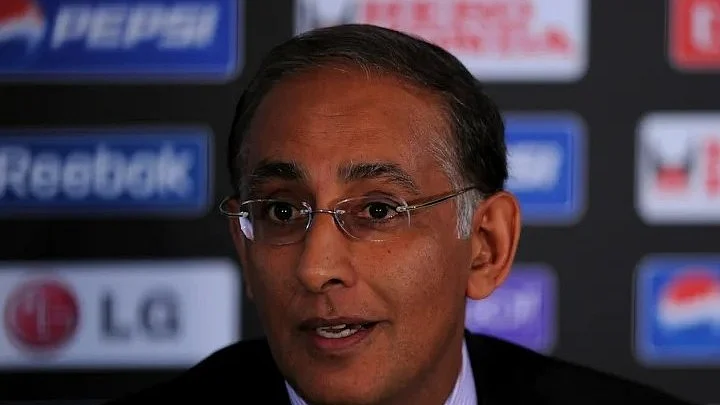


There are few administrative roles in cricket that Haroon Lorgat, the former CEO of International Cricket Council (ICC), hasn’t discharged in his distinguished career. The South African with Indian roots had occupied the hot seat between 2008 and 2012, before moving on to be a special advisor of Sri Lanka Cricket and then take over as the CEO of Cricket South Africa replacing Gerald Majola the very next year.
Now 65, Lorgat – a chartered accountant by profession who had been an accomplished allrounder for Eastern Province and Transvaal in South Africa’s competitive domestic scene – had been in the thick of many a challenges during his ICC role like introduction of the Decision Review System (DRS) and expansion of anti-corruption measures. Later in his administrative career, Lorgat had lent his experience and vision in conceptualising the T20 franchise league in his own country as well as laying the foundation for the Pakistan Super League (PSL) as an advisor.
The ongoing crisis in the run-up to the T20 World Cup, which had seen two major hiccups in first Bangladesh being expelled and now Pakistan announcing a selective boycott of the marquee India game on 15 February, has Lorgat worried as well. ‘’A warning sign of a failing global governing board,’’ is how the astute administrator, who had also been a chairman of selection committee in South Africa, looks at the crisis in an email interview with National Herald after much persuation.
Following are the excepts:
National Herald: What do you think about the threat of selective boycott of Pakistan of the India game?
Haroon Lorgat: It will be most unfortunate if it actually happens. The mere suggestion is a warning sign of a failing global governing board that’s been structurally captured by a dominant member and left smaller boards with almost no legitimate avenues to contest coercive power.
The ICC has created an environment where the dominant member(s) political comfort effectively determines participation norms. When one board can disengage selectively without sanction, it confirms that obligations in international cricket are enforced unevenly and shaped by power rather than principle. In that sense, Pakistan’s threat or decision lays bare a deeper crisis of governance, revealing the threatened boycott as a symptom of a captured and unfair system rather than a standalone political gesture.
Sadly, this is reflective of a much wider global issue, where might is right. Fairness, equity and justice have in present times escaped leaders around the world.
Q: It’s a case of geopolitics getting precedence over everything else. Could ICC have avoided this?
A: Geopolitics has been allowed to trump cricket because the ICC had long ago traded independence for dependence on money, permitting the market power of one member to harden into political control over scheduling, hosting and policy. ICC could have mitigated this crisis had it implemented reforms recommended in the Woolf Report, for example, board and voting structures, needs-based funding and ethical safeguards, instead of endorsing a revenue and governance model that entrenched leverage and dominance. By refusing governance reform and allowing political and executive authority (Chairman and CEO) to be concentrated in one shop, the ICC virtually ensured that any dispute involving dominant member(s) would escalate into a geopolitical showdown.
This favouritism towards one or just a few allows geopolitical hypocrisy to fester, forcing the likes of Pakistan into a stand that highlights cricket's politicization under ICC's weak leadership. True fairness demands equal accountability, not selective enforcement that favour some above others.
Q: Do you think the over-leveraging on one game (Ind-Pak) has also played its part in this crisis?
I do believe so and the ICC bears responsibility for engineering that dependency. The India–Pakistan fixture has been monetised as the crown jewel of all ICC events precisely because the commercial ecosystem and television audience in the Indian sub-continent underpins global broadcast revenues.
Once the ICC accepted a model where flagship events, hosting patterns and even the global calendar were reshaped around such broadcasters and advertisers, it effectively weaponised a single game as the financial fulcrum of world cricket, making any disruption - like Pakistan’s threatened boycott - both inevitable and explosively consequential. Over-leveraging this one match is a direct result of a system that rewards power over sporting equity. When that single game is withdrawn, the entire tournament architecture is destabilised .
Q: How will it affect the saleability of international cricket in general?
Commercial partners have already signalled reduced valuations for international cricket. It is also a fact that international cricket is under threat from franchise leagues. Furthermore, ICC tournaments design, venues and economics are built around a few dominant members and, only secondly, around competitive balance.
The boycott will serve to erode confidence in ICC events as genuine global competitions and hence accelerate the decline in the value of international cricket. Most members already struggle with “precarious finances” and shrinking opportunities. It cannot be right for the global game that one member gets 38.5% share while the rest get a fraction of that amount to survive, let alone grow the game.
Q: Do you think it will also hit the very foundation of ACC?
It seems obvious that the ACC will also be impacted by the same issues as it operates in an ecosystem where the same imbalances exist. India has an indispensable market on which the other Asian boards are heavily dependent. The recent expulsion of Bangladesh from the T20 World Cup and the threatened boycott by Pakistan will shake the foundation of the ACC.
Bangladesh’s attempt to relocate their fixtures signalled that even within Asia, security, sovereignty and equity are negotiable if they clash with commercial priorities, placing strain on any notion of a balanced and happy Asian bloc.
Join our official telegram channel (@nationalherald) and stay updated with the latest headlines