


Bhupen Hazarika: A voice born of Assam's soil
On his birth centenary, time to remember that the Bharat Ratna’s songs were not just about melody and music, they embodied the voice of society
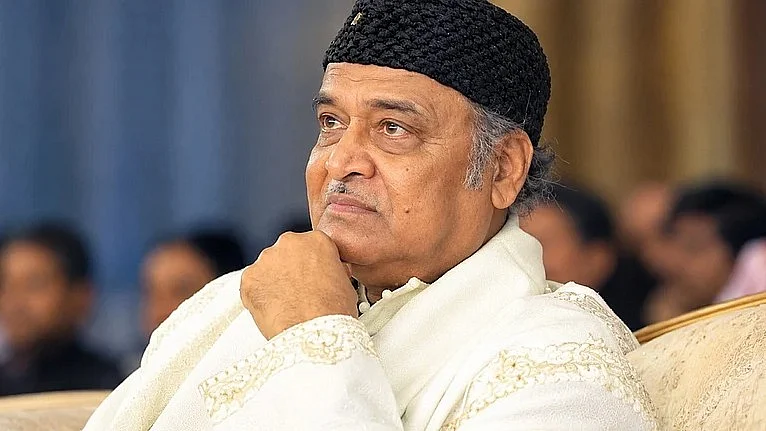


He was a voice that emerged from the soil of Assam and carved a niche for itself in the hearts of music lovers not only across the country but around the world. On his birth centenary today, 8 September, one thinks about his voice which held a unique sweetness. His songs reflected a concern for society and his style revealed a deep bond with his homeland. This was the voice of the legendary singer, composer and filmmaker Bhupen Hazarika. He was affectionately known as 'Sudhakantha'—an artist with a voice as sweet as nectar.
Born on 8 September 1926, in Tinsukia, Assam, Bhupen's love for music began at childhood when his mother Shantipriya introduced him to traditional Assamese music. This music eventually became his identity, and his voice began to reflect the culture, the soil and the lives of the common people of Assam.
He completed his early education in Guwahati and later studied Political Science at Banaras Hindu University. Subsequently, he had the opportunity to study at Columbia University in the United States. Despite living abroad, his roots remained firmly anchored to his homeland. Themes such as the common man, social equality and humanity frequently featured in his compositions.
The depth and impact of Bhupen's voice earned him a distinct identity. He received the title 'Sudhakantha' from the famous Assamese poet Ananda Chandra Barua—a name that perfectly suited his voice. His songs were not merely about melody and music; they embodied the voice of society. His music was deeply connected to the lives of the poor, the working class, the marginalsed, and the common man. This is why his popularity was not limited to mere entertainment. He viewed art as a responsibility towards society.
Through his songs, he inspired people to think and question. For him, music was not merely a means of earning a living; he regarded his art as a responsibility towards society. Understandably, he would get upset if his songs were remixed without permission as no one had the right to alter or dilute the social message embedded in them.
Yet, he was a person with a very tender heart. Once, after a performance during the Bihu festival, he spotted a local dhol player, exhausted after a long performance, sleeping beneath the stage. Bhupen-da stopped his car and personally drove the artist home. He believed that no artist is 'small' or 'big'; anyone who works hard for their art deserves respect.
Awarded Bharat Ratna posthumously
Bhupen shared a bond of deep mutual respect with Lata Mangeshkar. Once, on a visit to her house in Mumbai, he had to wait outside due to security protocols. When Lata learned of this she rushed out to welcome him personally.
He sang around a thousand songs in his lifetime and cast the magic of his voice across multiple languages. Music for films like Rudaali earned him a distinct identity in Hindi cinema as well. He was awarded the Padma Bhushan, the Dadasaheb Phalke Award and, posthumously, the Bharat Ratna.
Despite achieving such immense fame, Bhupen preferred simplicity over ostentation. He enjoyed humble Assamese delicacies like roasted corn and red gourd, simple things that kept him connected to his roots and his people.
However, the final phase of his life was not easy. He even faced financial difficulties while seeking treatment for a serious illness. At one point, he had trouble raising money for medical expenses and eventually had to borrow it. His death in 2011 left a void in music but his voice
Join our official telegram channel (@nationalherald) and stay updated with the latest headlines