


Delhi’s ‘green’ waste solution scores 100 on pollution
Four waste-to-energy plants score maximum on pollution index even as they're given easier regulatory treatment
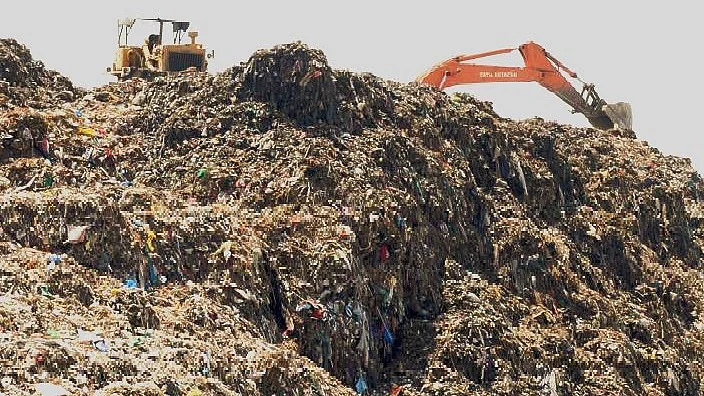


Four waste-to-energy plants meant to help Delhi deal with its mountains of garbage have themselves been found to have the maximum possible pollution score — an irony that has raised fresh questions over the decision to give such facilities lighter regulatory treatment.
A new analysis by the Centre for Financial Accountability (CFA) found that the waste-to-energy (WTE) plants at Okhla, Ghazipur, Narela-Bawana and Tehkhand have a cumulative Pollution Index (PI) score of 100 out of 100.
In simple terms, the plants promoted as a way of dealing with Delhi’s waste are themselves classified as generating pollution at the highest possible level.
The findings also challenge the Central Pollution Control Board’s (CPCB) decision in January 2025 to move WTE plants from the ‘red’ category of highly polluting industries to a new ‘blue’ category meant for facilities providing ‘essential environmental services’.
The pollution index runs from 0 to 100, with a higher score indicating a greater pollution load. Industries scoring 80 or above are classified as ‘red’ and face stricter monitoring, more frequent inspections and continuous emissions monitoring.
WTE plants had earlier fallen in this category. The new ‘blue’ category, however, was not based on a pollution-score range. It was created specifically for facilities designated as providing ‘essential environmental services’ in managing domestic and household waste. WTE plants were subsequently moved into it.
The irony goes beyond the classification itself. Burning municipal waste does not simply make the waste disappear. According to the CFA analysis, the process generates toxic air pollutants such as dioxins and heavy metals, polluted wastewater and large quantities of hazardous ash that require secure disposal.
The analysis also said CPCB's own reports show that WTE facilities across India generate thousands of tonnes of hazardous waste every year.
The CFA arrived at a cumulative PI score of 100 for the four Delhi plants, compared with the CPCB's figure of 97.6.
The study argued that the difference is significant because 100 represents the absolute ceiling of the Pollution Index. 'By documenting the score as 97.6 instead of 100, the CPCB avoids admitting that WTE plants have reached the absolute maximum "ceiling" of pollution potential,' it said.
The analysis further found that WTE facilities generate 68 per cent more greenhouse gas emissions per unit of energy than coal-fired power plants.
There is another regulatory irony. While red- and orange-category industries are subject to closer scrutiny, blue-category plants are required to self-assess their pollution index scores, according to the analysis.
'Blue category plants, in contrast to those put in red and orange categories, are required to "self-assess" their PI scores, introducing a structural conflict of interest into the very mechanism designed to protect the public from pollution,' the study said.
The CFA described the reclassification as 'bluewashing', arguing that it allows highly polluting facilities to operate with fewer environmental and health safeguards. 'By "bluewashing" these facilities, the state effectively sanctions the most "toxic industry" to continue its operation by dismantling existing environmental and health safeguards,' the study said.
With PTI inputs
Join our official telegram channel (@nationalherald) and stay updated with the latest headlines