


Academicians say conducting common entrance exam for college admissions will disempower rural, poor students
UGC Chairman M Jagadesh Kumar announced mandatory common university entrance test (CUET) for admission to undergraduate programmes in all 45 central universities, with no weightage to Class 12 marks
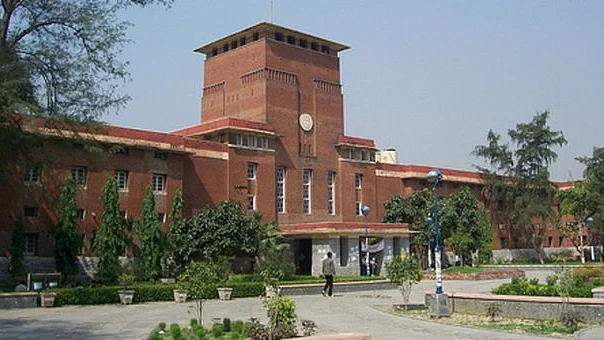


Following the announcement made by UGC Chairman M Jagadesh Kumar of the first ever mandatory common university entrance test (CUET) for admission to undergraduate programmes in all the 45 central universities, academicians around the country condemned the move and lambasted the UGC’s unwillingness to improve access to higher education instead.
Admission to undergraduate courses in universities will be solely based on the CUET score, and Class 12 Board marks will not carry any weightage. The government said it did not want to consider Board marks for admission because of the difference in evaluation methods.
Delhi University, Indira Gandhi National Open University, Jawaharlal Nehru University, South Asian University, Jamia Millia Islamia University, Aligarh Muslim University, Allahabad University, Banaras Hindu University, Babasaheb Bhimrao Ambedkar University, Central University of Kerala, Central University of Orissa and Central University of Tamil Nadu are some of the better-known central universities in the country.
Professors across the country said that while the close to 100% cut-offs in several colleges was an issue, CUET was not the solution. “There was an issue with the kind of marks which were being assigned to students. If you have close to 100% cut-offs, it was problematic. This had to be rectified. There is no doubt about it. But whatever the new UGC chairman Jagadish Kumar has proposed is not the solution,” said Professor Nadeem Rezavi, who teaches history at Aligarh Muslim University.
Professor Abha Dev Habib of Miranda House College in New Delhi said that there were many more people aspiring to become a graduate these days, so this new exam will not help them. The government needs to increase the number of seats in the 45 central universities, she added.
“More and equal opportunities will open up only if the government will put in money in the higher education sector. 100% cut-off is because CBSE gives high marks. So, instead of mending one mistake, they are committing another mistake. The government has to see which filter actually works as all barriers keep away a larger section of students as seats are limited,” added Habib, who is a former Delhi University Teachers' Association (DUTA) office-bearer.
The Centre has allocated Rs 40,828 crore to the Education Ministry’s Higher Education Department for the next financial year. This is an increase of 6.6% over the current financial year. In FY 2021-22, the budget for the Higher education department was Rs 38,350.65 crore and it further dropped to Rs 36,031.57 in the revised estimates.
Overall, the Education department was allocated Rs 1.04 lakh crore, which forms only 3.1% of the GDP as against the 6% suggested by the National Education Policy.
More than 14 lakh students appeared for the preliminary entrance exams for the IITs for just about 17,000 seats. Coaching centers prey on the insecurity of students. “Now, there will be coaching centers for these entrance exams too. So, it begs the question: who will really benefit? It will only be urban students and coaching centers. It is well known that parents spend less money on schooling and much more money on coaching,” underscored Habib.
According to higher education data, almost 4 crore students are enrolled for higher education, out of which 3 crore are in undergraduate courses. A higher number of students are in social sciences and humanities and all of these students study on their own and score. On the basis of this, they get ahead.
This new exam will create more insecurity as Class 11 and 12 exam marks will not be considered. Now parents will be forced to spend money on coaching. “If you look at schools, only one-third of the students are science students and these are the people who are stuck at coaching centers. This is followed by commerce students due to maths. Humanities and social sciences students have had relative peace,” added Habib.
Rezavi pointed out that everything needed to be looked through the lens of the National Education Policy. The policy suggests that all schools should have uniform syllabus and the same thing to be taught everywhere. The UGC Chairman has already stated that the questions in the examination will come from the NCERT syllabus.
“As a history professor, I’ll highlight the issues in the history segment. In the NCERT textbooks, history has already been distorted and diluted. More weightage is being given to Shivaji and Aurangazeb and not Akbar or Shahjahan or the colonial rule. The textbooks show the British rule as a benevolent period. It shows Modern period as a period of enlightenment. There is no focus on the caste system or the problems faced by the Dalits. No problems of the society are mentioned. They are all ironed over,” said Rezavi.
There were schools which did not adopt these textbooks. “But now there will be a demand to ensure this version of history is taught because questions will come from this version. Answers will depend on the version in these NCERT textbook. All diversity is being overruled. Textbooks in different states will contain matter that is more relevant to the students in that particular state. History of Bihar or Kerala or Maharashtra is different. But all of that will be secondary,” added Rezavi.
This is part of the government’s ‘one size, fits all’ approach, said Professor Apoorvanand, who teaches at Delhi University. “This is problematic for a country like India. In fact, it is undermining the federal nature of the nation. This is an indirect way to do something that they cannot do directly as education is on the concurrent list. Without tampering with the structure formally, this move will undermine state boards,” underscored Apoorvanand.
Everything will be driven from the point of the test. Everyone will be forced to adopt the NCERT text. “It will no longer be studies leading to tests, but tests leading to studies,” added Apoorvanand.
The UGC has already stated it would like private institutions also to use this examination for their students. In a country like ours with many smaller educational institutions and varied backgrounds, having uniformity overlooks these structural problems and is never good, though on the face of it, the exam may seem good, explained Rezavi.
Academicians at the Central University of Kerala (CUK) said the move was reminiscent of talk about ‘one nation, one identity card’ and ‘one nation, one election’. Different universities have developed differently, and have different regional requirements. This test overlooks all of that. “This is an attempt to bring in an ideological uniformity in central universities. Standardization is never desirable. This test will bring generalised mediocrity in top universities in the country,” said a professor, who did not want to be named.
Universities abroad also have a gradation with Ivy League Colleges at the top.
Head of the English department at CUK, Dr Joseph Koyipally said the only advantage of this test is that a student sitting anywhere can apply for colleges across the country by writing just one examination. It allows for mixing of students across the country. “For science exams, such MCQs may not be a problem, but for humanities and language subjects, MCQs will be a disadvantage. Also, the medium of instruction will be different in different states,” said Koyipally.
He added that the biggest disadvantage of this test is the loss of autonomy of universities.
Assistant professor Mritunjay Kumar Yadavendu at Mahatma Gandhi Central University in Bihar said his university has been in the dock for several malpractices in admission. “Children and relatives of those who are politically well-connected and influential citizens get seats more often than not. This entrance may end that, but it is too early to see how they will work around this. Will it lead to more leaks of question papers? We do not know,” said Yadavendu.
However, he too warned that removing the weightage of Class 12 marks will prove to be detrimental. “We all come from different backgrounds and we cannot give admission based on Multiple Choice Questions. They should give at least 50% weightage to Class 12 marks, if not more. Several colleges, including St Stephens College in Delhi, follow such a pattern,” said Yadavendu.
Many students in Bihar do not have basic facilities to study or even access computers or laptops. Exam setters should be aware of such disparities in the country. If the UGC organises an online exam for CUET, Yadavendu pointed out, it would be disastrous to those from socially backward groups and marginalised communities. “Such exams will also force students to move to other parts of the country which they may not be able to afford and they may not want to move either,” added Yadavendu.
All academicians questioned if the National Testing Agency (NTA), which is supposed to conduct the CUET, can handle these exams. Even though CUET has been announced for July, the website has no information on this exam.
“The current Class XII will get over in a couple of months. Is the NTA equipped to handle these exams this year? Will this put the future of students at disarray? No question papers or format of the exams have been uploaded on the website. Shouldn’t it have been completed after two years with a plan in place? So, will NTA outsource this task?” asked Habib.
School teachers and professors remarked that earlier there was some pressure to improve school education so that students can successfully go to the next level. But schools will start cutting corners as Class XII results would not have much significance now.
“What will happen to students studying in small towns? Their future will be dependent on MCQs. Continuous evaluation in schools and performance in subjective manner should not be overlooked,” underlined Habib.
Join our official telegram channel (@nationalherald) and stay updated with the latest headlines