


54 injured, 18 missing after explosion at Qatar’s Ras Laffan gas facility
Industrial complex serves as backbone of Qatar's LNG industry, which supplies key markets across Asia and Europe
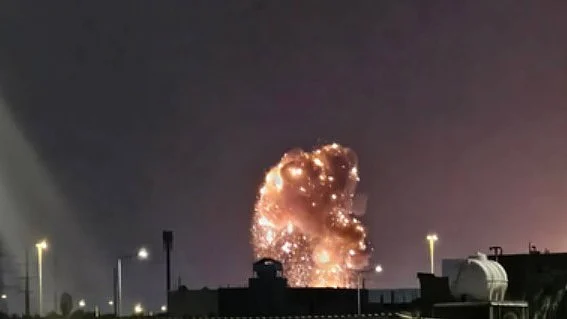


A powerful explosion tore through Qatar's vital Ras Laffan industrial complex on Sunday night, injuring at least 54 people and leaving 18 others missing, according to official figures, in an incident that has renewed concerns over the security of critical energy infrastructure in the Gulf.
The blast struck the Barzan gas supply facility, a key component of Qatar's natural gas network, triggering a major fire that sent emergency crews scrambling to contain the flames and search for workers feared trapped in the wreckage.
State-owned energy giant QatarEnergy confirmed that the explosion occurred while technical teams were working to restore operations at parts of the facility following earlier disruptions linked to regional tensions and conflict.
"Operations to restart sections of the export infrastructure were underway when the explosion and subsequent fire occurred at the Barzan gas supply facility," the company said in a statement.
Authorities initially reported limited casualties, but the toll rose sharply as rescue teams gained access to affected areas. Qatar's interior ministry later confirmed that at least 54 people had been injured, while search-and-rescue operations continued through the night for 18 workers who remained unaccounted for.
The full extent of the damage has yet to be determined.
Located within the sprawling Ras Laffan Industrial City on Qatar's northeastern coast, the Barzan facility plays a crucial role in the country's energy system. With a production capacity of nearly 1.4 billion standard cubic feet of sales gas per day, the plant supplies fuel for electricity generation and desalination facilities that provide water to much of the desert nation.
The explosion comes at a particularly sensitive moment for Qatar's energy sector. Engineers had been attempting to restore normal operations after previous disruptions caused by regional instability. Ras Laffan, one of the world's largest energy and liquefied natural gas hubs, had reportedly sustained damage during recent hostilities, including missile strikes that forced partial shutdowns of some operations.
The industrial complex serves as the backbone of Qatar's LNG industry, which supplies key markets across Asia and Europe. Any prolonged disruption at Ras Laffan could therefore reverberate far beyond the Gulf, potentially affecting global energy flows and market sentiment.
The Barzan project is jointly operated by QatarEnergy and international partners, including US energy major ExxonMobil, which holds a minority stake. ExxonMobil has not yet issued a detailed public statement regarding the incident.
Investigators are now working to determine the cause of the explosion. Officials have not indicated whether the blast resulted from a technical failure, operational accident or external factors.
Meanwhile, emergency services continue to comb the site for survivors as security teams secure the affected area.
The incident is the latest reminder of the vulnerability of Gulf energy infrastructure at a time of heightened geopolitical tensions. Following months of regional conflict and attacks on strategic facilities, governments and energy markets alike are closely monitoring developments at Ras Laffan, whose importance to global gas supplies makes it one of the world's most consequential industrial sites.
With IANS inputs
Join our official telegram channel (@nationalherald) and stay updated with the latest headlines