


About 300 Afghan Taliban personnel, its allied terrorist groups killed: Pak
Operation Ghazab lil-Haq escalates tensions as calls grow for dialogue and regional mediation
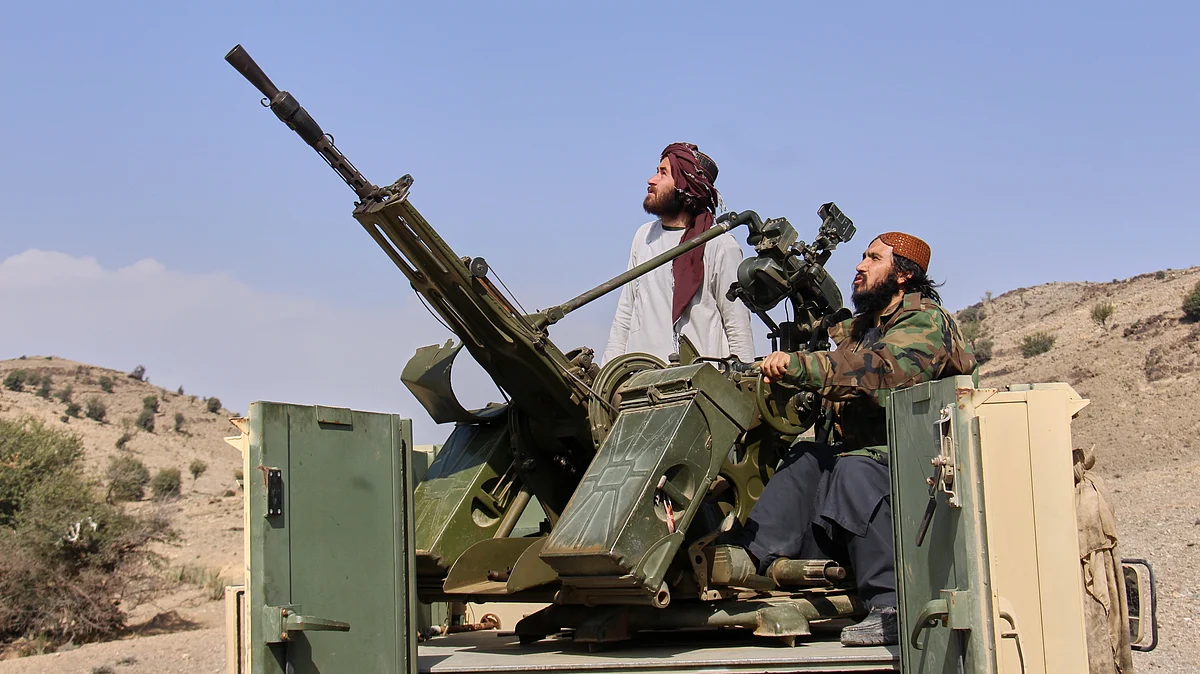


Pakistan has said that nearly 300 Afghan Taliban personnel and allied militants have been killed as its military operation against them continues, marking a sharp escalation in hostilities along the border.
In a late-night update, information minister Attaullah Tarar said security forces had killed 297 fighters linked to the Afghan Taliban regime, while more than 450 Afghan operatives were injured.
Summarising the impact of the ongoing campaign, Tarar said Pakistan destroyed 89 Taliban posts and captured 18 others during Operation Ghazab lil-Haq. He added that approximately 135 tanks and armoured vehicles were also destroyed. According to the minister, the Pakistan Air Force targeted around 29 locations across Afghanistan as part of the operation.
Islamabad launched the retaliatory offensive after alleging that Afghan forces had carried out coordinated attacks on 53 locations along the more than 2,600-km border.
Addressing a press conference on Friday, army spokesperson Lt Gen. Ahmad Sharif Chaudhry issued a blunt message to the Afghan Taliban leadership.
"I want to make one thing clear: the oppressive Afghan Taliban regime has to make a clear choice. The choice is to choose between Tehreek-i-Taliban Pakistan, Baloch Liberation Army, Daesh, Al Qaeda, the terrorists and terrorist organisations and Pakistan,” he said.
“They have to make this choice. It has been made clear by the government of Pakistan. It is not something new I am saying...They have to make this choice. Whether they choose terrorists and terrorism or Pakistan. We are clear...Let it be known that our choice is absolutely clear. It will always be Pakistan over everything.”
Pakistan has long accused the Afghan Taliban of allowing the Tehreek-i-Taliban Pakistan (TTP) and other militant groups to use Afghan territory for shelter, training and logistical support to carry out attacks inside Pakistan.
Kabul has repeatedly rejected these allegations, urging Islamabad instead to address its internal security challenges through dialogue with militant groups.
Amid rising tensions, a senior US official voiced support for Pakistan’s position. Under Secretary of State for Political Affairs Allison Hooker said she had spoken with Pakistan’s foreign secretary to “express condolences for lives lost in the recent conflict between Pakistan and the Taliban”.
“We continue to monitor the situation closely and express support for Pakistan’s right to defend itself against Taliban attacks,” she said on X.
At the same time, signals of de-escalation began to emerge. The Afghan Taliban indicated willingness to pursue negotiations.
“Afghanistan...has always preferred to resolve issues based on mutual understanding and respect,” the Afghan foreign ministry quoted Foreign Minister Amir Khan Muttaqi as telling Qatar’s junior Foreign Minister Mohammed bin Abdulaziz Al-Khalifi during a phone call.
Taliban spokesperson Zabihullah Mujahid echoed the sentiment, saying, “now also we want to resolve this matter through dialogue”.
Regional actors have also stepped in diplomatically to ease tensions. Iran’s Foreign Minister Abbas Araghchi offered to mediate between the two sides.
“The Islamic Republic of Iran stands ready to provide any assistance necessary to facilitate dialogue and to enhance understanding and cooperation between the two countries,” Araghchi said on X.
Officials indicated that Saudi Arabia and Qatar were also working behind the scenes to encourage de-escalation. Saudi Foreign Minister Faisal bin Farhan spoke separately with Pakistan’s Deputy Prime Minister and Foreign Minister Ishaq Dar and Afghan acting Foreign Minister Amir Muttaqi.
Turkiye, too, is reported to be in contact with both Islamabad and Kabul in efforts to end the hostilities.
With PTI inputs
Join our official telegram channel (@nationalherald) and stay updated with the latest headlines