


At least 16 Epstein files vanish from DOJ webpage
Among the missing files is a photo showing Donald Trump with Epstein, Melania Trump and Ghislaine Maxwell
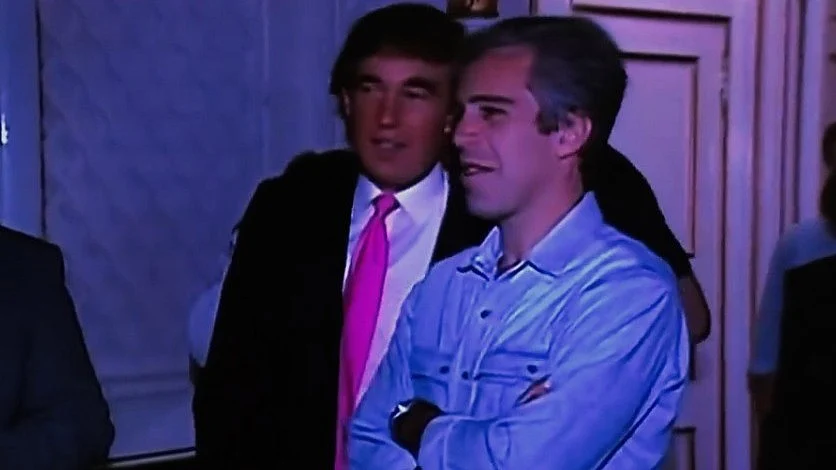


A fresh wave of suspicion has rippled through Washington after at least 16 files vanished without explanation from the US Justice Department’s public webpage containing documents related to the late financier Jeffrey Epstein — less than a day after they were made public.
Among the missing materials was a photograph showing former President Donald Trump alongside Epstein, Melania Trump and Epstein’s longtime associate, Ghislaine Maxwell.
The files, accessible on Friday but gone by Saturday, included unsettling images of paintings depicting nude women and photographs laid out across furniture and hidden inside drawers. One such image revealed, tucked among other photographs, the now-missing picture featuring Trump. The sudden disappearance came with no public notice and no immediate explanation from the government.
Pressed for answers, the Justice Department declined to clarify why the files were removed. Instead, it posted a brief statement on X saying that “photos and other materials will continue being reviewed and redacted consistent with the law in an abundance of caution as we receive additional information.”
Online, the unexplained takedown ignited speculation and deepened the enduring intrigue surrounding Epstein and the powerful figures who once orbited his world. Democrats on the House Oversight Committee seized on the missing Trump image, posting pointedly on X: “What else is being covered up? We need transparency for the American public.”
The episode compounded mounting frustration over the Justice Department’s long-anticipated release of Epstein-related records. Though tens of thousands of pages were made public, the disclosures yielded little new insight into Epstein’s crimes or the prosecutorial decisions that allowed him to evade serious federal charges for years. Many of the most closely watched records — including FBI interviews with survivors and internal Justice Department memoranda weighing charging decisions — were conspicuously absent.
Despite spanning tens of thousands of pages, the initial release left glaring gaps. Missing were the very documents that might have illuminated how investigators assessed the case and why Epstein, in 2008, was permitted to plead guilty to a comparatively minor state-level prostitution charge.
The omissions ran deeper still. The records, released under a law recently passed by Congress to force transparency, barely referenced several powerful figures long associated with Epstein, including Britain’s former Prince Andrew. The silence renewed lingering questions about who was scrutinised, who escaped examination, and how much accountability the disclosures truly deliver.
There were, however, fragments of revelation. Newly released materials offered insight into the Justice Department’s decision to abandon a federal investigation in the early 2000s — a retreat that paved the way for Epstein’s lenient plea deal. Also revealed was a previously unseen 1996 complaint accusing Epstein of stealing photographs of children.
Much of the material released so far leaned heavily on images of Epstein’s lavish homes in New York City and the US Virgin Islands, interspersed with photographs of celebrities and political figures. A series of never-before-seen images of former President Bill Clinton surfaced, while photographs of Trump were notably fewer. Both men have acknowledged knowing Epstein in the past but have since distanced themselves from him. Neither has been accused of wrongdoing in connection with Epstein, and there is no indication the photographs played a role in the criminal cases brought against him.
Even as Congress had set a firm Friday deadline for full disclosure, the Justice Department said it would release records on a rolling basis, citing the painstaking process of redacting survivors’ names and identifying details. No timeline has been provided for when further records might appear.
That approach angered some Epstein survivors and members of Congress who fought for years to force the release. Instead of marking the culmination of a long struggle for transparency, Friday’s disclosure felt to many like the beginning of yet another indefinite wait.
“I feel like again the DOJ, the justice system is failing us,” said Marina Lacerda, who alleges Epstein began sexually abusing her at his Manhattan mansion when she was just 14.
Federal prosecutors charged Epstein with sex trafficking in 2019, but he died by suicide in jail before the case could go to trial.
The documents released so far represent only a sliver of what remains hidden. Deputy Attorney General Todd Blanche has said Manhattan federal prosecutors alone possessed more than 3.6 million records from sex trafficking investigations into Epstein and Maxwell, though many duplicated materials already held by the FBI.
Much of what has been released was previously scattered across court filings, congressional disclosures and freedom of information requests — though now, for the first time, gathered in one searchable public archive. The truly new material, however, often arrived stripped of context or heavily blacked out. One 119-page document labelled “Grand Jury–NY,” believed to stem from the federal investigations that led to Epstein’s 2019 charges or Maxwell’s 2021 conviction, was entirely redacted.
Trump’s Republican allies quickly focused on photographs of Clinton, including images of the former president with entertainers Michael Jackson and Diana Ross. Other photos showed Epstein alongside actor Kevin Spacey, comedian Chris Tucker and even legendary broadcaster Walter Cronkite. None came with captions or explanations, leaving their significance opaque.
The most consequential disclosures revealed that federal prosecutors appeared to have built a strong case against Epstein as early as 2007 — yet still declined to bring charges.
Grand jury transcripts released publicly for the first time included testimony from FBI agents describing interviews with girls and young women who said they were paid to perform sex acts for Epstein. The youngest was just 14.
One survivor recounted being sexually assaulted after resisting Epstein’s advances during a massage. Another, then 21, testified that Epstein hired her at age 16 and later had her recruit other girls.
“For every girl that I brought to the table he would give me $200,” she told the grand jury, adding that many were classmates from high school. “I also told them that if they are under age, just lie about it and tell him that you are 18.”
The documents also include a transcript of a later interview with Alexander Acosta, the US attorney who oversaw the case and later served as labour secretary during Trump’s first term. Acosta said concerns about whether jurors would believe the accusers factored into the decision not to pursue federal charges, and suggested the case sat uncomfortably between sex trafficking and prostitution law.
“I’m not saying it was the right view,” Acosta said, adding that public attitudes toward survivors have since shifted. “There’s been a lot of changes in victim shaming.”
Jennifer Freeman, an attorney representing Epstein accuser Maria Farmer and other survivors, said the document release was both validating and devastating.
“It’s a triumph and a tragedy,” she said. “It looks like the government did absolutely nothing. Horrible things have happened, and if they investigated in even the smallest way, they could have stopped him.”
With AP inputs
Join our official telegram channel (@nationalherald) and stay updated with the latest headlines