


Catholic Bishops question moral foundations of US foreign policy
Cardinal McElroy warns that Catholic social teaching demands far more than a narrow, transactional view of national interest
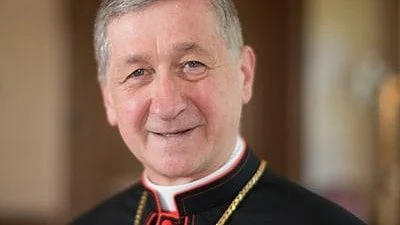


In an unusually forceful intervention into the heart of American foreign policy, three of the United States’ most senior Catholic leaders have issued a rare joint statement, warning that the country’s growing reliance on power and coercion risks pushing the world toward deeper and more destructive conflict.
Cardinal Blase J. Cupich of Chicago, Cardinal Robert W. McElroy of Washington, and Cardinal Joseph W. Tobin of Newark said the United States is now engaged in its most consequential moral reckoning over its conduct abroad since the end of the Cold War. Pointing to unfolding developments in Venezuela, Ukraine and Greenland, the cardinals said fundamental questions of war, peace and national purpose are once again pressing urgently upon the nation’s conscience.
Their statement, released simultaneously from Chicago, Washington and Newark, measures current US foreign policy against the principles laid out by Pope Leo XIV in his 9 January address to diplomats accredited to the Holy See. The cardinals described that address as an “enduring ethical compass” capable of guiding American engagement with the world at a moment of growing global instability.
“As pastors entrusted with the teaching of our people, we cannot stand by while decisions are made that condemn millions to lives trapped permanently at the edge of existence,” Cardinal Cupich said. He added that Pope Leo had offered “clear direction” that must now be applied to the actions of the nation and those who govern it.
Cardinal McElroy warned that Catholic social teaching demands far more than a narrow, transactional view of national interest. When national priorities are severed from moral responsibility and global solidarity, he said, the result is “immense suffering” and a devastating blow to the just peace that serves all nations.
To ignore that truth in the current foreign policy debate, McElroy added, would come “at the cost of our country’s truest interests and the best traditions of this land that we love.”
Cardinal Tobin echoed those concerns, pointing to recent deliberations among church leaders in Rome as sharpening the urgency of Pope Leo’s appeal. Participation in last week’s consistory alongside cardinals from around the world, he said, reinforced the need to emphasise the Pope’s vision for just and peaceful relations among nations.
“Escalating threats and armed conflict risk destroying international relations and plunging the world into incalculable suffering,” Tobin warned.
In the full text of the statement—titled Charting a Moral Vision of American Foreign Policy—the cardinals lamented the steady erosion of multilateralism, which they said is increasingly being replaced by a diplomacy “based on force”, with war once again gaining legitimacy and appeal.
They cited Pope Leo’s warning that the post–World War II norm prohibiting the violation of borders by force has been “completely undermined”, and that peace is now too often pursued through weapons rather than dialogue, restraint and mutual recognition.
The cardinals also underscored the Pope’s reaffirmation that the right to life is the foundation of all other human rights. They pointed to his criticism of abortion and euthanasia, as well as his concern over wealthy nations reducing humanitarian and development assistance to poorer parts of the world.
They further highlighted Pope Leo’s alarm over “increasing violations of conscience and religious freedom” carried out in the name of ideological or religious absolutism.
“As pastors and citizens, we embrace this vision for the establishment of a genuinely moral foreign policy for our nation,” the statement said. Military force, the cardinals stressed, must be treated “only as a last resort in extreme situations,” not as a routine instrument of national policy. They called instead for an approach that prioritises the protection of human life, religious liberty and human dignity, particularly through economic and humanitarian assistance.
While acknowledging that America’s debate over its moral role in the world has become increasingly polarised and partisan, the cardinals said Pope Leo has offered “the prism through which to raise it to a much higher level.” They pledged to “preach, teach and advocate” in the months ahead to ensure that this higher moral vision shapes public discourse.
The joint intervention is notable both for its collective authorship and its direct engagement with contemporary US foreign policy, reflecting the enduring influence of Catholic social teaching on questions of war, peace and international responsibility. The Catholic Church has long championed multilateral cooperation, the protection of civilians and strict limits on the use of force under just-war principles.
With IANS inputs
Join our official telegram channel (@nationalherald) and stay updated with the latest headlines