


Ceasefire shifts to tougher phase as US-led Gaza roadmap faces major political, security hurdles
UN-backed plan seeks demilitarised Gaza, reconstruction and political transition; mediators warn momentum could falter without consensus
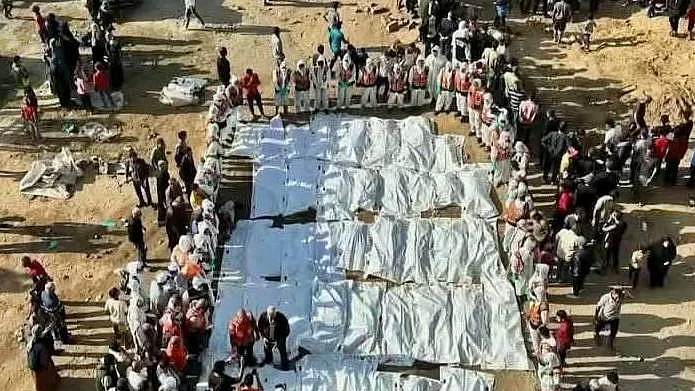


The first stage of the US-brokered ceasefire between Israel and Hamas is almost over, with only one hostage’s remains still in Gaza. After two months of delays and disagreements, the focus now shifts to a much more difficult second phase. This next stage is built around US President Donald Trump’s UN-backed plan, which aims to change how Gaza is governed, rebuilt and secured.
But the steps ahead are complicated. If the plan moves forward, Gaza could see reconstruction, new security arrangements and a political transition. If it stalls, the territory may remain unstable, with displaced residents, damaged infrastructure and no clear path to peace.
The roadmap sets out a broad political vision: ending Hamas’ control, rebuilding a demilitarised Gaza under international oversight, normalising Israel–Arab ties and creating conditions that could, eventually, support Palestinian statehood.
But diplomats caution that failure to move forward may leave Gaza in an extended period of instability, marked by fragmented control, continued Israeli military presence and deep humanitarian distress.
Qatari Prime Minister Sheikh Mohammed bin Abdulrahman Al Thani, a key mediator, warned over the weekend that the ceasefire had reached a critical crossroads. Israeli Prime Minister Benjamin Netanyahu is expected to visit the White House this month to discuss the next steps.
International involvement still taking shape
A central component of the plan is the deployment of an international security mission, though the contours remain undefined. Several nations — including Egypt, Turkey, Indonesia and Pakistan — have signalled preliminary willingness to participate, but no command structure, rules of engagement or timeline has been finalised.
A senior US official said partner states are holding meetings this month.
He suggested that deployments could begin in early 2026.
Concerns persist on all sides. Hamas has rejected any effort to forcibly remove its weapons, and potential troop contributors may be reluctant to risk confrontations. Israel, meanwhile, remains wary of entrusting its security interests to an external force.
Governance transition remains uncertain
The proposal envisions an international council overseeing a team of Palestinian technocrats responsible for Gaza’s civil administration. Only Trump has been publicly named, with other members likely to be announced in coming weeks. Former UK prime minister Tony Blair has been informally discussed.
The challenge for the council will be balancing competing demands:
Israeli insistence on strict security assurances,
Palestinian expectations of autonomy,
Humanitarian agencies’ need for uninterrupted access, and
Mediators’ efforts to preserve political space for future negotiations.
Analysts warn that unless the administrative body is seen as credible and independent, public acceptance in Gaza may be limited.
Gaza’s reconstruction — a central pillar of the plan — has yet to begin. Egypt is preparing to host a donor conference later this month. The UN estimates rebuilding costs at nearly $70 billion, reflecting extensive destruction and the displacement of most of Gaza’s two million residents.
Key obstacles include:
securing pledges from donors,
managing competing political interests among contributing states, and
establishing transparent channels for long-term development.
The absence of a detailed economic strategy has raised concerns among aid partners about implementation timelines.
Disarmament and Israeli withdrawals remain unresolved
The ceasefire framework calls for Hamas to relinquish its weapons under international monitoring. Militants who comply would receive amnesty and an option to leave the territory.
Hamas, however, insists it will not disarm until Israel fully withdraws from occupied Palestinian territories. A senior Hamas official said the group may consider placing weapons in long-term storage during political negotiations — a proposal Israel is unlikely to accept.
Disarmament is directly tied to Israel’s phased withdrawal from Gaza. Israel currently controls over half the territory, despite commitments to reduce its presence.
Future pullbacks are to be negotiated based on security benchmarks, but no timelines have been finalised. Israel’s military chief recently described the current internal barrier — known as the Yellow Line — as a “new border”, signalling resistance to relinquishing control.
Role of Palestinian Authority still undefined
The plan also requires reforms within the Palestinian Authority (PA) to create a “credible pathway” to Palestinian statehood.
While PA officials say initial measures on governance and anti-corruption have begun, Israel opposes both Palestinian statehood and any PA involvement in Gaza. Without clarity on the PA’s long-term role, diplomats warn that public support for the broader roadmap may weaken.
As the ceasefire enters this more complex phase, mediators say political fragility, unresolved security concerns and competing regional interests pose significant risks. Progress on one component is closely tied to advances on others — and delays on any front could stall the entire framework.
With inputs from AP
Join our official telegram channel (@nationalherald) and stay updated with the latest headlines