


China launches Shenzhou-24 with first Pakistani astronaut aboard
Muhammad Zeeshan Ali is set to become the first foreign astronaut to visit China’s Tiangong space station, where he will spend about a week in orbit
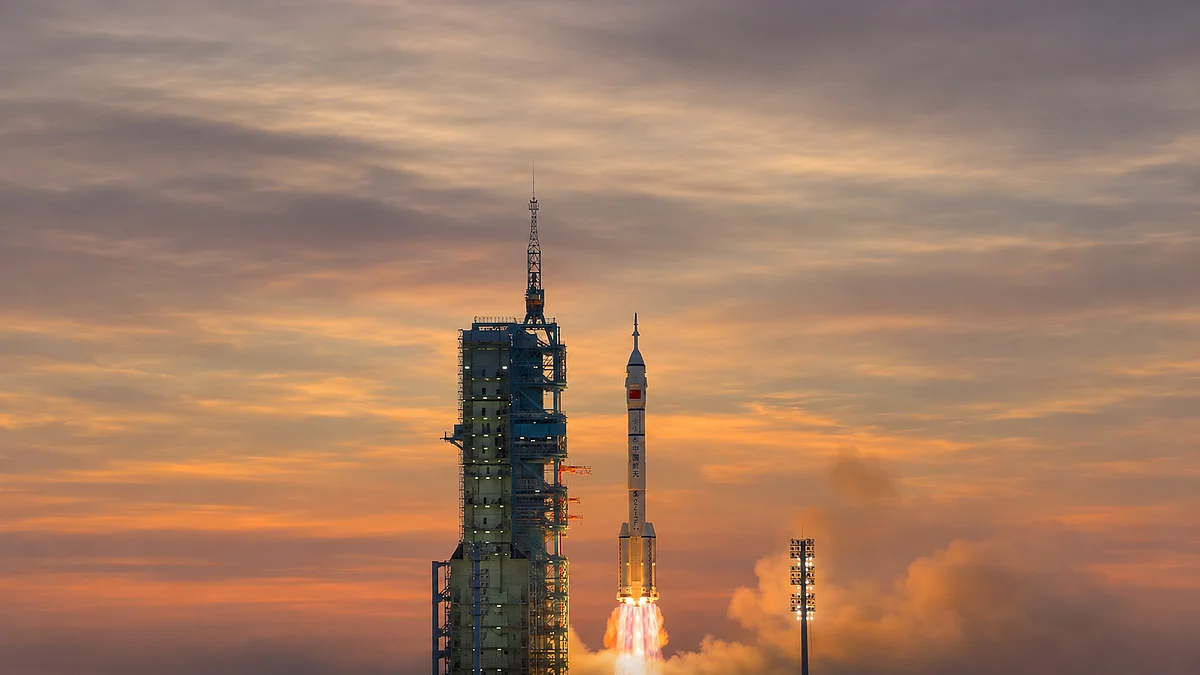


Muhammad Zeeshan Ali is set to become the first foreign astronaut to visit China’s Tiangong space station
The spacecraft is expected to dock with Tiangong about three hours after launch. Ali is due to return to Earth aboard Shenzhou-23 after about a week in orbit
The flight follows a China–Pakistan agreement signed in February 2025. More than 90 experiments and technology tests are planned during the mission
China launched its Shenzhou-24 spacecraft on Wednesday, carrying Pakistan’s Muhammad Zeeshan Ali, the first foreign national to fly as part of China’s crewed space programme.
A Long March-2F rocket lifted off from the Jiuquan Satellite Launch Centre in north-western China, and officials declared the launch a success minutes later. Ali is flying alongside mission commander and spacecraft pilot Tang Hongbo and flight engineer Wu Yi.
Shenzhou-24 is expected to reach the Tiangong space station about three hours after lift-off. Ali is due to spend about a week in orbit before returning aboard Shenzhou-23, the spacecraft that brought the outgoing crew to the station. Chinese astronauts typically spend about six months aboard Tiangong.
Chinese officials said the mission would rotate the station’s crew, carry out maintenance and test payloads. The research programme includes more than 90 experiments and technology tests in fields such as space medicine, materials science, combustion and the behaviour of fluids in microgravity.
Pakistan’s Prime Minister Shehbaz Sharif called the launch a source of national pride and said he hoped it would inspire young Pakistanis. In a post on X, he thanked Beijing for including a Pakistani astronaut and said the mission extended the two countries’ partnership into space.
Planning Minister Ahsan Iqbal described the flight as the start of a new phase for Pakistan’s space programme. He said it reflected the expansion of cooperation with China from infrastructure and digital connectivity to space research.
Tiangong became operational in 2022 and is smaller than the multinational International Space Station (ISS). China built its own orbital station after it was reportedly kept out of the ISS programme amid concerns about the role of the People’s Liberation Army in its space programme. NASA plans to retire the ISS in early 2031, using a vehicle being developed by SpaceX to guide it into a controlled re-entry over the South Pacific.
With PTI inputs
Join our official telegram channel (@nationalherald) and stay updated with the latest headlines