


Death toll rises to 148 in US-Israeli attack on Iranian school
As many as 95 others wounded in the attack, local prosecutor Ebrahim Taheri was quoted as saying by Iran’s semi-official Tasnim news agency
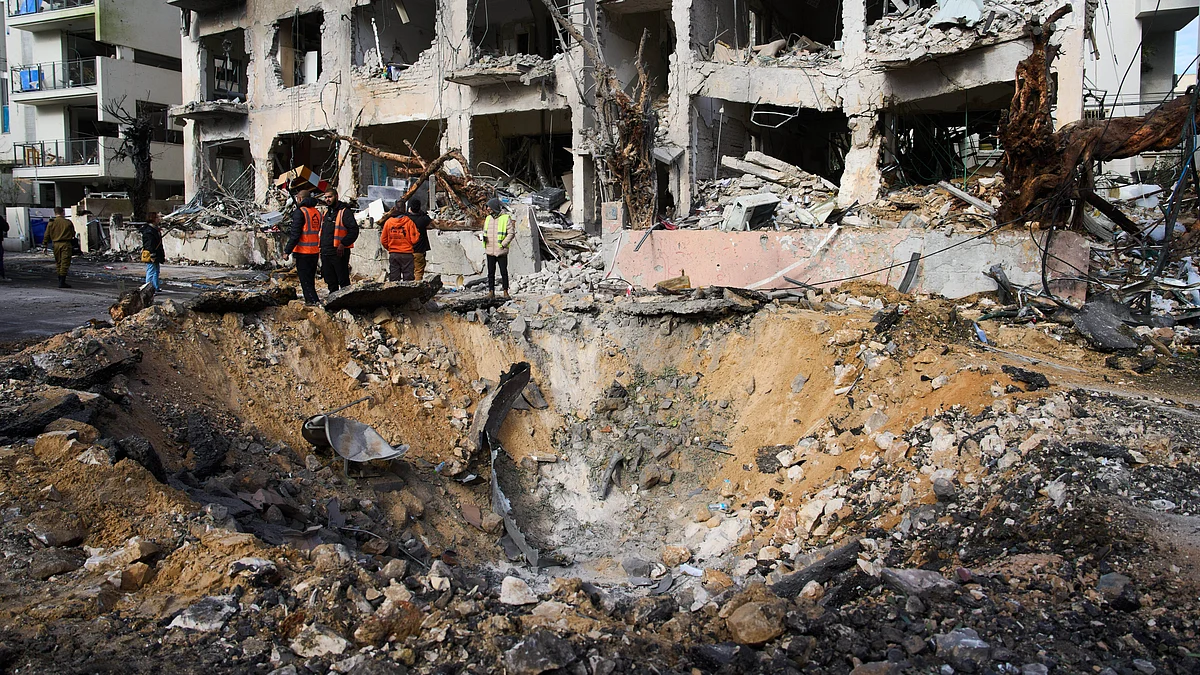


The toll from a devastating joint US-Israeli strike on a girls’ elementary school in Iran’s southern Hormozgan province has climbed to 148, according to local media reports on Sunday, marking one of the deadliest single incidents in the escalating conflict.
As many as 95 others were wounded in the attack, local prosecutor Ebrahim Taheri was quoted as saying by Iran’s semi-official Tasnim news agency. The majority of those killed were young pupils, he said, with teachers, school staff and parents who had been present also among the victims — a grim tableau that has sent shockwaves across the region.
The strike came amid a sweeping military offensive launched on Saturday morning, when Israel and the United States carried out coordinated attacks on Tehran and several other major Iranian cities, including Tabriz, Qom, Isfahan, Kermanshah and Karaj. Iran responded swiftly, unleashing missile and drone strikes targeting Israel and US bases across the Middle East, igniting fears of a broader regional conflagration.
In Tehran, the attacks reportedly killed Iran’s Supreme Leader Ayatollah Ali Khamenei, defence council secretary Ali Shamkhani and Mohammad Pakpour, the chief commander of the Islamic Revolutionary Guard Corps — a dramatic escalation with far-reaching political and military implications.
The US Central Command (CENTCOM) said on Saturday night that military operations against Iran remain ongoing. “CENTCOM is now delivering swift and decisive action as directed,” the command said in a post on X, adding in an earlier update that there had been no reported US casualties and no US Navy vessels struck. Damage to American installations, it said, was minimal and had not disrupted operations.
US secretary of war Pete Hegseth described the campaign — dubbed Operation Epic Fury — as “the most lethal, most complex, and most-precision aerial operation in history.” In a forceful statement, he declared that Iran’s missiles and missile production capabilities would be destroyed, along with its navy, reiterating Washington’s longstanding position that Iran would never be allowed to acquire a nuclear weapon.
As tensions mount, general Kenneth F. McKenzie Jr., former head of US Central Command, told American media that the next 72 to 96 hours would be pivotal in determining whether Iran can sustain an intense barrage of retaliatory missile strikes against US bases and regional partners.
With civilian casualties mounting and military operations still underway, the conflict appears poised at a perilous crossroads, its trajectory likely to shape the geopolitical landscape of the Middle East for years to come.
With IANS inputs
Join our official telegram channel (@nationalherald) and stay updated with the latest headlines