


Trump signs NDAA seeking expanded military engagement with India
The new diplomatic post coordinates US efforts in Indian Ocean, focusing on countering China’s influence
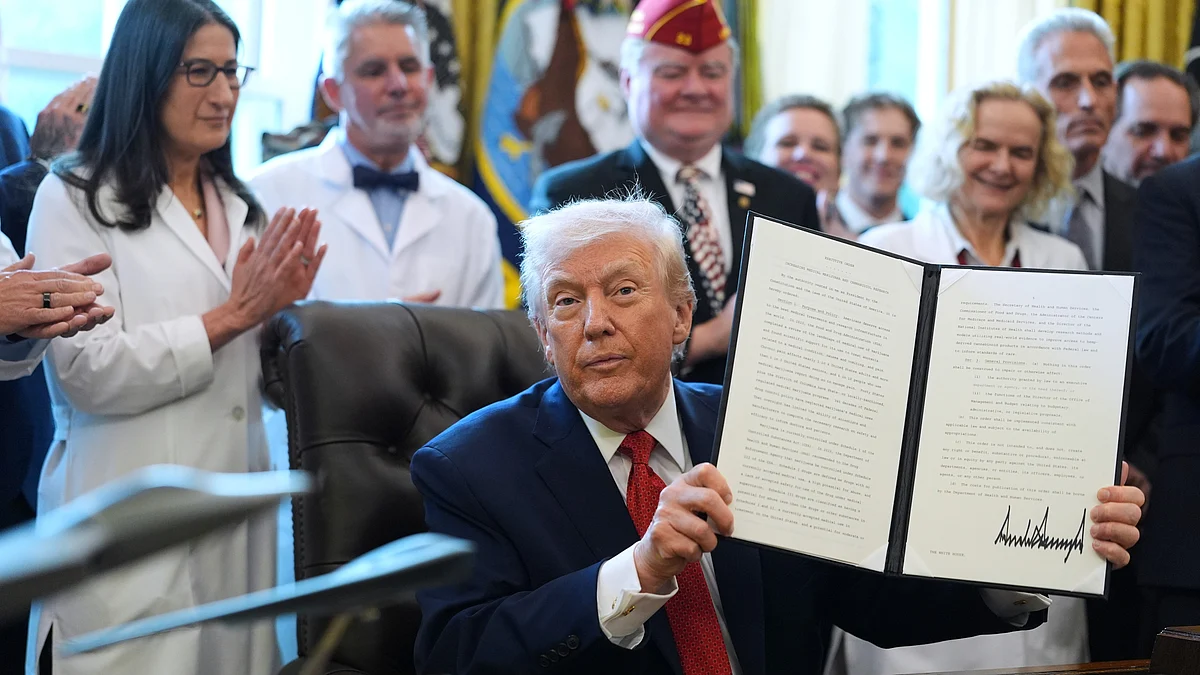


In a significant move that underscores Washington’s deepening strategic embrace of India, US President Donald Trump has signed into law the National Defense Authorisation Act (NDAA) for Fiscal Year 2026, a sweeping defence measure that authorizes $890 billion in national security spending and charts a robust course for America’s Indo-Pacific policy.
The landmark legislation explicitly calls for expanded military engagement with India, elevating bilateral ties through the Quadrilateral Security Dialogue (Quad) and signaling a shared commitment to a free and open Indo-Pacific region. In his signing statement, Trump described the Act as a cornerstone of his “Peace Through Strength” agenda, asserting that it will safeguard the homeland, fortify the defence industrial base, and codify elements of more than a dozen executive actions from his administration.
Under the NDAA, US-India defence cooperation will deepen across multiple fronts — from increased participation in military exercises and enhanced defence trade to closer collaboration on humanitarian assistance and disaster relief. Maritime security is highlighted as a pivotal area for joint efforts, while nuclear cooperation receives a renewed legislative mandate, directing a joint assessment on liability rules under the US-India Strategic Security Dialogue.
The Act also calls on the secretary of state to establish a recurring consultative mechanism with India to evaluate the implementation of the 2008 civil nuclear agreement, align domestic nuclear liability rules with international norms, and craft joint diplomatic strategies for civil nuclear collaboration. The state department is tasked with submitting detailed reports to Congress within 180 days and annually thereafter for five years, reflecting the Act’s rigorous oversight framework.
In a broader geopolitical sweep, the NDAA instructs assessments of Russia’s military cooperation with India and its implications for the Indo-Pacific, while authorising the creation of an Ambassador-at-Large for the Indian Ocean Region. This new diplomatic post will coordinate US efforts across the Indian Ocean, with a focus on countering malign influence from the People’s Republic of China. Additional provisions authorize $1 billion for the Taiwan Security Cooperation Initiative and tighten restrictions on Chinese military firms seeking to evade US regulations.
Beyond strategic imperatives, the NDAA addresses the welfare of the US defence community, authorizing a 3.8 per cent pay raise for service members, alongside funding for housing, healthcare, childcare, and protections for civilian defence employees.
Passed annually for over six decades, the NDAA remains the bedrock of American defence policy. With the FY26 law, the United States has formally enshrined expanded military, nuclear, and regional engagement with India within its legislative framework, signaling a profound deepening of ties between two of the world’s largest democracies in an era of rising global strategic competition.
With IANS inputs
Join our official telegram channel (@nationalherald) and stay updated with the latest headlines