


EV funding row: 16 US states sue Trump administration over federal freeze
States allege over $2 billion for electric vehicle infrastructure unlawfully withheld despite congressional approval
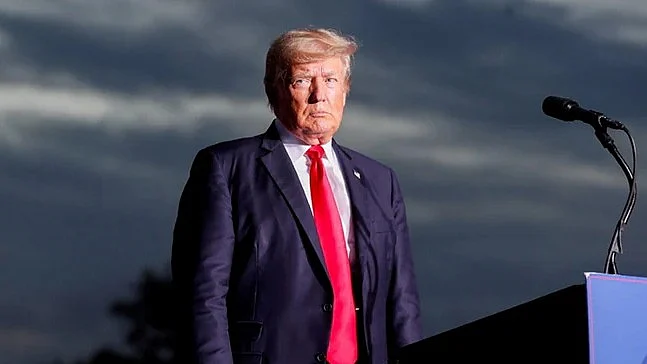


Sixteen US states and the District of Columbia have filed a federal lawsuit against President Donald Trump’s administration, alleging the unlawful withholding of more than $2 billion in funding meant for electric vehicle (EV) charging programmes approved by Congress under the previous Joe Biden administration.
The lawsuit, filed on Tuesday in the US District Court for the Western District of Washington, accuses the Department of Transportation (DOT) and the Federal Highway Administration (FHWA) of “impounding” funds that had already been obligated for EV infrastructure development.
California Attorney General Rob Bonta, one of the lead plaintiffs, said the move was illegal and harmful. “The Trump Administration's illegal attempt to stop funding for electric vehicle infrastructure must come to an end,” he said, adding that the freeze would stall efforts to curb air pollution, combat climate change, and generate green jobs.
The DOT did not immediately respond to requests for comment.
Funding programmes under dispute
The lawsuit focuses on two EV-related funding streams:
$1.8 billion under the Charging and Fueling Infrastructure Grant Programme, and
Around $350 million under the Electric Vehicle Charger Reliability and Accessibility Accelerator programme.
These are separate from the $5 billion National Electric Vehicle Infrastructure (NEVI) programme, under which several states had earlier sued the administration in May. In that case, a federal judge later ordered the release of much of the withheld funding for more than a dozen states.
The Trump administration had, in February, directed states to halt spending under EV charging programmes funded through the bipartisan infrastructure law passed during Biden’s presidency.
The latest lawsuit is being led by attorneys general from California and Colorado, joined by their counterparts from Arizona, Delaware, Illinois, Maryland, Massachusetts, Michigan, New Jersey, New York, Oregon, Rhode Island, Vermont, Washington, and Wisconsin, along with the District of Columbia. The Governor of Pennsylvania is also a party to the suit.
The plaintiffs argue that the administration’s actions violate federal law by blocking funds that Congress had already approved and allocated.
Policy shift under Trump
Since returning to office, President Trump has taken a markedly hostile stance towards electric vehicles, rolling back several clean transportation policies introduced under Biden. Trump has ordered an end to what he calls Biden’s “EV mandate”, although the earlier administration’s policies did not legally compel consumers to buy EVs or manufacturers to sell them.
Under Biden, the government had sought to encourage EV adoption through tighter tailpipe emission standards, fuel economy rules, and consumer tax credits of up to $7,500 per vehicle. The Trump administration has since proposed weakening emission rules, lowering penalties for automakers, and eliminating EV tax credits.
Trump has also repeatedly criticised federal charging programmes, at times making inaccurate claims about their cost and effectiveness.
Market context
The lawsuit comes amid a slowdown in EV sales in the US, driven by concerns over charging availability and high prices. New EVs sold at an average price of $58,638 last month, compared to $49,814 for new vehicles overall, according to Kelley Blue Book.
Several automakers have responded by scaling back EV ambitions. Ford Motor Co recently pivoted towards hybrid and fuel-efficient petrol vehicles, while Honda Motor Co has also announced a slowdown in its EV push.
Despite these trends in the US, electric vehicles continue to gain momentum in several other global markets.
Join our official telegram channel (@nationalherald) and stay updated with the latest headlines