


From threat to outcry: Greta Thunberg leads Gen Z against war rhetoric
Swedish activist frames Trump’s remarks within a wider moral landscape, warning of a world increasingly desensitised to devastation
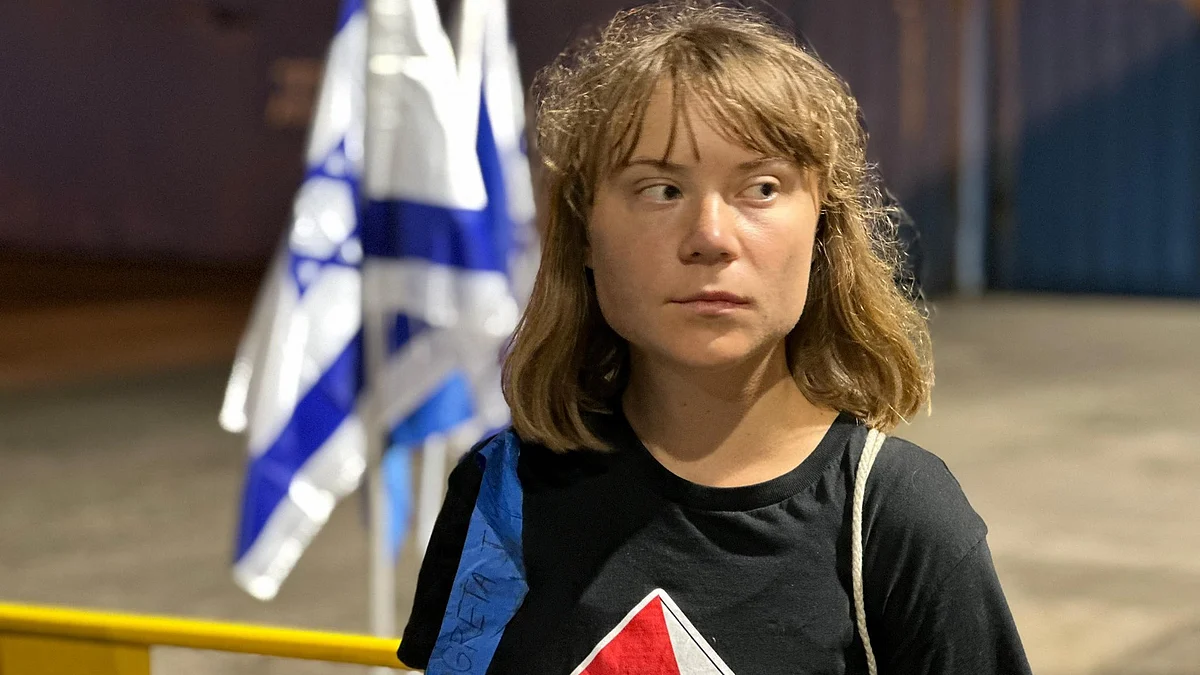


A cloud of uncertainty loomed over global capitals through much of Tuesday, as the world braced for the possibility of a full-scale US assault on Iran’s civilian infrastructure — until US President Donald Trump shattered the tension with an incendiary warning that “a whole civilisation will die tonight”.
The remark, stark in its finality, sent ripples of alarm across political and public spheres alike. Among the most prominent voices to respond was Greta Thunberg, the Swedish activist who has come to embody the moral urgency of Generation Z, the Al Jazeera reported.
In a candid and impassioned Instagram video, Thunberg expressed disbelief not only at the statement itself, but at what she perceived as a troubling quiet that followed.
“The president of the United States just said that a whole civilisation will die tonight,” she said, her voice edged with frustration. “And no one is reacting. This speaks for itself.” Her words, raw and unfiltered, captured a broader unease — an anxiety that such rhetoric risks slipping into normalcy.
For Thunberg, the issue transcended geopolitics. She framed Trump’s remarks within a wider moral landscape, warning of a world increasingly desensitised to devastation. “We have normalised genocide, total annihilation of entire people… and that corrupt, racist war criminals can act with complete impunity,” she said, urging her audience to resist this creeping indifference. “It is not too late to say stop.”
Her intervention reflects a deeper generational current — one that has been steadily reshaping public discourse around war, intervention, and accountability. Analysts point to a widening divide between younger and older generations in their perceptions of the US-led conflict involving Iran and Israel.
Polling data underscores this shift. A recent survey by the Pew Research Center revealed that younger Americans, across political affiliations, are markedly more sceptical about the war’s objectives and outcomes. Among Republicans, belief that the conflict would deter Iran’s nuclear ambitions dropped sharply from 67 per cent among those over 65 to just 25 per cent among those aged 18 to 29. Similarly, younger respondents were far more likely to believe that the war would worsen conditions for the Iranian people.
Even among Democrats, where divisions were less stark, younger voters expressed greater pessimism about the human cost of the conflict. Nearly 60 per cent of those aged 18 to 29 believed Iranians would be worse off, compared to 48 per cent of older respondents.
This generational scepticism extends beyond immediate policy concerns to broader fears about global stability. A survey by Emerson College found that nearly three-quarters of Americans under 50 believe a new world war could erupt within the next four years — a significantly higher proportion than among older age groups.
Further insights from Politico highlighted fractures even within Trump’s political base. Among self-identified “MAGA Republicans”, confidence in the President’s strategy was notably weaker among younger supporters, suggesting a generational re-evaluation of long-held political loyalties.
The roots of this divide run deep. Many in Generation Z have grown up in the long shadow of the post-9/11 wars in Iraq and Afghanistan — conflicts that shaped their understanding of foreign intervention and its consequences. A separate Pew study from late 2025 pointed to an emerging isolationist streak, with just 39 per cent of young Americans supporting an active US role in global affairs, compared to nearly three-quarters of older citizens.
Recent conflicts have only sharpened these attitudes. The war in Gaza, for instance, has triggered a pronounced backlash among younger audiences, with polls indicating significantly higher unfavourable views of Israel among Gen Z voters across party lines. Human rights concerns — including allegations of civilian harm and humanitarian crises — have further fuelled this sentiment.
Thunberg herself has been a visible participant in this evolving activism. From vocal criticism of military actions to participation in humanitarian efforts — such as an aid flotilla bound for Gaza — her advocacy has consistently linked environmental, humanitarian, and geopolitical crises into a single, urgent narrative.
As the immediate crisis between the United States and Iran appears to ease with a tentative ceasefire, the deeper undercurrents remain. The sharp words of a president, the impassioned response of a young activist, and the data reflecting a generational shift together paint a portrait of a world at a crossroads — where the battle is not only over territory or strategy, but over conscience, memory, and the future itself.
Join our official telegram channel (@nationalherald) and stay updated with the latest headlines