


Gaza on the brink: Fragile truce frays as war drums grow louder
Hamas, PIJ and PFLP reject terms, demand full ceasefire implementation, including 600 daily aid trucks
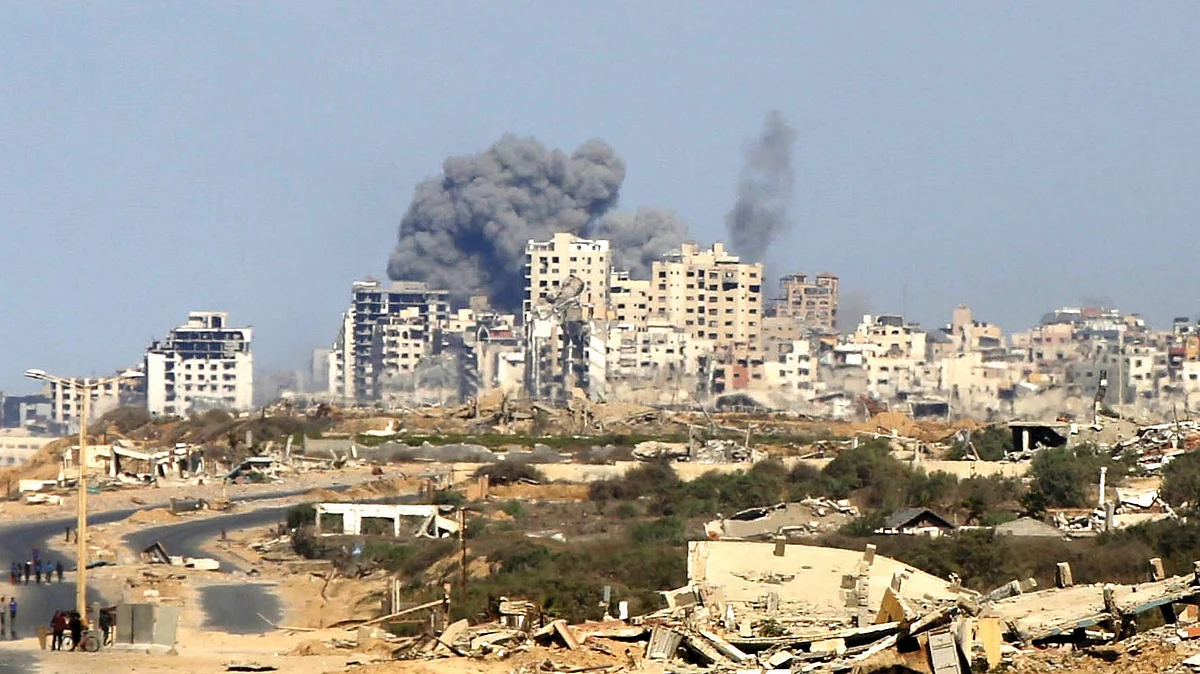


In the broken neighbourhoods of Khan Younis and Deir el-Balah, silence is a stranger. The buzz of Israeli drones and the thunder of controlled demolitions ripple through the air, a stark reminder that even under a so-called ceasefire, the war has never truly loosened its grip on the Gaza Strip, the Al Jazeera reported.
Since the truce was declared in October, grief has continued to seep through the rubble. Local medical sources report that at least 828 Palestinians have been killed in the intervening months — each number a life interrupted, each statistic a story buried beneath debris. Now, as Israeli officials signal the possibility of renewed hostilities, families brace once more for the storm.
In Jerusalem, Prime Minister Benjamin Netanyahu abruptly cancelled a scheduled security cabinet meeting, opting instead for closed-door consultations. Within military circles, the rhetoric has sharpened. A senior General Staff official, speaking to Channel 15, warned that another round of fighting was “almost inevitable,” citing Hamas’s refusal to disarm and the perceived failure of international mechanisms meant to uphold the ceasefire.
On the ground, facts are shifting as steadily as the front lines. Reports from Israel’s Army Radio suggest that Israeli forces have been quietly expanding their footprint, nudging the ceasefire’s “Yellow Line” westward and extending control over nearly 59 per cent of the enclave. Reinforcements, redirected from the Lebanese front, now flow into Gaza and the occupied West Bank, tightening an already suffocating grip.
Meanwhile, in Cairo, diplomacy unfolds with mounting urgency. Mediators are pressing Palestinian factions to accept a new roadmap championed by Nikolay Mladenov, tied to a broader vision backed by Donald Trump. The proposal demands the phased disarmament of Hamas within 281 days — linking humanitarian aid, reconstruction, and the reopening of crossings to the surrender of weapons.
Palestinian factions, however, have drawn a firm line. Leaders from Hamas, Palestinian Islamic Jihad, and the Popular Front for the Liberation of Palestine have collectively rejected the terms, insisting instead on the full implementation of the ceasefire’s initial phase — particularly the unimpeded entry of 600 aid trucks daily, a provision they say Israel has repeatedly blocked.
For analysts like Wissam Afifa, the impasse is about more than weapons. “The resistance insists that disarmament is tied to the ambition of establishing a Palestinian state and a complete end to the occupation,” he told Al Jazeera, warning that separating security from political rights risks turning humanitarian relief into leverage.
Others see a deeper strategy at play. Mamoun Abu Amer, an expert on Israeli affairs, described the escalating rhetoric as a “smoke screen” — a calculated move to bolster Netanyahu’s domestic standing ahead of looming elections, even as Israel grapples with mounting pressure across multiple fronts, including the unresolved tensions in southern Lebanon.
Yet for those living amid the ruins, strategy and speculation offer little solace. The toll of war continues to climb, with at least 72,608 Palestinians reported killed since the conflict began. Even as ceasefire lines are drawn and redrawn on maps, the reality on the ground remains unchanged: a people suspended between fragile calm and the ever-present shadow of another devastating war.
Join our official telegram channel (@nationalherald) and stay updated with the latest headlines