


Houthi leader warns of action over possible Israeli presence in Somaliland
Somalia’s Prime Minister’s Office rejects Israel’s move, affirming Somaliland is part of the Federal Republic of Somalia
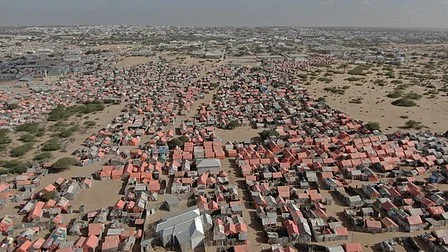


Tensions in the Horn of Africa have soared after Abdulmalik al-Houthi, leader of Yemen’s Houthi movement, issued a stern warning against any Israeli presence in Somaliland, declaring that it would be treated as a “military target”.
Speaking on the Houthi-run Al-Masirah television channel, al-Houthi described Israel’s recognition of the self-declared region as a grave threat to regional security, asserting that his forces would take “all possible supportive measures” to stand with the “brotherly Somali people”.
Al-Houthi, whose movement controls large swathes of northern Yemen, framed Israel’s move as a calculated attempt to establish a foothold in Somaliland for “hostile activities against Somalia, African countries, Yemen, and other Arab nations”, warning that such actions could further destabilise an already fragile region. He called for a “firm and serious” Arab and Islamic response to counter what he described as Israeli expansionism.
The response from the international community has been swift and unified. Across Africa and the Middle East, countries have condemned Israel’s recognition of Somaliland and reaffirmed their support for Somalia’s sovereignty and territorial integrity.
The Somalian Prime Minister’s Office rejected Israel’s move as unlawful, reiterating that Somaliland remains an inseparable part of the Federal Republic of Somalia. Somalia further stressed that no foreign military bases or arrangements would be tolerated on its soil, warning against any attempt to draw the nation into proxy conflicts or import regional hostilities.
Turkey joined the chorus of condemnation. Turkish foreign ministry spokesperson Oncu Keceli called Israel’s decision “a new example of unlawful actions by the Netanyahu government aimed at creating instability at both regional and global levels”, while Communications Director Burhanettin Duran labelled it “an irresponsible act” undermining peace and stability in the Horn of Africa.
Jordan and Saudi Arabia also voiced strong opposition. Jordan’s Ministry of Foreign Affairs reaffirmed full support for Somalia’s sovereignty, unity, and territorial integrity, describing Israel’s announcement as a “flagrant” violation of international law and an infringement on Somalia’s internal affairs. Saudi Arabia echoed these sentiments, rejecting the recognition as a violation of international law and reaffirming its support for Somalia’s legitimate institutions and national stability.
Regional organisations, too, weighed in. The Intergovernmental Authority on Development (IGAD) stressed that any unilateral recognition of Somaliland contravenes the UN Charter, the Constitutive Act of the African Union, and IGAD’s own founding agreements, reaffirming solidarity with the Somali government and people. Ahmed Aboul Gheit, secretary-general of the League of Arab States, echoed these concerns, warning that Israel’s move sets a dangerous precedent and threatens both regional and international security.
As the Horn of Africa watches with bated breath, the situation underscores the delicate balance of regional geopolitics, where unilateral acts risk igniting tensions in a region already steeped in fragility. Al-Houthi’s fiery warning, combined with a chorus of international condemnations, highlights the high stakes surrounding Somaliland’s contested status and the broader contest for influence in East Africa.
With IANS inputs
Join our official telegram channel (@nationalherald) and stay updated with the latest headlines