


Iran apologises to neighbours, suspends attacks amid escalating conflict
Tehran says it will halt strikes on neighbouring countries unless attacked, even as war with Israel and US continues
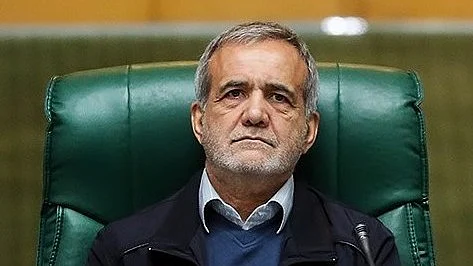


Iran’s President Masoud Pezeshkian on Saturday apologised to neighbouring countries for recent attacks and said Tehran had no intention of invading other nations, even as hostilities with Israel and the United States intensified across the region.
In a televised address, Pezeshkian said Iran’s temporary leadership council had decided to suspend attacks on neighbouring countries and halt missile launches unless those nations initiated attacks against Iran.
“I apologise to the neighbouring countries. We have no intention of invading other countries,” Pezeshkian said, adding that the decision was intended to prevent further escalation in the region.
Iran halts strikes on neighbouring states
Pezeshkian said the temporary leadership council had approved a measure to stop strikes against neighbouring countries while retaining the right to respond if Iran came under attack.
“The temporary leadership council announced that there will be no more attacks on neighbouring countries and no missile launches unless attacks originate from those countries against Iran,” he said.
However, Iran has continued exchanging attacks with Israel as the conflict widened across the Middle East following US-Israeli strikes on Iranian targets.
The war entered its second week on Saturday, with uncertainty persisting over when the hostilities might end.
Trump demands ‘unconditional surrender’
US President Donald Trump renewed pressure on Tehran, calling for what he described as Iran’s “unconditional surrender”.
“There will be no deal with Iran except UNCONDITIONAL SURRENDER!” Trump wrote on his Truth Social platform on Friday.
Trump added that once new leadership emerged in Iran, Washington and its allies would work to rebuild the country’s economy.
Earlier, Pezeshkian had said on social media that unnamed countries had begun mediation efforts, briefly raising hopes of a diplomatic breakthrough.
Rejecting Washington’s demand, the Iranian president said such expectations were unrealistic.
“They will take their dreams of us surrendering unconditionally to the grave,” he said.
Conflict spreads across the region
The conflict has expanded beyond Iran’s borders, with Tehran launching strikes on Israel and several Gulf countries hosting US military bases.
Missiles were seen heading toward Israel early Saturday, with Israeli air defence systems activated to intercept the incoming strikes.
Israel responded with fresh attacks targeting infrastructure in Tehran.
Israeli forces also carried out strikes in neighbouring Lebanon, saying they were targeting positions linked to Iran and the Hezbollah militant group.
Iranian state-linked media reported that Tehran’s Mehrabad Airport had been struck, though there was no immediate comment from Iran’s Islamic Revolutionary Guard Corps (IRGC).
Casualties mount, markets react
According to Iran’s ambassador to the United Nations, Amir Saeid Iravani, US-Israeli strikes have killed at least 1,332 Iranian civilians and injured thousands.
Iranian attacks have killed 11 people in Israel, while at least six US service members have also been reported dead.
The war has also triggered a humanitarian crisis in neighbouring Lebanon.
Israel has intensified its bombardment of the country, including strikes on Beirut’s southern suburbs, leading to large-scale displacement.
Around 300,000 people have been displaced in Lebanon in recent days, according to the Norwegian Refugee Council, while the Lebanese health ministry said 123 people have been killed and 683 wounded in Israeli strikes.
Global markets have also been shaken by the conflict. European and US stocks have fallen sharply, while oil prices have surged to multi-year highs amid concerns over disruption to shipping through the Strait of Hormuz, a route that carries nearly one-fifth of the world’s oil supply.
Join our official telegram channel (@nationalherald) and stay updated with the latest headlines