


Iran calls US port blockade ‘intolerable’; Trump hints at conflict return
In a parallel show of defiance, Mojtaba Khamenei vows to safeguard Iran’s nuclear and missile capabilities


A fresh wave of geopolitical strain has rippled across West Asia as Iran’s President Masoud Pezeshkian accused the United States of pursuing a de facto continuation of war through its naval pressure on Iranian ports — an act he termed “intolerable” and tantamount to an extension of military operations.
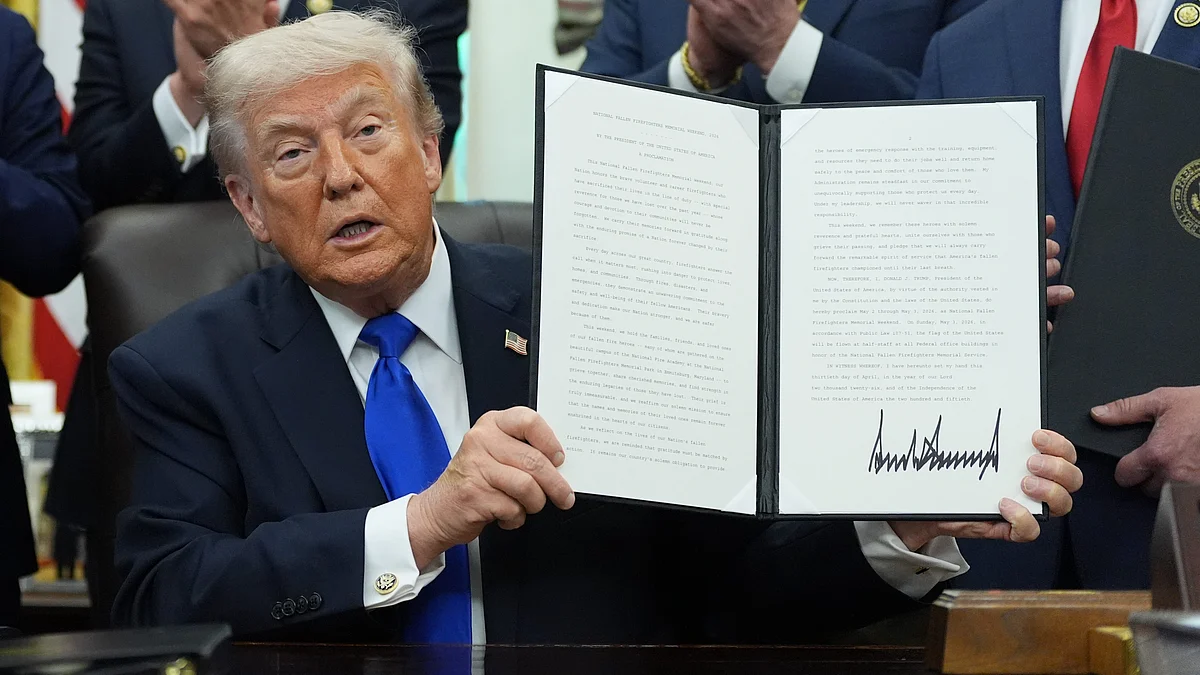
The sharp escalation in tone comes amid pointed rhetoric from Donald Trump, who signalled that a return to open conflict with Iran remains a possibility, remarking that “we might need” to restart war. In a cryptic aside, Trump suggested that the contours of ongoing engagements are known only to him and a select inner circle, casting a shadow over already opaque diplomatic channels.
Inside Iran, tensions have manifested in heightened security measures. The semi-official Tasnim News Agency reported that air defence systems were activated over Tehran to counter what authorities described as “small aircraft and reconnaissance drones,” underscoring a climate of deepening unease in the capital.
In a parallel show of defiance, Iran’s supreme leader Mojtaba Khamenei vowed to safeguard the country’s nuclear and missile capabilities — key flashpoints in tensions with Washington. In a statement broadcast on state television, he declared that the only place Americans belonged in the Persian Gulf was “at the bottom of its waters,” framing the current moment as the dawn of a “new chapter” in regional history.
Khamenei’s remarks come against the backdrop of mounting economic strain. Iran’s oil industry has been squeezed by a US naval blockade disrupting tanker movements, while Tehran’s grip over the Strait of Hormuz — a chokepoint for roughly a fifth of the world’s crude supply — has amplified global market anxieties. On Thursday, Brent crude surged to as high as $126 a barrel, reflecting the growing turbulence.
Beyond Iran’s borders, violence has surged along Israel’s northern frontier. Israeli strikes in southern Lebanon reportedly killed more than 30 people in a single day, according to Lebanon’s National News Agency, threatening to unravel a fragile US-backed ceasefire and raising fears of a broader regional conflagration.
Further fuelling international concern, Israel confirmed it would transfer 175 activists detained from the Gaza-bound Global Sumud Flotilla to Greece. The activists were intercepted in international waters more than 1,000 kilometres from the Gaza Strip, drawing sharp criticism and intensifying scrutiny of Israel’s maritime enforcement actions.
As military posturing, covert manoeuvres and diplomatic ambiguity collide, West Asia once again teeters on the edge of a widening crisis — each development tightening the knot of an already fragile and uncertain peace.
Join our official telegram channel (@nationalherald) and stay updated with the latest headlines