


Iran war: Looming fear over Strait of Hormuz becoming global internet chokepoint
Critical undersea cables carrying 99% of world internet traffic face growing risks as conflict threatens digital and economic disruption
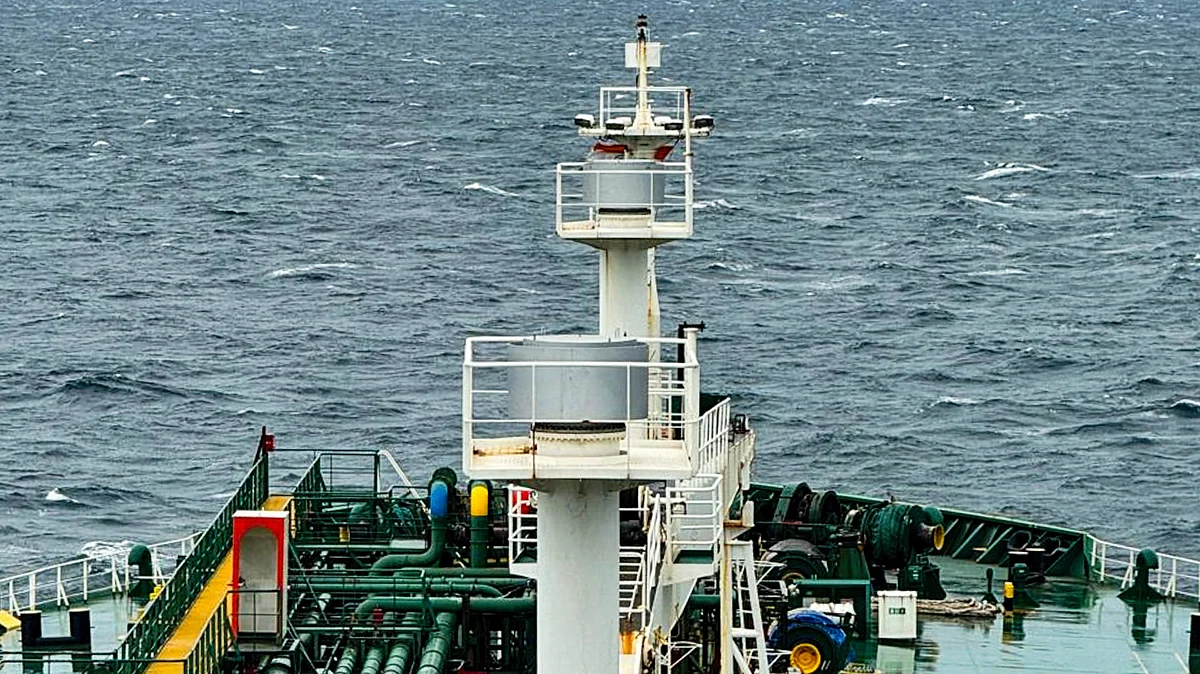


The ongoing Iran-US-Israel conflict has intensified concerns over the vulnerability of the Strait of Hormuz — not only as a critical global oil route but also as a potential “digital chokepoint” capable of disrupting internet infrastructure linking Asia, the Gulf and Europe.
Iran recently warned that submarine communication cables passing through the strategic waterway remain exposed, raising fears of large-scale disruption to telecommunications, cloud computing, banking systems and global trade networks.
Undersea cables carry world’s internet
According to the International Telecommunication Union, nearly 99 per cent of global internet traffic moves through subsea fibre-optic cables.
These cables form the backbone of global communications, supporting internet services, financial transactions, AI infrastructure, cloud systems and corporate data transfers.
Geopolitical analyst Masha Kotkin warned that any cable damage could have cascading consequences.
“Damaged cables mean the internet slowing down or outages, e-commerce disruptions, delayed financial transactions … and economic fallout from all of these disruptions,” she said.
Key data routes pass through Hormuz
Several major international cable systems pass through the Gulf region and near the Strait of Hormuz.
These include the Asia-Africa-Europe 1 (AAE-1), which links Southeast Asia with Europe, the FALCON system connecting India and Sri Lanka with Gulf and African markets, and the Gulf Bridge International network linking Gulf countries including Iran.
The FALCON network is particularly significant for India as it directly connects Mumbai to Gulf nations and carries major volumes of enterprise, telecom and financial data traffic.
Any disruption could affect internet speeds, cloud services, financial systems and India’s IT-driven economy.
AI and Gulf digital infrastructure at risk
The cable systems are also critical for Gulf countries such as the United Arab Emirates and Saudi Arabia, both of which are investing heavily in artificial intelligence, cloud infrastructure and digital economies.
Analysts say damage to undersea cables could significantly affect data centres, financial institutions and technology operations across the region.
War increases accidental damage risks
While no cable has yet been directly hit in the conflict, experts say the danger is increasing as military activity intensifies.
Most cable faults globally are caused not by sabotage but by accidental damage from fishing activity, ship anchors and drifting vessels.
“In a situation of active military operations, the risk of unintentional damage increases,” Kotkin said.
A similar incident occurred in 2024 when a ship attacked by Iran-backed Houthi forces in the Red Sea reportedly severed communication cables with its anchor.
Repair operations difficult in war zone
Experts warn that even if damaged, repairing cables in an active conflict zone would be extremely difficult.
Challenges include naval operations, security risks, insurance restrictions on repair vessels and delays in obtaining permissions for territorial waters.
“Often one of the biggest problems… is getting permits into the waters where the damage is,” telecom analyst Alan Mauldin said.
Post-conflict surveys may also be needed to identify underwater hazards such as wreckage or military debris before repair work can begin.
No scalable alternative exists
Analysts say satellite internet systems cannot realistically replace subsea cable networks at scale.
Even advanced low-Earth orbit satellite systems such as Starlink cannot currently handle the same volume of global data traffic and remain significantly more expensive.
“It’s not as though you could just switch to satellite. That’s not an alternative,” Mauldin said.
India’s aluminium sector also hit
The broader West Asia conflict is simultaneously affecting India’s industrial supply chains, particularly the aluminium recycling sector.
India produces nearly half of its 4.2 million metric tonnes of aluminium through recycled scrap imports sourced largely from Europe, the US and the Middle East.
Industry officials said disruptions have already caused production cuts of 20–40 per cent, inventory shortages and a nearly 30 per cent rise in scrap prices.
“There is a hand-to-mouth situation in scrap plants because of shortages and price increase,” said Sandeep Jain.
Auto sector may face higher costs
The supply disruption is expected to affect India’s automobile industry, which consumes roughly 60 per cent of secondary aluminium output.
Major automakers including Maruti Suzuki, Tata Motors, Mahindra & Mahindra and Hyundai Motor India could face rising raw material costs.
“Prices have been impacted, which will eventually be passed on to carmakers and ultimately, the buyers,” said Dhawal Shah.
Background
The Strait of Hormuz handles a significant share of global oil exports and also hosts some of the world’s most strategically important digital communication infrastructure.
As the Iran conflict drags on, experts warn that the risks now extend far beyond energy markets and could threaten the stability of the global internet and international commerce itself.
Join our official telegram channel (@nationalherald) and stay updated with the latest headlines