


Iran war: Trump delays power plant strikes by 5 days, extends Hormuz deadline
Makes announcement on Truth Social site on Monday, hours ahead of a deadline later in the day
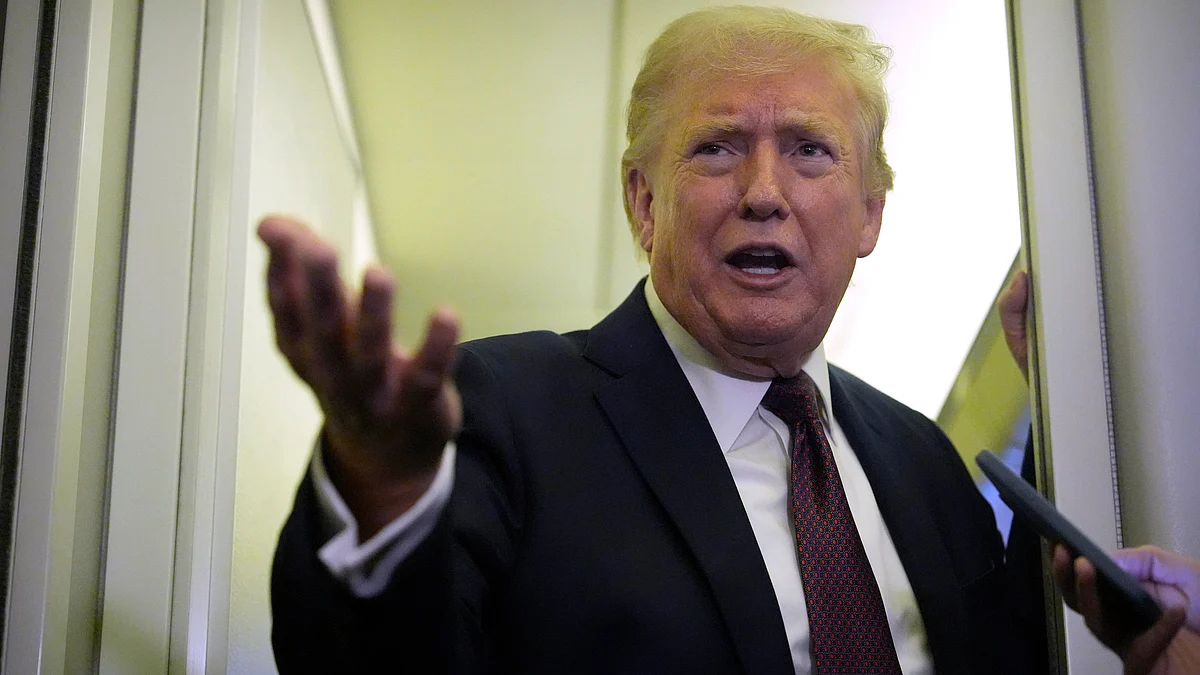


US President Donald Trump has said he has instructed the defence department to postpone planned military strikes on Iranian power plants for five days, signalling a possible pause in escalation as the conflict enters its fourth week.
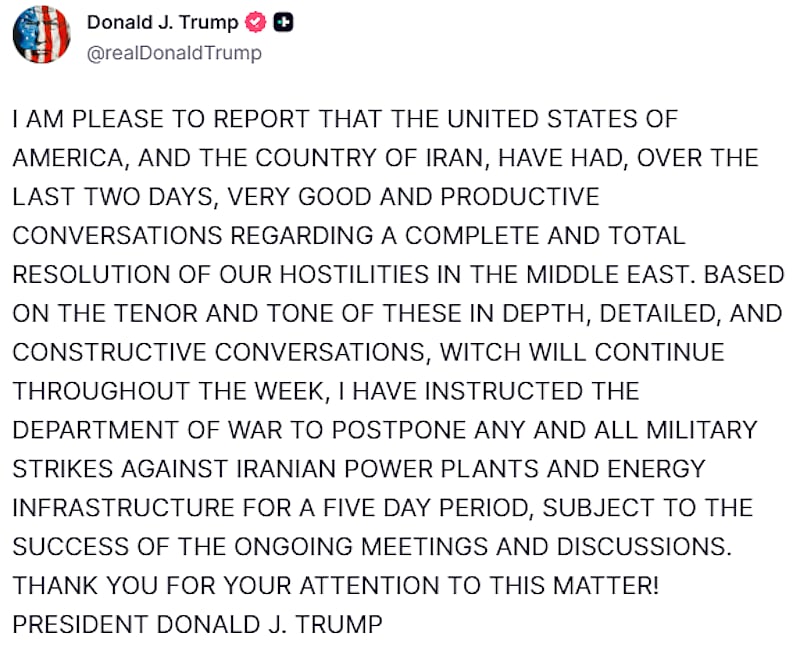
In a post on Truth Social, written in all caps, Trump said the US and Iran had held “VERY GOOD AND PRODUCTIVE” talks over the past two days aimed at a “COMPLETE AND TOTAL RESOLUTION OF HOSTILITIES IN THE MIDDLE EAST”.
The announcement came hours before a deadline he had set for Tehran to “fully open” the Strait of Hormuz to all shipping within 48 hours, warning that failure to comply would result in Iranian power plants being destroyed.
Iran’s Islamic Revolutionary Guard Corps (IRGC) had earlier warned that any such strikes would trigger retaliation targeting Israel’s power plants as well as energy facilities supplying US bases across the Gulf region. The prospect of attacks on electricity grids raised concerns about disruptions to desalination plants that provide drinking water in Gulf states, heightening fears of a broader regional energy crisis.
Market reaction suggested cautious relief, though analysts warned the postponement did not amount to a ceasefire.
“This is obviously a postponement, not a complete ceasefire and we will see what happens from here,” Chris Beauchamp, chief market analyst at IG Markets in the UK, was quoted as saying by Reuters. “What’s done is still not undone, so the impact has yet to be seen. But obviously markets are breathing a sigh of relief on these news.”
A Reuters report also quoted Elias Haddad, global head of markets strategy at Brown Brothers Harriman in London, said the initial response reflected expectations of reduced immediate risk. “We’re seeing a bit of a knee-jerk reaction to this positive news. If it’s a legitimate de-escalation, we could see a bit more of a relief rally in risk assets,” he said.
“It’s still hard to say whether this is just political jawboning or a legitimate de-escalation in this crisis. There’s certainly room for a bit of an unwind in the fear trade. A more sustained rally in risk assets will depend on whether this is legit de-escalation or simply a pause before a next leg up in escalation,” Haddad added.
Brent crude fell about 7 per cent to near $104 a barrel by 11.27 GMT (about 5.00 pm IST), reflecting expectations that energy supplies through the Strait of Hormuz — a critical chokepoint for global oil flows — may not face immediate disruption.
The Strait of Hormuz, through which roughly a fifth of global oil consumption passes, has remained at the centre of the confrontation. Tehran has signalled that any attempt to restrict its exports or damage domestic energy infrastructure could prompt measures affecting shipping lanes in the narrow waterway linking the Gulf to the Arabian Sea.
While shipping traffic has continued, heightened military presence and repeated threats have increased insurance costs and volatility in oil markets. Any disruption to tanker movement or regional power infrastructure could quickly affect fuel prices and supply chains worldwide.
Trump’s latest statement suggests diplomatic channels remain open, but with both sides maintaining military pressure, the situation around Hormuz and regional energy assets remains highly fragile.
Follow us on: Facebook, Twitter, Google News, Instagram, WhatsApp
Join our official telegram channel (@nationalherald) and stay updated with the latest headlines