


Iran’s supreme leader urges people to plant saplings in honour of war victims
Mojtaba Khamenei urges Iranians to plant saplings, turning grief into a symbol of hope and unity
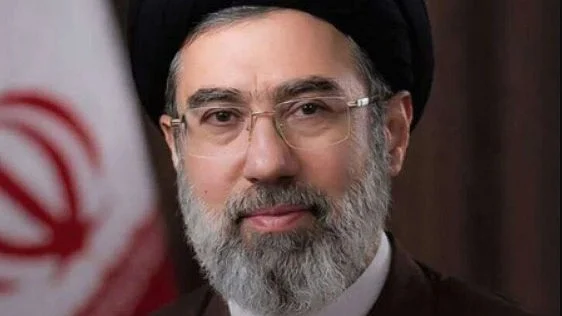


Amid the lingering smoke of conflict and the grief of lives lost, Iran’s supreme leader Mojtaba Khamenei has called on citizens to turn to nature as an act of remembrance and resilience — urging the planting of saplings across the country in honour of those killed in the recent US-Israeli strikes.
In a message marking the 47th anniversary of the Islamic Republic and on the eve of Sizdah Bedar — the traditional “Nature Day” that closes the Nowruz festivities — Khamenei framed the act as both symbolic defiance and a gesture of renewal. From bustling cities to quiet villages, he urged Iranians to nurture new life in the soil, transforming mourning into a living testament of hope, prosperity, and national unity.
He praised what he described as the Iranian people’s steadfastness in the face of “ruthless enemies,” accusing the United States and Israel of inflicting not only human loss but also damage upon Iran’s natural landscape. The call to plant trees, he said, should continue through the spring season, until 21 June, as a sustained expression of collective resolve.
The appeal comes weeks after a dramatic escalation in hostilities. On 28 February, joint US-Israeli strikes targeted Tehran and other Iranian cities, killing senior leaders, including former supreme leader Ali Khamenei, alongside military commanders and civilians. Iran responded with waves of missile and drone attacks on Israeli territory and US military assets across the region, plunging West Asia into one of its most volatile confrontations in recent years.
Even as tensions simmer, Iran’s President Masoud Pezeshkian struck a markedly different tone in a direct appeal to the American public — one that sought to separate governments from the people they represent.
In a letter addressed to citizens of the United States, Pezeshkian urged Americans to look beyond what he described as a “machinery of misinformation” surrounding the war. “The Iranian people harbour no enmity toward other nations,” he wrote, extending that sentiment explicitly to the American people, as well as to Europe and neighbouring countries.
He painted Iran’s modern history as one shaped by endurance rather than aggression, insisting the country has not pursued expansionism or domination despite decades of external pressure, intervention, and conflict. In his telling, the image of Iran as a global threat is a narrative carefully constructed by Israel to deflect attention from its actions toward Palestinians.
Pezeshkian also pointed to the extensive US military presence encircling Iran, arguing that the very infrastructure meant to project power has instead deepened insecurity. The ongoing strikes launched from these bases, he said, reveal the dangers inherent in such a posture.
Responding sharply to US President Donald Trump’s recent threats of targeting Iran’s energy infrastructure, Pezeshkian warned that such actions would amount to direct attacks on civilians and constitute “war crimes,” with consequences that could reverberate far beyond Iran’s borders.
He accused Washington of entering the conflict as a “proxy for Israel”, suggesting that American resources — both human and financial — were being drawn into a war driven by Israeli interests. “Is ‘America First’ truly among the priorities of the US government today?” he asked pointedly.
Framing the moment as a turning point in global history, Pezeshkian said the world now stands “at a crossroads”, faced with a stark choice between deepening confrontation or embracing engagement.
Between Khamenei’s call to plant life in the soil and Pezeshkian’s appeal to conscience across borders, Iran’s leadership has sought to weave a narrative of resistance tempered with outreach — even as the region remains gripped by uncertainty and the shadow of further escalation looms large.
With IANS inputs
Join our official telegram channel (@nationalherald) and stay updated with the latest headlines