


Israel strikes Iran in broad daylight; US involved as nuclear tensions surge
Blasts reported across Iran; Khamenei compound area targeted; airspace shut, region on edge
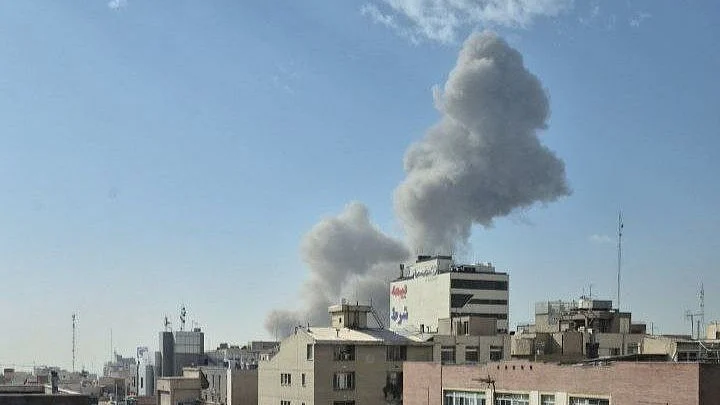


Israel launched a sweeping daylight attack on Iran’s capital on Saturday, striking targets in central Tehran and elsewhere across the country, in a dramatic escalation of tensions linked to Iran’s nuclear programme.
US officials confirmed American participation in the operation, though details of the extent and nature of that involvement were not immediately disclosed.
A thick plume of smoke rose from downtown Tehran, with one of the first apparent impacts occurring near the offices of Supreme Leader Ayatollah Ali Khamenei.
Roads leading to the compound were sealed off shortly after the explosions. It was not immediately clear whether the 86-year-old leader was present at the time. He has not been seen publicly in recent days amid intensifying rhetoric between Tehran and Washington.
Iranian state media acknowledged explosions in the capital and later reported strikes nationwide. No official casualty figures were released in the immediate aftermath. Iranian authorities shut down the country’s airspace and cut mobile phone services in parts of Tehran.
What is known so far
Explosions were reported near Khamenei’s office in central Tehran.
Iranian media said strikes occurred in multiple provinces, suggesting a coordinated campaign.
The United States confirmed participation in the operation, but the White House declined immediate comment.
Iran closed its airspace and restricted communications in parts of the capital.
Israel activated sirens nationwide and closed its own airspace.
A US official and a second person familiar with the operation, speaking on condition of anonymity, said Washington was involved in the strikes. It was not specified whether the US role included direct air operations, intelligence support, logistics or defensive coordination.
According to an official briefed on the Israeli campaign, the targets included:
Iranian military facilities.
Intelligence installations.
Government symbols and command centres.
Israeli Defense Minister Israel Katz described the operation as being carried out “to remove threats,” without elaborating.
The attack follows weeks of mounting pressure over Iran’s nuclear activities. The United States has assembled a substantial military presence in the region in recent weeks, including fighter aircraft, naval vessels and missile defence systems, in what officials described as a show of deterrence.
Background to the escalation
Washington has sought a renewed deal to constrain Iran’s uranium enrichment.
Tehran insists enrichment is its sovereign right and refuses to negotiate its missile programme.
Iran also rejects discussions on its support for regional armed groups, including Hamas and Hezbollah.
Domestic unrest and economic strain inside Iran have added to geopolitical pressure.
Former US President Donald Trump had advocated for a stricter nuclear agreement, while warning that failure to reach a deal could result in military consequences. Iran, for its part, has warned repeatedly that any attack would trigger retaliation against US forces and allied targets in the region.
In Israel, hospitals moved patients and surgeries to underground facilities as emergency protocols were activated. The Israeli military issued a “proactive alert to prepare the public for the possibility of missiles being launched toward the state of Israel.”
Iran has previously demonstrated the capability to launch ballistic missiles and deploy proxy forces across the Middle East. Whether Tehran would respond immediately or calibrate its reaction remained unclear.
The confrontation represents one of the most direct and significant military exchanges between Israel and Iran in years. Analysts warn that the situation could rapidly widen into a broader regional conflict if retaliatory strikes occur or if American assets become direct targets.
As of Saturday afternoon, both governments continued to release limited operational details, and the full scale of damage or casualties remained uncertain.
With AP/PTI inputs
Join our official telegram channel (@nationalherald) and stay updated with the latest headlines