


Japan, Australia urge calm after Chinese J-15 fighter radar locks Japanese F-15s near Okinawa
Tokyo protests “dangerous” act as Beijing accuses Japan of harassment; defence ministers of Japan and Australia vow deeper security coordination
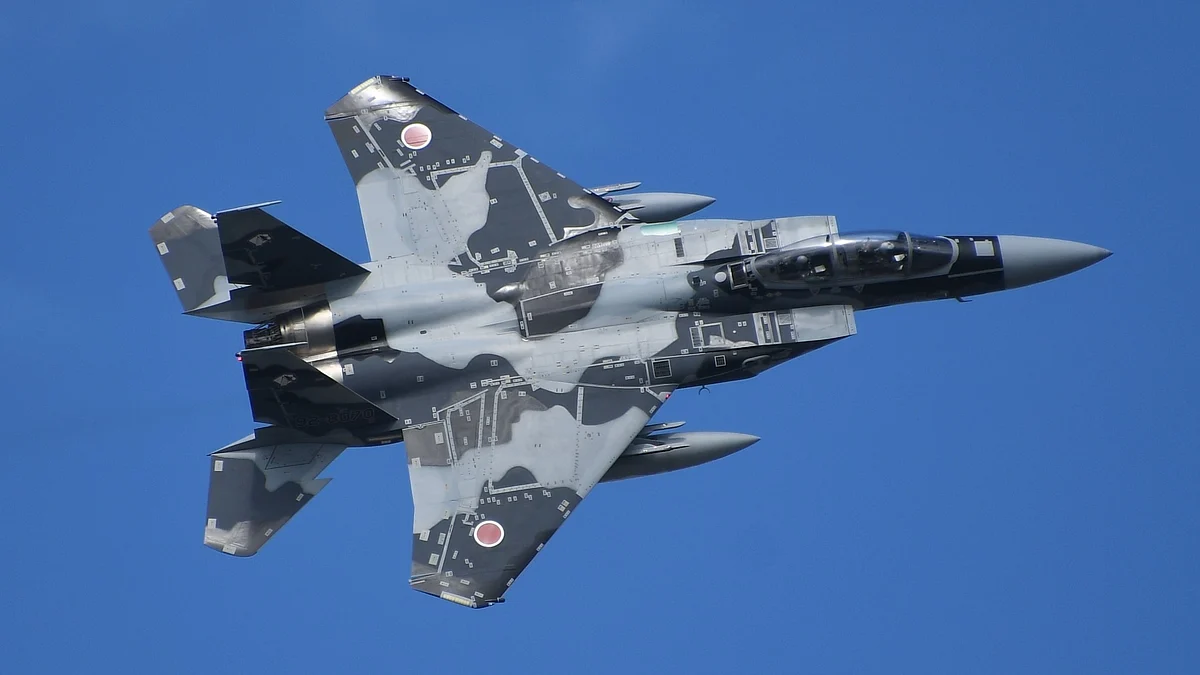


Japan and Australia on Sunday urged restraint after Chinese military aircraft locked radar on Japanese fighter jets, a serious mid-air action that heightened tensions between Tokyo and Beijing. The incident occurred a month after Japanese Prime Minister Sanae Takaichi’s remarks on Taiwan, which China had sharply criticised.
Japanese Defence Minister Shinjiro Koizumi said Tokyo lodged a strong protest with Beijing, describing the radar lock as “extremely regrettable” and “dangerous”.
“We have demanded strict preventive measures,” he said. According to Japan’s Defence Ministry, a Chinese J-15 fighter took off from the aircraft carrier Liaoning near Okinawa on Saturday and “intermittently” locked its radar onto Japanese F-15 jets twice — for around three minutes in the late afternoon and about 30 minutes in the evening. Officials did not confirm whether the same J-15 was involved in both instances.
Japanese fighters had been scrambled to monitor Chinese aircraft conducting takeoff and landing drills in the Pacific. Defence officials cited by Kyodo News said the Japanese jets kept a safe distance, did not engage provocatively, and reported no breach of airspace or damage.
China’s response sharply contradicted Japan’s account.
Senior Colonel Wang Xuemeng, spokesperson for the Chinese Navy, said the exercises near Miyako island were pre-announced and accused Japanese aircraft of “harassment”.
In a statement posted on Sunday, he said, “We solemnly asked the Japanese side to immediately stop slandering and smearing, and strictly restrain its frontline actions,” adding that the Chinese Navy would take necessary measures to safeguard its security and interests.
The radar lock comes as relations between the two countries worsen over Taiwan. Takaichi had said in early November that Japan’s military could potentially respond if China were to take action against the self-governed island, drawing criticism from Beijing.
Japan and Australia, whose defence ministers met in Tokyo on Sunday, expressed concern over the developments. Australian Defence Minister Richard Marles said, “We are deeply concerned by the actions of China in the last 24 hours,” stressing the need for interactions to remain “safe and professional”. He added that Australia seeks no change to the status quo across the Taiwan Strait and wants “calm, sensible and moderate” engagement with Beijing.
During their talks, Tokyo and Canberra agreed to strengthen military cooperation and establish a comprehensive “framework for strategic defence coordination”. Japan has been expanding its defence partnerships beyond the United States, viewing Australia as a semi-ally. Marles also visited a Mitsubishi Heavy Industries shipyard in Nagasaki on Saturday to inspect production of the upgraded Mogami-class frigate selected by Australia for its future fleet.
Saturday’s radar lock is believed to be the first involving Japanese and Chinese military aircraft, though a similar confrontation occurred in 2013 when a Chinese warship targeted a Japanese destroyer. Fighter radars are used for search operations or fire-control guidance before missile launches.
Separately, the Philippine Coast Guard reported that China fired three flares toward a fisheries bureau aircraft patrolling the South China Sea on Saturday, warning it away from airspace Beijing claims over disputed waters.
Join our official telegram channel (@nationalherald) and stay updated with the latest headlines