


Rubio says US-China ties at ‘strategic stability’, flags supply chain risks
US secretary of state says both sides recognise the dangers of unchecked escalation between the world’s two largest economies
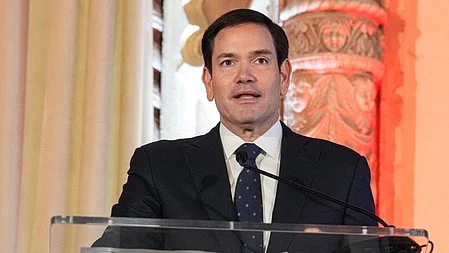


US secretary of state Marco Rubio on Wednesday said Washington and Beijing have arrived at a point of “strategic stability” in their relationship, even as deep structural disagreements persist over trade, technology, supply chains and nuclear weapons.
Speaking to reporters during a visit to Saint Kitts and Nevis, Rubio said both sides recognise the dangers of unchecked escalation between the world’s two largest economies.
“I think both countries concluded that having an all-out global trade war between the United States and China would be deeply damaging to both sides and to the world,” he said.
However, he acknowledged that significant differences remain. “There remain issues of disagreement. There remain issues that we know in the long term are going to have to be confronted and could be irritants in our relationship,” Rubio said.
His remarks come ahead of a planned visit by President Donald Trump to China in about four weeks, a trip expected to focus heavily on trade and security concerns.
Supply chains and national security
Rubio stressed that the United States does not consider it sustainable to depend heavily on a single country for critical goods, including pharmaceuticals and rare minerals.
“We don’t think it’s sustainable to live in a world where we depend on some country for 90 per cent of anything — whether it’s supply chains or critical minerals or pharmaceuticals,” he said.
He added that diversifying supply chains is a national security priority. “We have every intention of doing everything we can to ensure that our critical supply chains are diversified.”
Washington in recent years has sought to reduce vulnerabilities exposed during the COVID-19 pandemic and amid rising geopolitical tensions.
Technology and export controls
On technology, Rubio addressed concerns over Chinese access to advanced American semiconductor technology and potential technology transfer.
“Every agreement the President’s made has all gone through a full national security review to minimise and mitigate against that,” he said, while conceding that “no measures are perfect”.
Rubio noted that China has been developing “native capabilities”, sometimes using knowledge acquired abroad. The US has tightened export controls on advanced chips and chipmaking equipment, citing national security risks.
Engagement despite rivalry
Despite strategic rivalry, Rubio emphasised the necessity of sustained dialogue between Washington and Beijing.
“The two largest economies in the world, which both possess nuclear arsenals, have to be able to talk, have to be able to communicate, and have to be able to interact,” he said.
“It would be reckless and irresponsible for the United States and China not to have meetings,” Rubio added, warning that it would be “foolish, and frankly dangerous” to sever ties even as areas of conflict persist.
Nuclear arms and China’s expanding arsenal
Rubio also raised concerns about China’s expanding nuclear stockpile. He argued that any meaningful arms control arrangement in the 21st century must include Beijing, moving beyond the traditional US-Russia framework.
“We think ultimately, for there to be a true arms control agreement, it has to involve China,” he said, noting that China’s nuclear inventory has grown “dramatically”.
While Beijing maintains that its arsenal remains smaller than those of the United States and Russia, Rubio dismissed that comparison as “irrelevant”, saying China has the capacity to catch up and is “well on its way to doing so”.
He acknowledged, however, that China has publicly refused to enter a trilateral arms control agreement.
“We can’t compel them,” Rubio said. “You can create incentives, but if they don’t want to do it, then we won’t have one. We’ll just keep doing what we need to do.”
Limited areas of progress
Rubio said there has been some progress in targeted areas of cooperation. He noted that China has agreed to schedule more fentanyl precursor chemicals — a longstanding US concern — though Washington is seeking concrete enforcement steps.
He also said Beijing has increased purchases of American agricultural products, suggesting incremental economic engagement continues despite broader strategic competition.
Broader context
US-China relations in recent years have been defined by intense rivalry across trade, advanced technology, Taiwan, and regional security issues. Washington has tightened export controls and investment restrictions while keeping high-level diplomatic channels open to manage risks.
Meanwhile, China has accelerated military modernisation and expanded its nuclear capabilities, prompting calls in Washington for broader arms control discussions that reflect changing global power dynamics.
Rubio’s remarks signal an effort to balance competition with communication — acknowledging strategic rivalry while emphasising the importance of preventing escalation between two nuclear-armed powers.
With IANS inputs
Join our official telegram channel (@nationalherald) and stay updated with the latest headlines