


Carney hails new trade agreements, expects US to respect Canada’s sovereignty
The prime minister portrays Canada as a nation gathering momentum at a pivotal moment
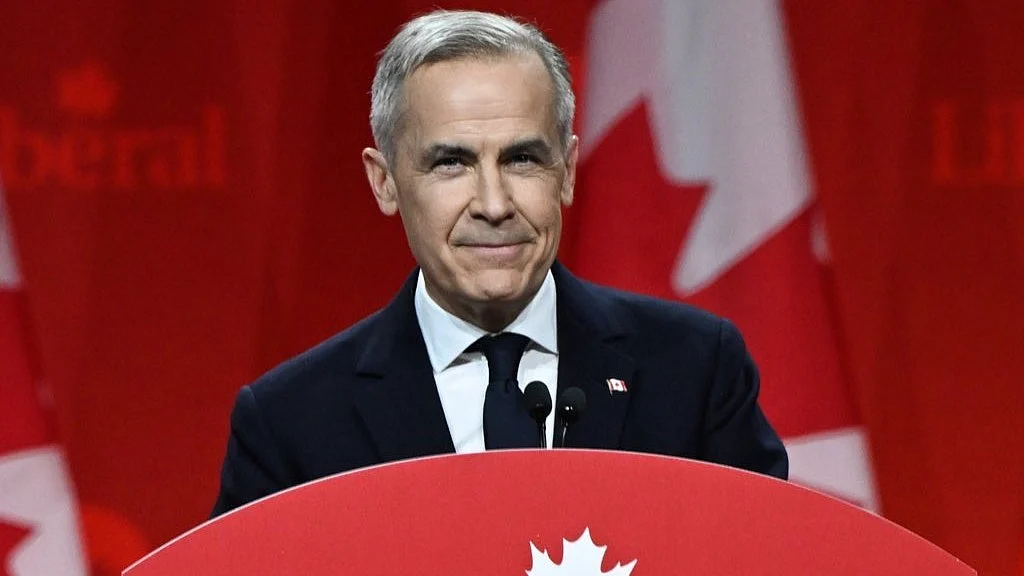


Canadian Prime Minister Mark Carney struck a confident and defiant note as he unveiled a slate of new trade agreements, vowing to broaden Canada’s global partnerships while making clear that Ottawa “expects” the United States to respect the country’s sovereignty, the Al Jazeera reported.
Addressing provincial and territorial leaders at a meeting on Thursday, Carney portrayed Canada as a nation gathering momentum at a pivotal moment. “Our country is more united, ambitious and determined than it has been in decades,” he said, urging leaders to seize the opportunity to “build big things together” as he highlighted 12 new economic and security accords concluded over the past six months.
His remarks come amid simmering tensions with the administration of US President Donald Trump, whose rhetoric has repeatedly tested diplomatic norms — including past suggestions that Canada should become America’s “51st state.”
Among the agreements Carney spotlighted was a new deal with China aimed at lowering trade levies. The accord drew sharp criticism from Trump last week, who threatened to retaliate with a sweeping 100 per cent tariff on Canadian goods. Pushing back against accusations that Canada could become a “drop-off port” for Chinese exports, Carney clarified that Ottawa was not pursuing a free-trade agreement with Beijing.
Even so, he emphasised the tangible benefits of the arrangement, particularly for Canada’s agricultural heartland. “This agreement unlocks more than $7 billion in export markets for Canadian farmers, ranchers, fish harvesters and workers across our country,” Carney said.
Looking beyond China, the prime minister signalled an ambitious expansion of Canada’s trade horizon, announcing plans to deepen economic ties with “global giants” such as India, the Association of Southeast Asian Nations (ASEAN), and the South American trade bloc Mercosur. At the same time, he underscored the importance of repairing and renewing Canada’s most critical partnership.
“We will work to renew our most important economic and security relationship with the United States through the joint review of the Canada–United States–Mexico Agreement later this year,” Carney said, referring to the regional trade pact set to expire in July.
The push to diversify Canada’s trade and security portfolio follows closely on the heels of Carney’s headline-grabbing address at the World Economic Forum in Davos, Switzerland, just eight days earlier. There, he delivered a stark assessment of the global order, warning that the so-called “rules-based” international system was fraying under the weight of great-power rivalry.
“We knew the story of the international rules-based order was partially false,” Carney told the Davos audience. “That the strongest would exempt themselves when convenient, that trade rules were enforced asymmetrically, and that international law applied with varying rigour depending on the identity of the accused or the victim.”
He called on the world’s “middle powers” to band together amid an era where, he warned, power increasingly dictates outcomes.
The speech was widely interpreted as a thinly veiled rebuke of Trump, whose aggressive tariff campaign has targeted allies and rivals alike — including Canada. Trump’s actions since returning to office have further unsettled global capitals, from the controversial abduction of Venezuelan leader Nicolás Maduro to repeated threats aimed at the self-governing Danish territory of Greenland — moves that have sent tremors through NATO, of which both the United States and Denmark are members.
Trump has also repeatedly floated the idea of expanding US control into Canada, referring to the country as a “state” and its prime minister as a “governor.” Following Carney’s Davos remarks, Trump reportedly withdrew the Canadian leader’s invitation to join his so-called Board of Peace.
Carney, however, has stood firm. He publicly rejected claims by US Treasury Secretary Scott Bessent that he had “aggressively” softened his stance during a private call with Trump, insisting that his position remains unchanged.
That resolve was on display again on Thursday when Carney was questioned about reports that US officials had met with separatist groups advocating independence for Alberta, Canada’s oil-rich western province. According to the Financial Times, US State Department officials have held multiple meetings with the Alberta Prosperity Project, which is pushing for a referendum on secession.
“We expect the US administration to respect Canadian sovereignty,” Carney said bluntly. “I’m always clear in my conversations with President Trump to that effect.”
As Ottawa charts a broader global course, Carney’s message was unmistakable: Canada will diversify, defend its interests, and stand firm on sovereignty — no matter how turbulent the geopolitical winds become.
Join our official telegram channel (@nationalherald) and stay updated with the latest headlines